
How to Track Hormonal Health: A Step-by-Step Guide
Table of Contents
- Why Tracking Hormonal Health Matters
- Understanding Your Menstrual Cycle and Ovulation
- Female Hormone Blood Test: What to Measure
- Signs of Hormonal Imbalance in Women
- Tracking Symptoms of Perimenopause
- Using Basal Body Temperature and Symptom Diaries
- Integrating Wearable Technology and Data Privacy
- What to Do After You Identify an Imbalance
Last Updated: August 22, 2026
Why Tracking Hormonal Health Matters
Understanding your hormonal health is foundational to how you feel, recover, and age. Your endocrine system orchestrates everything from energy levels and mood to sleep quality and skin repair. When hormones drift out of balance, the effects ripple through your entire body in ways that often feel disconnected from their root cause.
Many people attribute fatigue, mood swings, or poor recovery to lifestyle alone, pushing harder and adjusting diet without success. That's because they're treating symptoms without understanding the underlying hormonal picture. Tracking moves you from guessing to knowing, gathering data about your unique biology and building a personalised health strategy based on measurable markers.
Understanding Your Menstrual Cycle and Ovulation
Your menstrual cycle isn't just about menstruation; it's a monthly hormonal symphony that affects energy, mood, strength, and recovery capacity. The cycle divides into four phases. The follicular phase (days 1-13) begins with menstruation and rises toward ovulation, with estrogen climbing while progesterone remains low (the NIH). Many people report higher energy and mental clarity here. The ovulation phase (around day 14) is when luteinizing hormone (LH) surges, triggering egg release and peak fertility. The luteal phase (days 15-28) brings rising progesterone and falling estrogen, when many people need to slow down and prioritise recovery. The final days before menstruation can bring mood dips, bloating, or fatigue as hormones decline sharply.
Tracking ovulation matters because it anchors your entire cycle. If you know when ovulation occurred, you can predict your luteal phase timing and adjust training intensity, nutrition, and recovery accordingly. Many people track this through symptom observation, basal body temperature, or LH tests.
Female Hormone Blood Test: What to Measure
A female hormone blood test provides the clinical snapshot that app data alone cannot. Knowing which hormones to measure makes the difference between useful data and a guessing game.
The core hormones most relevant to menstrual cycle health and perimenopause are:
Oestrogen (specifically oestradiol): The primary female sex hormone, peaking during the follicular phase. Low oestrogen can cause hot flushes, mood changes, and poor recovery.
Progesterone: Rises sharply after ovulation. Low progesterone often causes irregular cycles, poor sleep, and mood instability. Testing is most useful 7 days after ovulation when levels peak.
Luteinizing hormone (LH): Surges to trigger ovulation. An LH test confirms whether ovulation is actually occurring, critical for anyone with irregular cycles.
Follicle-stimulating hormone (FSH): Drives follicle development. Rising FSH levels signal perimenopause or menopause transition, essential for women over 40 experiencing cycle changes.
Thyroid hormones (TSH, free T4, free T3): Often overlooked but crucial. Thyroid dysfunction mimics hormonal imbalance, and since thyroid and reproductive hormones interact, testing both gives a complete picture.
Prolactin: Elevated prolactin can suppress ovulation and cause cycle irregularities.
Timing matters enormously. Hormone levels fluctuate throughout your cycle, so testing on day 21 (luteal phase) for progesterone gives different results than testing on day 7 (follicular phase). A comprehensive hormone panel should include multiple tests across different cycle phases, or at minimum, progesterone tested during the luteal phase when it's at its highest.
Signs of Hormonal Imbalance in Women
Hormonal imbalance rarely announces itself with one clear symptom. Instead, it creates clusters of seemingly unrelated problems that persist despite lifestyle changes. Common signs include persistent fatigue, unexplained weight gain, mood instability, irregular or absent menstrual cycles, severe PMS symptoms, and poor recovery from exercise. Brain fog, sleep disruption, skin changes like acne, hair loss, low libido, joint pain, and digestive changes frequently accompany hormonal shifts.
When three or more of these persist for more than a few months, hormonal tracking becomes genuinely worthwhile. The challenge is distinguishing hormonal problems from other causes like thyroid dysfunction, nutritional deficiencies, sleep deprivation, or chronic stress. This is precisely why tracking through blood tests, symptom diaries, and cycle observation helps clarify what's actually happening.
Tracking Symptoms of Perimenopause
Perimenopause, the transition toward menopause, typically begins in your 40s but can start earlier (the NIH). During this phase, your ovaries gradually produce less oestrogen and progesterone, creating hormonal chaos. Cycles become erratic, and many women feel blindsided by changes.
Tracking symptoms of perimenopause requires a different approach than tracking a regular menstrual cycle. Your cycle may be 21 days one month and 45 days the next. Traditional cycle tracking apps often fail during perimenopause because the patterns are genuinely unpredictable.
Instead, focus on symptom clustering. Hot flushes, night sweats, mood swings, sleep disruption, joint pain, and brain fog are hallmark perimenopause signals. These symptoms often intensify in the luteal-equivalent phase. A symptom diary becomes essential: record daily hot flushes or night sweats, mood notes, sleep quality, energy level, and menstrual bleeding. After 2-3 months of data, patterns emerge that guide conversations with your doctor about whether hormone-related treatments might help.
Blood tests during perimenopause are complex because hormones fluctuate wildly. Many healthcare providers recommend testing FSH and oestradiol together, ideally during a bleeding phase or the first half of your cycle. Repeat testing across a few months often clarifies the perimenopause picture better than a single snapshot.
Using Basal Body Temperature and Symptom Diaries
Basal body temperature (BBT) tracking is one of the oldest and most reliable ways to confirm ovulation. Your body temperature rises slightly, typically 0.3 to 0.8 degrees Celsius, after ovulation when progesterone levels spike (peer-reviewed research). By tracking this shift, you create a physical record of whether ovulation actually occurred.
To track BBT accurately, measure your temperature immediately upon waking, before getting out of bed, using a dedicated BBT thermometer. Record daily and note any variables like illness or poor sleep that might distort readings. After a few cycles, you'll notice a pattern: relatively stable temperatures during the follicular phase, then a distinct rise around ovulation that persists through the luteal phase. supplements for hormonal balance.

BBT tracking works best alongside a symptom diary. While temperature confirms ovulation biochemically, your symptoms provide context. Cervical mucus changes, mild cramping, breast tenderness, and mood shifts all correlate with hormonal phases. Daily notes on energy level (1-10 scale), mood, sleep quality, and menstrual bleeding create valuable data. After three cycles, patterns emerge showing whether fatigue consistently hits during your luteal phase or whether mood dips occur predictably.
Combining BBT, symptom tracking, and cycle apps creates redundancy. If the app predicts ovulation on day 14 but your temperature doesn't rise until day 16 and your cervical mucus peaks on day 15, the physical data overrides the prediction.
Integrating Wearable Technology and Data Privacy
Modern wearable devices generate enormous amounts of biometric data. When used thoughtfully, this data enriches your hormonal health tracking by capturing patterns you'd otherwise miss. Your resting heart rate, heart rate variability, sleep architecture, and activity levels all shift across your menstrual cycle. Wearables quantify these shifts, and many now include cycle tracking features that observe changes in resting heart rate (typically higher in the luteal phase) and sleep patterns.
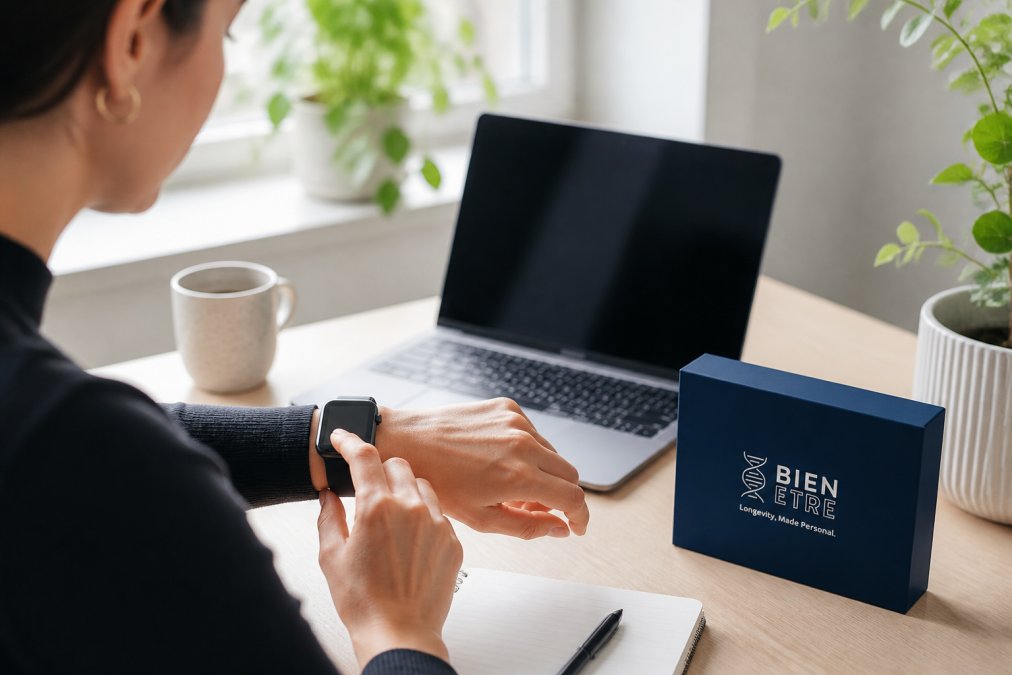
The challenge emerges around data privacy. Your hormonal data is deeply personal health information. Before integrating wearables into your hormonal tracking, review the app's privacy policy explicitly. Ask: Where is data stored? Is it encrypted? Can the company sell anonymised data to pharmaceutical companies or insurers? What's your right to deletion?
Consider using wearables for tracking without connecting them to cloud-based apps. Many devices allow local data storage and export. You can manually log wearable insights into a private symptom diary rather than uploading everything to a third-party platform.
What to Do After You Identify an Imbalance
Data without action is just noise. Once you've tracked hormonal health and identified an imbalance, use that information to drive meaningful change.
Compile your evidence: bring your symptom diary, BBT charts, wearable data summaries, and any blood test results to your GP or a healthcare provider specialising in women's health. This documentation transforms vague complaints into a clinical case. Providers take tracked data seriously.
Depending on what your data reveals, your healthcare provider might recommend several paths. If blood tests confirm low progesterone, they might discuss supplementation or lifestyle changes supporting progesterone production. If thyroid dysfunction appears alongside reproductive hormone problems, treating the thyroid often improves cycle health. If you're in perimenopause with severe symptoms, hormone replacement therapy might be appropriate.
Many hormonal imbalances respond to lifestyle changes: sleep consistency, stress reduction, specific micronutrients (magnesium, zinc, B vitamins), timing of exercise intensity around your cycle, and dietary adjustments. For athletes and high performers, cycle-synced training becomes actionable once you understand your hormonal phases. During the follicular phase, many people tolerate high-intensity training better. During the luteal phase, recovery-focused work often aligns better with physiology.
The most important step after identifying an imbalance is follow-through. Tracking is valuable only if it leads to action, whether that's medical consultation, lifestyle changes, targeted supplementation, or simply understanding your body better.
Hormonal imbalance doesn't have to remain a mystery. When you track hormonal health systematically through symptom diaries, temperature monitoring, wearable data, and clinical blood tests, you move from guessing to knowing. You understand why you feel the way you do and can make informed decisions about your health alongside your healthcare provider. Bien-Etre's clinical-grade NAD⁺ testing options provide the lab-backed foundation many people need to start this conversation with confidence. Get started with measurable data that transforms how you understand your body. For those interested in understanding their unique biology, consider the NAD⁺ Intracellular Test for £299.00, or the Starter Pack, NAD⁺ Test + 1 Month of NAD+ also for £299.00. If you're looking for a longer-term plan, the 60 Day Cellular Recharge, NAD⁺ Test + 60 Days of NMN300 is available for £199.00. These options provide the lab-backed foundation many people need to start this conversation with confidence.


Frequently Asked Questions
How can I track my hormone levels at home?
You can track hormonal health using clinical-grade at-home tests, symptom diaries, and wearable devices. At-home hormone tests measure key markers like luteinizing hormone and progesterone from saliva or blood samples. Record symptoms daily, mood, energy, sleep quality, and libido, to identify patterns across your cycle. Wearable technology tracks biometric data like basal body temperature and heart rate variability, revealing cycle regularity and fertility windows. Combining these methods provides data-driven insights without clinic visits.
What are the signs of hormonal imbalance in women?
Common signs include irregular menstrual cycles, persistent fatigue, mood fluctuations, sleep disruption, changes in libido, skin issues, and unexplained weight changes. Perimenopause may bring hot flushes, night sweats, and brain fog. Heavy or light periods, severe period pain, and fertility challenges also signal imbalance. A symptom diary helps you spot patterns over weeks or months. If you experience multiple symptoms, a female hormone blood test measuring estrogen, progesterone, and luteinizing hormone can clarify whether hormonal shifts are responsible.
Should I see a GP about my hormonal health?
Yes, consult your GP if symptoms significantly affect your quality of life, persist for several months, or follow a sudden change. Bring your symptom diary and any at-home test results to inform the discussion. Your GP can order a clinical blood panel, rule out other conditions, and discuss treatment options if needed. At-home tests complement, not replace, professional assessment. They provide baseline data and help you advocate for yourself during appointments.
How is tracking hormonal health different for athletes?
Athletes benefit from tracking how hormonal fluctuations affect performance, recovery, and energy levels. The follicular phase often brings higher energy and strength gains, while the luteal phase may require adjusted training intensity. Monitoring basal body temperature and luteinizing hormone helps athletes time workouts and nutrition to their cycle. Wearable data reveals how hormonal changes impact heart rate variability, sleep quality, and recovery. This data-driven approach enables personalized training plans that optimise performance across all phases of the menstrual cycle.
This article was written using GrandRanker