
Best At-Home Lab Test Kits in the UK (2026 Guide)
Table of Contents
- What to Look for in At-Home Lab Test Kits
- Quick Comparison: Top At-Home Lab Test Kits in the UK
-
The Best At-Home Lab Test Kits Reviewed
- Bien-Etre: Clinical-Grade NAD⁺ and DNA Skin Analysis
- Medichecks: Broadest Test Catalogue
- Thriva: Best for Ongoing Subscription Monitoring
- Vitall: Fastest Turnaround with Included GP Review
- Forth With Life: Best for Athletes and Hormone Tracking
- Lola Health: Premium Phlebotomist Home Visit
- Healthpath: Specialist Gut Microbiome Testing
- CQC Registered Private Blood Tests: Why Regulation Matters
- At-Home vs Clinic Blood Test Accuracy: What the Evidence Shows
- How to Interpret At-Home Blood Test Results
- Integrating At-Home Lab Data with Wearables and Lifestyle Tracking
- Which At-Home Lab Test Kit Should You Choose?
Last Updated: August 8, 2026
Patient-initiated testing has fundamentally changed how people in the UK manage their health. At Bien-Etre, we've tracked the rapid growth of at-home lab test kits from novelty to clinical tool. This guide reviews providers available, covering what accreditation labels mean, where finger-prick samples fall short, and which providers offer actionable support after results arrive.
We compare providers across sample collection, turnaround time, biomarker depth, and post-test clinical support, the four factors that determine whether a test kit changes your health decisions.
Quick Picks:
- Best for NAD⁺ and DNA skin analysis: Bien-Etre, clinical-grade testing with jargon-free personalised reports
- Broadest test catalogue: Medichecks, 300+ biomarkers, multiple collection options
- Best subscription monitoring: Thriva, quarterly tracking with trend dashboards
- Fastest turnaround with GP review: Vitall, 48-hour results, GP consultation included
- Best for athletes and hormones: Forth With Life, custom hormone panels, clinician-reviewed
- Premium phlebotomist home visit: Lola Health, venous draw at home, 45-70 biomarkers
- Specialist gut microbiome testing: Healthpath, 100+ gut biomarkers, practitioner support
What to Look for in At-Home Lab Test Kits
The biggest mistake is prioritising price over analytical rigour. A cheap kit producing unreliable results is worse than no test at all, it can lead to unnecessary anxiety, missed conditions, or misguided decisions.
Three criteria separate genuinely useful kits from wellness theatre: laboratory accreditation, sample collection quality, and post-result support.
Accreditation and Laboratory Standards
UKAS accreditation (United Kingdom Accreditation Service) is the standard to look for. UKAS is the sole national accreditation body recognised by the UK government. Its ISO 15189 accreditation for medical laboratories confirms that a lab meets internationally recognised standards for diagnostic accuracy and quality management. According to UKAS guidance on medical laboratory accreditation, accreditation covers equipment calibration, staff competency, and sample handling protocols.
Most reputable UK providers, Medichecks, Vitall, Forth With Life, and Lola Health, process samples through UKAS-accredited laboratories. If a provider cannot confirm UKAS accreditation, that is a significant red flag.
CQC registration (Care Quality Commission) is a separate trust signal. CQC registers health and social care providers in England, and many private blood testing services hold CQC registration for clinical oversight components.
Sample Collection Methods: Finger-Prick vs Venepuncture
Finger-prick sampling is standard for most at-home kits. A lancet punctures the fingertip to produce capillary blood collected into a microtainer tube. It is convenient but has real limitations: haemolysis (red blood cell rupture from squeezing) can skew results for certain biomarkers, and some hormones and lipid panels are more reliably measured from venous blood.
Venepuncture, drawing blood from a vein, produces a larger, higher-quality sample. Some providers offer clinic-based venous draws or home visits from qualified phlebotomists. For comprehensive hormone profiles and metabolic panels covering 40+ biomarkers, venepuncture is more clinically reliable.
For most health screening, a well-collected finger-prick sample processed by an accredited laboratory is adequate. For complex panels, a venous draw is worth the additional cost.
Quick Comparison: Top At-Home Lab Test Kits in the UK
Provider |
Sample Method |
Turnaround |
GP/Clinician Review |
Best For |
|---|---|---|---|---|
Bien-Etre |
At-home kit |
Varies by test |
Jargon-free personalised report |
NAD⁺ testing |
Medichecks |
Finger-prick, clinic, home nurse |
Standard |
Doctor's report included |
Widest biomarker catalogue |
Thriva |
Finger-prick (Tasso+ device) |
Standard |
GP report included |
Quarterly subscription monitoring |
Vitall |
Finger-prick, clinic, home nurse |
48 hours |
GP consultation included |
Speed and flexibility |
Forth With Life |
Finger-prick, clinic upgrade |
2 working days |
Clinician-reviewed |
Hormone and fitness panels |
Lola Health |
Phlebotomist home visit |
Standard |
GMC-registered doctor review |
Premium venous draw at home |
Healthpath |
Stool sample (gut test) |
3-4 weeks |
Practitioner report included |
Gut microbiome analysis |
The Best At-Home Lab Test Kits Reviewed
Choosing the right kit depends on what you are trying to learn. A runner optimising recovery needs different biomarkers than someone investigating perimenopausal symptoms.
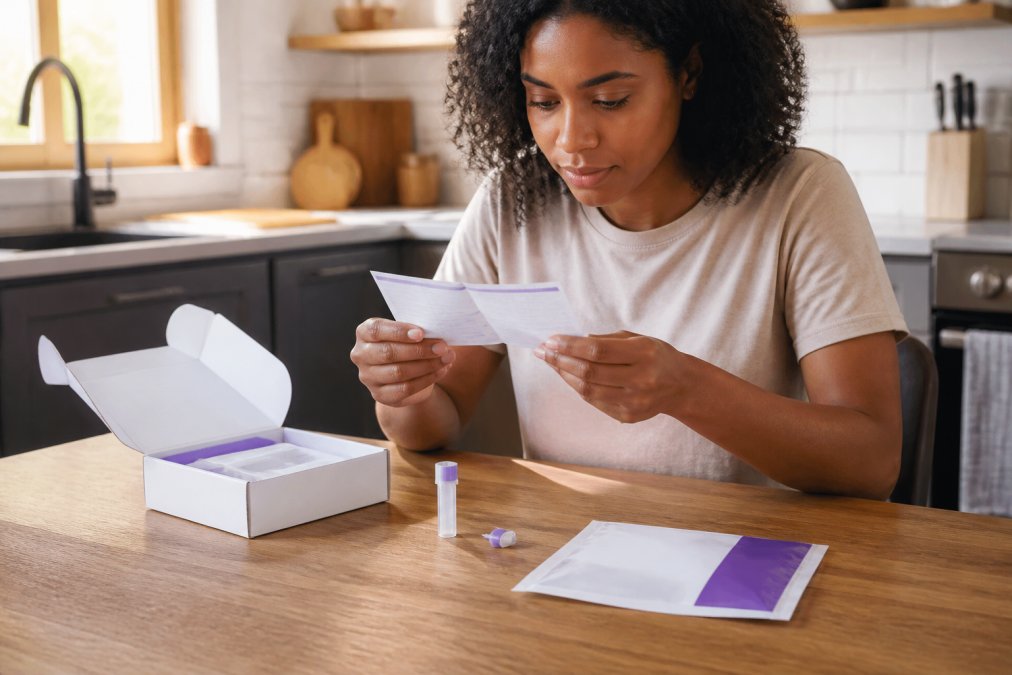
Bien-Etre: Clinical-Grade NAD⁺ Testing
Bien-Etre specialises in clinical-grade NAD⁺ measurement and NMN supplements, testing areas most providers do not cover.
NAD⁺ (nicotinamide adenine dinucleotide) is a coenzyme central to cellular energy metabolism. Many people experiencing unexplained fatigue are curious about NAD⁺ status, but most "NAD⁺ tests" lack clinical validation. Bien-Etre's testing is run through accredited laboratories with clinical diagnostic rigour, an actual biochemical analysis, not a wellness proxy. Results arrive as clear, jargon-free reports designed for direct discussion with your GP or dermatologist.
Best for: Adults with unexplained fatigue wanting measurable NAD⁺ data.
Pros:
- Clinical-grade NAD⁺ testing with laboratory validation
- Reports designed for practical use
- At-home collection without clinic visits
Cons:
- Specialist focus; not a broad-spectrum blood panel provider
Medichecks: Broadest Test Catalogue
Medichecks offers the most comprehensive option in the UK market with over 300 tests covering thyroid function, serology, and immunology panels. Every test is analysed at UKAS-accredited laboratories with a doctor's report contextualising findings. Collection options include finger-prick at home, clinic venous draw, or home nurse visit.
Best for: Individuals with specific health concerns requiring niche biomarkers; those wanting a one-stop shop for multiple tests over time.
Pros:
- 300+ tests covering virtually every common biomarker
- UKAS-accredited laboratory analysis
- Doctor's report included
- Multiple sample collection methods
Cons:
- GP review may incur additional costs for some panels
- Home nurse visit incurs extra fees
Thriva: Best for Ongoing Subscription Monitoring
Thriva's strength is its subscription model, turning health screening into a habit. Quarterly testing with a consistent panel lets you track trends in key biomarkers over time, far more informative than a single snapshot.
The Tasso+ autodraw device is a notable differentiator. Rather than a traditional lancet, it uses a small vacuum-assisted device on the upper arm, which many users find less painful and easier to use correctly. This improves sample quality and reduces haemolysis risk.
Best for: Individuals monitoring metabolic health, nutritional deficiencies, or hormonal changes across multiple quarters.
Pros:
- Subscription model encourages consistent monitoring
- Tasso+ device reduces anxiety and improves sample quality
- Dashboard tracking visualises trends over time
- GP reports included
Cons:
- Primarily finger-prick only; venous draw is an upgrade cost
- Preset packages offer less customisation for niche testing
Vitall: Fastest Turnaround with Included GP Review
Vitall's 48-hour turnaround from sample receipt to results is the fastest in the UK market for standard blood panels. Every test includes a GP consultation as standard. Collection options include finger-prick at home, clinic venous draw, or home nurse visit. UKAS-accredited laboratory analysis is standard.
Best for: Anyone needing results quickly with professional clinical interpretation included.
Pros:
- 48-hour turnaround is the fastest available
- GP consultation included with every test
- Flexible sample collection including home nurse network
- UKAS-accredited analysis
Cons:
- Generally higher price point than comparable panels
- Narrower test catalogue than Medichecks for specialist needs
Forth With Life: Best for Athletes and Hormone Tracking
Forth With Life has built its reputation on hormone and fitness-related panels. The custom panel builder lets you construct a test around your specific performance or recovery goals. Results are typically available in two working days and are reviewed by a clinician before delivery.
Research indicates that 95% of Forth With Life's samples are analysed by an NHS laboratory partner. For athletes and fitness-focused individuals tracking hormone profiles, iron status, and metabolic markers, this is a strong option.
Best for: Runners, cyclists, and gym-focused individuals tracking recovery biomarkers; women investigating hormonal changes including perimenopause markers.
Pros:
- Custom panel builder for tailored testing
- Strong hormone and fitness panel focus
- Clinician-reviewed results with personalised health scores
- NHS lab partner for analysis
Cons:
- Venous draw at select clinics costs extra
- Specialist tests outside fitness and hormones may be limited
Lola Health: Premium Phlebotomist Home Visit
Lola Health occupies the premium end of the market. A qualified phlebotomist visits your home to perform a venous blood draw, producing a higher-quality sample than any finger-prick method. Panels cover 45 to 70 biomarkers, results are reviewed by GMC-registered doctors, and laboratory analysis is UKAS-accredited.
Best for: Individuals wanting clinical-grade venous collection without attending a clinic; those running comprehensive longevity or health optimisation panels where sample quality is paramount.
Pros:
- Professional phlebotomist home visit for venous blood
- Extensive biomarker coverage (45-70 markers per panel)
- GMC-registered doctor review
- UKAS-accredited laboratory processing
Cons:
- Higher starting price due to phlebotomy service
- May exceed needs for single-marker or basic health checks
Healthpath: Specialist Gut Microbiome Testing
Healthpath analyses stool samples rather than blood, examining over 100 biomarkers including zonulin (intestinal permeability), H. pylori, parasites, pathogenic bacteria, and microbiome diversity. Results take three to four weeks but come with personalised food and supplement plans and practitioner support.
Best for: Individuals with persistent digestive symptoms, IBS-type presentations, or those understanding the microbiome basis of energy, mood, or immune function.
Pros:
- 100+ gut biomarkers including H. pylori and parasites
- Personalised food and supplement plans included
- Practitioner report and expert feedback
- Accredited lab partners
Cons:
- 3-4 week turnaround is the longest on this list
- Higher price point than basic blood tests
CQC Registered Private Blood Tests: Why Regulation Matters
CQC registration confirms that a health service provider meets fundamental standards of quality and safety in England. For private blood testing services, CQC registration covers clinical oversight: how results are reviewed, how abnormal findings are communicated, and whether appropriate clinical governance structures exist.
UKAS accreditation applies to the laboratory processing your sample. CQC registration applies to the service provider managing your care pathway. According to Care Quality Commission guidance on independent health services, providers offering diagnostic services must meet specific fundamental standards including safe care and treatment, dignity and respect, and acting on concerns.
At-Home vs Clinic Blood Test Accuracy: What the Evidence Shows
For most standard biomarkers, thyroid function, cholesterol, vitamin D, ferritin, HbA1c, a well-collected finger-prick sample processed by an accredited laboratory produces results clinically comparable to a clinic venous draw.
Variables affecting accuracy are sample collection, not the laboratory itself. Haemolysis from excessive finger squeezing, insufficient sample volume, and delayed posting in hot weather are the most common sources of error. Providers using the Tasso+ autodraw device or including detailed collection instructions reduce these risks meaningfully.
False Positive and False Negative Rates
Test sensitivity is the probability a test correctly identifies a condition when present. Test specificity is the probability a test correctly returns a negative result when the condition is absent. Most at-home blood tests measure established biomarkers with well-characterised reference ranges, so sensitivity and specificity are comparable to laboratory testing.
The greater risk with at-home testing is misinterpretation of results just outside reference ranges. A result flagged as slightly low or high is not automatically clinically significant. This is why post-test clinical support matters: a clinician contextualises your results against your symptoms, history, and other markers.
How to Interpret At-Home Blood Test Results
Interpreting results correctly requires understanding what reference ranges represent and where to go when a result raises questions.

Understanding Reference Ranges
Reference ranges are intervals within which 95% of a healthy population's results fall. This means approximately 1 in 20 healthy people will have at least one result outside the reference range on any given panel, purely by statistical chance. On a comprehensive panel testing 20+ biomarkers, the probability of at least one incidental out-of-range result in a healthy person becomes quite high.
A single flagged result on a comprehensive panel is not automatically concerning. Patterns across multiple related biomarkers, combined with your symptoms and medical history, give results clinical meaning.
Providers including a doctor's or clinician's report, Medichecks, Vitall, Forth With Life, Lola Health, contextualise this for you. Bien-Etre's jargon-free reports translate biochemical analysis into actionable language for discussion with your healthcare provider.
Post-Test Clinical Support and Next Steps
Post-test clinical support is the most underrated factor in at-home testing. The best providers include clinician review as standard (Vitall, Lola Health), offer practitioner follow-up (Healthpath), or produce reports designed for GP discussion (Bien-Etre).
If your chosen provider does not include clinical support, plan your next step before testing: share results with your GP, use a private GP service for telephone consultations, or work with a registered nutritional therapist for nutrition-related results.
Integrating At-Home Lab Data with Wearables and Lifestyle Tracking
The most forward-thinking use of at-home lab test kits is as a layer of objective data alongside continuous monitoring from wearables. Devices tracking heart rate variability, sleep quality, blood oxygen, and activity load generate patterns that become far more interpretable with corresponding biomarker data.
For example, consistently poor HRV scores alongside low ferritin suggest iron-related fatigue affecting recovery. A wearable alone cannot explain why recovery metrics are declining; a blood test alone cannot show when decline began. Together, they create a more complete picture.
For athletes and health-optimisers: test biomarkers quarterly or after significant training blocks, note wearable trends in the two weeks before and after testing, bring both datasets to clinical consultations, and track longitudinally to show whether interventions work.
Which At-Home Lab Test Kit Should You Choose?
The right kit depends entirely on what question you are answering.
Your Goal |
Recommended Provider |
Key Reason |
|---|---|---|
Measure NAD⁺ levels or DNA skin analysis |
Bien-Etre |
Clinical-grade, personalised reports |
Test a specific or niche biomarker |
Medichecks |
300+ test catalogue |
Track biomarkers quarterly over time |
Thriva |
Subscription model with trend dashboard |
Get results fast with GP review included |
Vitall |
48-hour turnaround, GP consultation standard |
Hormone and fitness panel, custom build |
Forth With Life |
Custom panel builder, clinician review |
Premium venous draw at home |
Lola Health |
Phlebotomist home visit, 70 biomarkers |
Gut microbiome and digestive health |
Healthpath |
100+ gut markers, practitioner support |
For most people starting health monitoring, Medichecks or Vitall offer the best combination of breadth, accreditation, and clinical support. For those with specific concerns around cellular energy, skin ageing, or NAD⁺ status, Bien-Etre addresses a gap that standard blood panels do not cover.
Every provider on this list has UKAS-accredited laboratory analysis. That is your minimum standard. Do not compromise on it.
Choosing between providers is straightforward once you know what you are testing for. The harder challenge is knowing what to do with the results. Bien-Etre is designed to close that gap: clinical-grade NAD⁺ testing and DNA skin analysis delivered with clear, jargon-free reports that give you a personalised path for health and recovery, not a spreadsheet of numbers to decipher alone. Get started with Bien-Etre and move from guessing why you feel run down to understanding your biology with measurable, lab-backed data.
Frequently Asked Questions
Are at-home blood test kits as accurate as GP tests?
Finger-prick kits from accredited laboratories produce clinically valid results for most biomarkers, though venous draws remain the gold standard for certain panels. Diagnostic accuracy depends heavily on the laboratory's accreditation status (look for UKAS-accredited facilities), the specific test, and how carefully you follow the collection instructions. For complex hormone profiles or high-stakes decisions, a venepuncture sample collected by a trained phlebotomist will generally reduce variability. Always discuss results with a qualified clinician before making treatment decisions.
Do I need a doctor's referral for private at-home blood tests?
No. At-home lab test kits in the UK are patient-initiated, meaning you can order and complete them without a GP referral. This is one of the main advantages of private health screening. That said, if your results fall outside reference ranges, most reputable providers include a clinician review or recommend you follow up with your GP. Certain regulated tests, particularly those used for diagnostic purposes under the MHRA framework, may have additional requirements depending on the provider.
What should I look for in a CQC-registered testing provider?
Check that the laboratory processing your sample holds UKAS accreditation (ISO 15189 for medical laboratories) and that any clinical services attached to the provider are registered with the Care Quality Commission. A CQC-registered provider has met defined standards for safety, clinical governance, and patient care. Also confirm the provider uses validated assays, includes clinician-reviewed reports, and has a clear data privacy policy covering how your biological samples and genetic data are stored and handled under UK GDPR.
How do I interpret at-home blood test results without a doctor?
Most reputable at-home lab test kits supply results alongside reference ranges and plain-language explanations, so you can see whether each biomarker sits within the expected band for your age and sex. Focus on markers flagged as outside range first. Avoid drawing conclusions from a single data point; trends across repeat tests are more meaningful. Providers like Bien-Etre and others offer jargon-free reports designed for this purpose. For anything unexpected, book a follow-up with your GP or a private clinician who can contextualise the biochemical analysis alongside your symptoms.
Is the NAD⁺ at-home test clinically validated?
NAD⁺ testing is an emerging area of metabolic health screening. Bien-Etre's NAD⁺ test is processed through accredited laboratories using validated assay methods, which means the measurement itself meets clinical diagnostic standards. What the result means for your individual health still requires interpretation in the context of your wider biomarker profile and symptoms. It is distinct from consumer ancestry DNA tests, which do not measure biochemical markers at all. Discuss your NAD⁺ result with a healthcare provider who is familiar with metabolic health testing.
This article was written using GrandRanker