
Best Alternatives to VitaminLab for Health Tracking
Table of Contents
- Why People Switch from VitaminLab to Other Health Tracking Solutions
- Clinical-Grade NAD+ Testing: The Foundation of Cellular Health Tracking
- At-Home Diagnostic Testing for Health Optimization
- Building a Personalised Supplement Routine Based on DNA
- Comparison: Key Features and Pricing of Health Tracking Options
- Data Privacy and Ownership: What Matters When Choosing a Health Tracking Service
- How to Choose the Right Health Tracking Alternative for Your Goals
- Conclusion
Last Updated: August 23, 2026
Why People Switch from VitaminLab to Other Health Tracking Solutions
When you've been relying on one health tracking platform, switching feels like starting over. But many people abandon their current service when it stops delivering the insights they actually need. The reasons vary: limited testing options, generic reports that don't speak to your specific situation, privacy concerns, or simply discovering that alternatives offer more personalized depth at better value.
The shift toward health tracking alternatives has accelerated because people are tired of one-size-fits-all wellness advice. They want measurable data tied to their unique biology, not population averages. They want to understand why they feel fatigued, how their hormones are shifting, or what their skin actually needs to age well. And they want that information without endless clinic visits or jargon-filled reports that require a medical degree to interpret.
Bien-Etre helps you to move beyond guessing by providing clinical-grade testing at home. But the broader landscape of health tracking alternatives now includes several compelling options, each with distinct strengths depending on your goals, budget, and what you're actually trying to measure.
Below, we'll walk you through the key alternatives, how they compare, and how to pick the right one for your situation.
Clinical-Grade NAD+ Testing: The Foundation of Cellular Health Tracking
NAD+ (nicotinamide adenine dinucleotide) is a coenzyme involved in over 500 cellular functions, from energy production to DNA repair. Your levels naturally decline with age, and by your forties, they can drop by up to 50% (peer-reviewed research). This decline affects how you recover, how much energy you have, and how quickly your cells age.
Clinical-grade NAD+ testing measures your baseline levels with precision. Unlike consumer wellness gadgets that estimate, clinical testing uses validated laboratory protocols to give you a number you can actually track over time. This matters because you can't optimize what you don't measure.
The difference between a clinical test and a rough estimate is significant. A clinical test tells you whether you're genuinely depleted or whether your fatigue comes from somewhere else entirely. That distinction changes everything about how you approach supplementation and recovery.
When you test your NAD+ levels, you establish a baseline. Then, after implementing a targeted protocol, whether that's supplementation, lifestyle changes, or both, you retest to see if your efforts actually moved the needle. This test-measure-adjust cycle is what separates data-driven health optimization from guessing.
Bien-Etre's NAD⁺ Intracellular Test uses accredited laboratory analysis with a simple at-home fingerprick sample. You get a personalised, plain-language report. The cost is £299.00 for the test alone, or you can pair it with supplementation through bundles like the Starter Pack at £299.00 (which includes one month of NAD+ supplement at no extra cost) or the 60 Day Cellular Recharge at £199.00 (which includes two months of NMN300).


Other platforms offer NAD+ testing, but many rely on third-party labs or provide less detailed interpretation. The advantage of clinical-grade testing is that your results are defensible, you can share them with your doctor or coach and have a meaningful conversation about what they mean for your specific situation.
At-Home Diagnostic Testing for Health Optimization
The shift from clinic-based testing to at-home diagnostics has fundamentally changed how people access health data. You no longer need to book an appointment, sit in a waiting room, or wait weeks for results. A fingerprick sample collected at your kitchen table, posted in a prepaid envelope, and analysed by an accredited lab, this is now the standard for many serious health trackers.
At-home diagnostic testing works because the science doesn't change based on location. What changes is convenience and cost. An at-home test removes barriers, which means more people actually get tested instead of putting it off indefinitely.
The quality of at-home testing depends entirely on the laboratory doing the analysis. Accreditation and equivalent standards matter because they mean the lab follows validated protocols and quality controls. A fingerprick sample is as reliable as a venipuncture sample for many biomarkers, NAD+, nutrient levels, hormonal markers, when the lab knows what it's doing (peer-reviewed research).
What separates premium at-home testing from basic options is the reporting. A raw number means nothing without context. The best services translate your results into actionable insights: what the number means for your health, how it compares to optimal ranges, and what you can actually do about it. Bien-Etre's reports are written in plain language specifically because medical jargon creates more confusion than clarity.
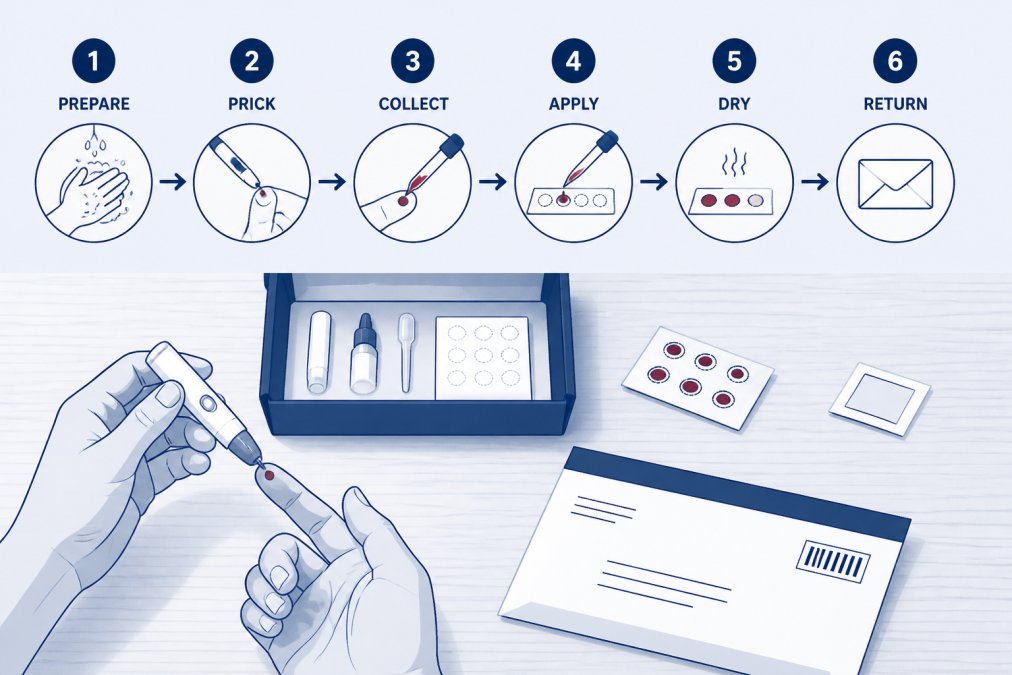
The logistics matter too. Clear instructions, and a tracking system so you know when your sample arrives and when your results are ready, these details separate a smooth experience from a frustrating one.
Building a Personalised Supplement Routine Based on DNA
Your genes influence how you metabolise nutrients, how you respond to caffeine, whether you're prone to inflammation, and how your body handles stress. A generic supplement routine ignores all of this. It treats everyone like they have the same biology, which is why so many people take supplements that don't actually help them.
DNA-based supplement recommendations work by analysing genetic variants that affect nutrient metabolism. If your genes show you process folate poorly, a standard multivitamin won't help, you need a form your body can actually use. If you're genetically sensitive to caffeine, a pre-workout supplement will backfire. If your genes predispose you to higher inflammation, your supplement priorities shift entirely.
Bien-Etre's DNA Nutrition Test at £199.00 analyses genetic factors that influence how you process vitamins and minerals (folate, B12, vitamins A/C/D/E, magnesium, zinc, selenium, choline, omega-3s), how you handle food sensitivities (lactose, gluten, caffeine, salt), and your metabolic health markers (blood sugar, weight context, alcohol, iron). The report includes specific food and supplement guidance you can discuss with your healthcare provider or coach.
This is fundamentally different from DNA tests marketed primarily for ancestry. Those tests answer the question "Where did my family come from?" This test answers "What does my biology need to function optimally?" The difference is everything.
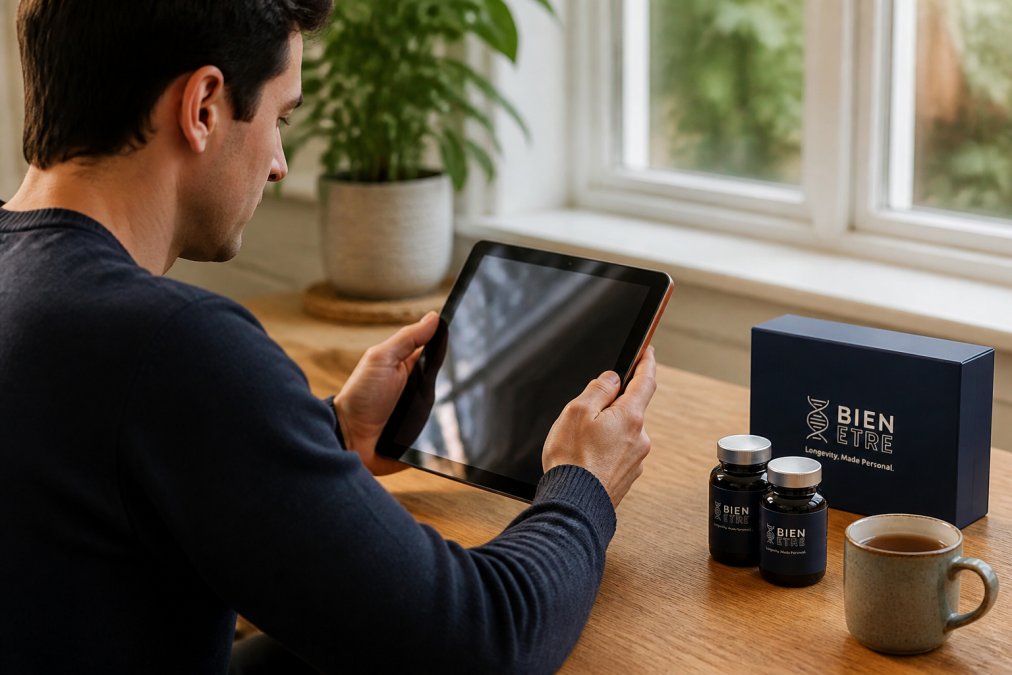
A personalised supplement routine built on DNA data does several things. First, it stops you from wasting money on supplements your body can't use effectively. Second, it identifies gaps in your nutrition that you might not have suspected. Third, it gives you a framework for adjusting your routine as your life changes, when you age, when you start training differently, when your stress levels shift.
The catch is that DNA testing only tells you what your genes suggest. It doesn't account for your current nutrient levels, your actual absorption, or how you respond to specific supplements. That's why the best approach combines DNA testing with biomarker testing (like NAD+, or nutrient level panels) to see both what your genes predict and what your current biology shows.
Comparison: Key Features and Pricing of Health Tracking Options
| Feature | Bien-Etre NAD⁺ Test | Bien-Etre DNA Nutrition Test | Bien-Etre 60 Day Bundle | At-Home General Wellness Trackers | Clinic-Based Testing |
|---|---|---|---|---|---|
| Clinical-grade NAD⁺ testing | ✓ | , | ✓ | , | ✓ |
| DNA nutrition analysis | , | ✓ | , | Partial | , |
| At-home collection | ✓ | ✓ | ✓ | ✓ | , |
| Plain-language report | ✓ | ✓ | ✓ | Variable | Often jargon-heavy |
| Included supplementation | Optional (bundles) | , | ✓ (60 days NMN300) | , | , |
| Cost (starting) | £299 | £199 | £199 | £50-£150 | £200-£500+ per visit |
| Results timeline | 7-10 working days | 7-10 working days | 7-10 working days | 2-4 weeks | 1-2 weeks (after appointment) |
| Privacy & data ownership | Clear, UK-based | Clear, UK-based | Clear, UK-based | Variable (often unclear) | Protected by NHS/GDPR |
The choice between these options depends on what you're actually trying to optimise. If your primary concern is cellular energy and recovery, NAD+ testing is your foundation. If you're building a supplement routine and want it tailored to your genetics, DNA nutrition testing makes sense. If you want both, and many people do, the bundles offer better value than buying separately.
Clinic-based testing remains relevant if you have a specific medical concern or need to involve your doctor from the start. But for baseline health optimisation and ongoing tracking, at-home testing is faster, cheaper, and increasingly thorough.
Data Privacy and Ownership: What Matters When Choosing a Health Tracking Service
Your genetic data and health biomarkers are sensitive. You have every right to know where that data goes, who can access it, and whether it's being sold or shared. This is where many health tracking services fall short, they're vague about privacy, bury terms in dense legal language, or operate in jurisdictions with weak data protection.
Bien-Etre operates under UK GDPR and stores data securely in UK facilities. Your genetic information and test results belong to you. You can download your reports, share them with your healthcare provider, and request deletion at any time. This clarity matters because it means you're not trading your health data for convenience.
Other services vary widely. Some use your data for research (which may or may not be disclosed clearly). Some sell anonymised data to pharmaceutical companies. Some operate in jurisdictions where data protection is weaker. None of these approaches are inherently wrong, but you should know what you're agreeing to before you send in a sample.
The practical question is simple: Can you easily access your own data? Can you download it in a portable format? Can you delete it if you change your mind? If the answer to any of these is unclear or "no," that's a red flag.
How to Choose the Right Health Tracking Alternative for Your Goals
Start by defining what you actually want to measure. Are you tracking energy and recovery? Hormonal health? Nutritional status? Skin aging? Inflammation? Different tests answer different questions, and bundling tests you don't need is wasteful.
Next, consider your timeline. Do you need answers now, or are you building a long-term tracking system? If you're dealing with acute symptoms (unexplained fatigue, hormonal disruption), you might want to start with a targeted test and retest in 8-12 weeks. If you're optimising performance, you might establish a baseline and then retest annually.
Budget matters, but it's worth separating the test cost from the total cost. A £199 test is only valuable if you act on the results. If the results lead you to supplements you don't need, or if the report is so unclear that you don't know what to do next, that cheap test became expensive. Conversely, a £299 test that leads to a clear, actionable protocol and measurable improvement is a bargain.
Consider your relationship with your healthcare provider. Some people want to share results with their doctor and discuss implications together. Others are more self-directed. If you're in the first camp, choose a service that provides reports in a format your doctor will take seriously, clinical-grade testing with clear methodology beats a wellness app report every time.
Finally, think about what happens after you get your results. Do you want supplementation guidance? Lifestyle recommendations? A coach to help you interpret the data? Bien-Etre provides plain-language reports designed for discussion with healthcare providers or coaches, but you're responsible for the next step. Other services might offer more hand-holding, or less, depending on what you prefer.
Switching from your current health tracking service is worth it only if the alternative actually delivers better insights or a better experience. The landscape of health tracking alternatives has matured enough that you have real choices. Clinical-grade NAD+ testing, DNA-based nutrition analysis, and transparent data ownership are no longer luxuries, they're standard features of serious health optimisation platforms.
Bien-Etre's approach combines all three: clinical-grade testing, personalised insights based on your biology, and complete transparency about how your data is handled. Whether you start with the NAD⁺ Intracellular Test to understand your cellular health, the DNA Nutrition Test to build a supplement routine that actually fits your genetics, or a bundle that gives you both with supplementation included, you're choosing a platform built on the principle that generic advice is the enemy of real progress. Get started with Bien-Etre and move from guessing about your health to knowing it.
Frequently Asked Questions
How do at-home diagnostic tests compare to wearable health trackers?
At-home diagnostic tests and wearables serve different purposes. Wearables track daily activity, heart rate and sleep patterns in real time, while at-home diagnostic tests measure specific biomarkers like NAD+ levels or genetic factors through laboratory analysis. Many people use both together: wearables provide continuous lifestyle data, whilst diagnostic tests offer detailed snapshots of cellular health and metabolism. For example, a diagnostic NAD+ test reveals your baseline cellular energy status, which you can then monitor through lifestyle changes tracked by a wearable device.
What should I look for when choosing a health tracking service?
Focus on three key areas: test accuracy (look for accredited laboratory analysis), report clarity (results should be explained in plain language, not jargon), and actionability (the service should help you understand what to do with your results). Consider whether the service integrates with your doctor or health coach, offers follow-up testing to measure progress, and prioritises data privacy. Check whether you receive a downloadable report to share with your healthcare provider, and whether the service provides support in interpreting results.
Are there UK-based alternatives for lab-backed personalised supplement routines?
Yes. Services offering DNA-based nutrition analysis and cellular health testing provide personalised supplement guidance rooted in your biology rather than generic recommendations. These typically combine genetic testing to understand how you metabolise nutrients with baseline biomarker testing (like NAD+ levels) to track cellular health. The best options deliver clear reports explaining which nutrients your body may need, personalised dosing based on your genetics, and the ability to retest after supplementing to measure real progress. Look for services with accredited laboratory partners and plain-language reporting.
How is clinical-grade NAD+ testing different from other cellular health tests?
Clinical-grade NAD+ testing measures your intracellular nicotinamide adenine dinucleotide levels using accredited laboratory standards, the same rigour applied in clinical diagnostics. This differs from general wellness tests because it quantifies a specific molecule directly involved in over 500 cellular functions, including energy production and recovery. The test uses dried blood spot collection at home but undergoes the same analytical validation as hospital-based testing. Results are meaningful only if the laboratory uses validated protocols; not all NAD+ measurements meet clinical standards. A true clinical-grade test enables you to establish a baseline and retest after supplementation to verify whether your protocol is actually raising your NAD+ levels.
What happens after I get my health tracking results?
Quality health tracking services provide clear, actionable reports you can discuss with your doctor, nutritionist or coach. Your results should explain what the data means for your health, suggest practical next steps (such as dietary changes or supplementation), and offer a secure digital report to download and share with healthcare professionals. Many services also enable retesting after a set period (typically 90 days) so you can measure whether your protocol is working. Ask whether the service offers guidance during interpretation, access to a practitioner for questions, or integration with your existing healthcare provider.
This article was written using GrandRanker