
Clinical-Grade NAD Testing for Recovery
Table of Contents
- What Is NAD+ and Why Recovery Depends on It
- Why Your NAD+ Levels Decline With Age
- How to Interpret NAD+ Blood Test Results
- NAD+ IV Therapy Benefits for Recovery vs Oral Supplementation
- At-Home Diagnostic Testing for Longevity and Cellular Repair
- Clinical-Grade NAD Testing vs Standard Testing: What Sets Them Apart
- Using Your NAD+ Data to Optimise Recovery and Performance
- Conclusion
Last Updated: August 19, 2026
What Is NAD+ and Why Recovery Depends on It
NAD+, or nicotinamide adenine dinucleotide, is a coenzyme found in every living cell that plays a central role in cellular energy production and repair. Your cells rely on NAD+ to convert nutrients into ATP, the energy currency that powers everything from muscle contraction to cognitive function. Without adequate NAD+ levels, your cells struggle to generate the energy needed for recovery, repair, and optimal performance.
The reason recovery depends on NAD+ is straightforward: damaged cells need energy to repair themselves. Whether you're recovering from intense training, managing fatigue, or dealing with the accumulated effects of aging, your mitochondria, the powerhouses of your cells, require sufficient NAD+ to function. When NAD+ levels drop, so does your capacity for cellular repair, which directly impacts how quickly you recover and how you feel day-to-day.
At Bien-Etre, we've found that many people experiencing unexplained fatigue or slow recovery don't realise their NAD+ levels may be compromised. They assume fatigue is normal or inevitable, when in fact measurable deficiencies in this single coenzyme can explain why they feel run down. Understanding your individual NAD+ status, rather than assuming you're fine based on generic population averages, is the first step toward targeted recovery optimisation.
NAD+ also activates sirtuins, a family of enzymes that regulate cellular stress responses and longevity pathways. This connection between NAD+, sirtuin activation, and cellular repair has made NAD+ a focus of longevity research and recovery optimisation protocols across clinical and athletic communities.
Why Your NAD+ Levels Decline With Age
NAD+ production naturally decreases with age, a process that begins around your 30s and accelerates significantly after 50. This decline isn't a mystery, it's a predictable consequence of how your cells handle metabolic stress over time. As you age, the enzymes responsible for NAD+ synthesis become less efficient, and simultaneously, your cells consume NAD+ faster due to increased DNA damage and oxidative stress.
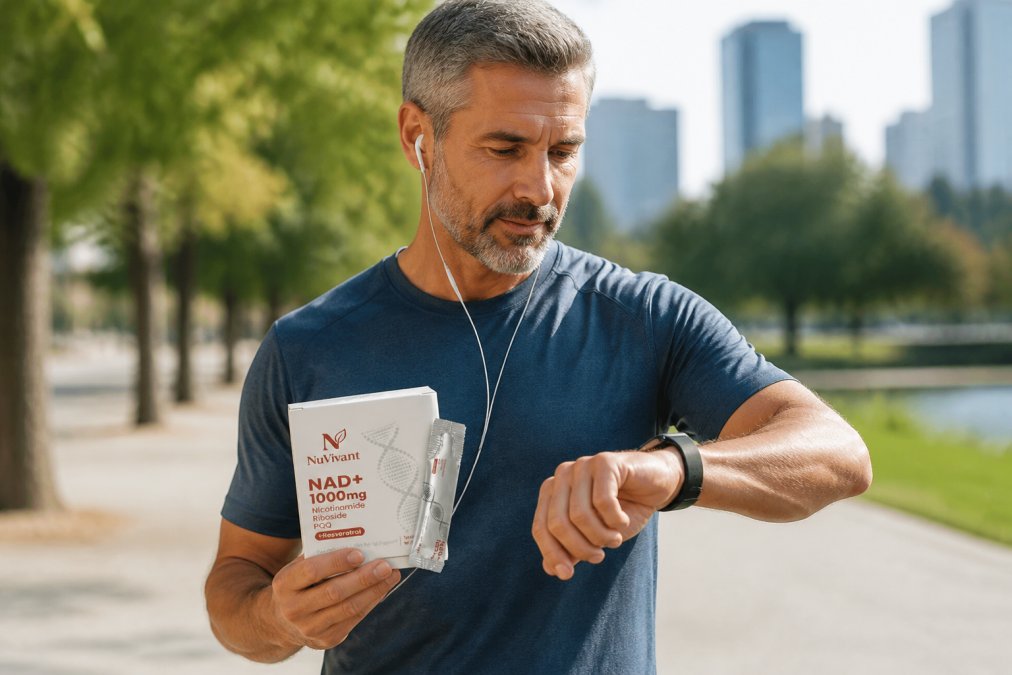
The decline accelerates because of a vicious cycle: lower NAD+ means less efficient cellular repair, which leads to more accumulated damage, which consumes even more NAD+ in repair attempts. By the time you reach your 50s or 60s, NAD+ levels can drop by 50% or more compared to your 20s. This explains why recovery slows, fatigue sets in, and age-related conditions become more common.
Several factors accelerate this decline beyond age alone. Chronic stress, poor sleep, sedentary behaviour, and oxidative stress from inflammation all deplete NAD+ faster. This is why two people of the same age can have vastly different NAD+ levels, their lifestyle and stress exposure matter significantly.
The clinical-grade NAD testing offered by Bien-Etre measures your actual intracellular NAD+ levels, not estimates or population averages. This matters because your individual decline trajectory is unique. Some people maintain higher NAD+ levels into their 60s due to genetics and lifestyle; others see sharper drops earlier. Without testing, you're guessing.

How to Interpret NAD+ Blood Test Results
A clinical-grade NAD+ blood test measures the concentration of NAD+ in your whole blood, typically expressed in micromolar units (µM). Normal ranges vary slightly between laboratories, but generally, healthy adults show NAD+ levels between 200-500 µM, with optimal levels for recovery and longevity typically above 300 µM.
When you receive your results, the key number to focus on is your absolute NAD+ concentration. A result of 250 µM indicates lower NAD+ availability for cellular repair compared to 400 µM. The difference isn't trivial, it translates to measurable differences in recovery speed, energy levels, and mitochondrial function.
What makes clinical-grade testing different from standard blood work is the methodology. Clinical-grade tests use validated assays that measure intracellular NAD+ with precision, whereas routine blood panels often don't include NAD+ measurement at all. This is why many people have never seen their NAD+ level on a standard lab report, it simply isn't measured unless specifically requested.
Interpreting your results also requires context. A NAD+ level of 280 µM in a 58-year-old athlete might indicate room for optimisation, whereas the same level in a 72-year-old could be considered reasonable. Age, training intensity, and recovery goals all influence what "optimal" means for you personally. This is why Bien-Etre's reports translate raw numbers into personalised insights rather than leaving you to decipher clinical data alone.
One critical detail: NAD+ levels fluctuate throughout the day based on circadian rhythms, sleep quality, and recent activity. Testing should ideally be done at a consistent time of day for reliable baseline measurement. Your first test establishes your baseline; subsequent tests measure whether your recovery optimisation strategy is working.
NAD+ IV Therapy Benefits for Recovery vs Oral Supplementation
NAD+ IV therapy delivers nicotinamide adenine dinucleotide directly into the bloodstream, bypassing the digestive system entirely. This intravenous approach achieves peak NAD+ concentrations in minutes, making it attractive for athletes and individuals seeking immediate cellular repair support. The bioavailability is superior to oral routes because the coenzyme enters circulation without degradation.
However, IV therapy has significant practical limitations. Sessions typically last 1-4 hours, require clinical administration, and involve ongoing costs. For most people managing recovery on a realistic timeline, oral supplementation offers a more sustainable approach.
Oral NAD+ precursor compounds, primarily nicotinamide riboside (NR) and nicotinamide mononucleotide (NMN), work differently. These compounds are absorbed through the digestive system and converted into NAD+ within your cells via metabolic pathways. Bioavailability is lower than IV administration, but consistent daily supplementation builds NAD+ levels over weeks and months.
The practical difference comes down to your situation. IV therapy suits acute recovery needs or intensive training phases where you want rapid NAD+ elevation. Oral supplementation works better for sustained, long-term NAD+ optimisation, which is what most people actually need for consistent energy and recovery.
Bien-Etre's approach combines clinical-grade NAD+ testing with oral supplementation bundles like the 60 Day Cellular Recharge, NAD⁺ Test + 60 Days of NMN300, which pairs your baseline NAD+ test with two months of NMN300 supplementation. This strategy lets you measure where you start, apply a consistent intervention, and track whether your NAD+ levels improve, giving you data-backed evidence of what actually works for your unique biology. boost energy naturally.
At-Home Diagnostic Testing for Longevity and Cellular Repair
At-home diagnostic testing has fundamentally changed how people approach health optimisation. Rather than waiting for symptoms or scheduling clinic appointments, you can measure key biomarkers from home and act on real data about your current state.
Clinical-grade NAD+ testing at home works through a simple blood collection kit. You prick your finger, collect a small blood sample, and mail it to an accredited laboratory. The sample is analysed using validated assays that measure intracellular NAD+ concentration with clinical precision. Results typically return within 5-10 business days with a detailed report explaining what your NAD+ level means for your recovery and cellular repair capacity.
The advantage for longevity-focused individuals is clear: you get objective data about a key longevity biomarker without scheduling a doctor's appointment or explaining to a GP why you want NAD+ testing (which many standard practitioners don't yet routinely order). This is particularly valuable for people aged 40-60 who are proactive about optimisation but don't have obvious clinical symptoms that warrant traditional medical investigation.
At-home testing also enables longitudinal tracking. Your first test establishes a baseline. After implementing recovery strategies, whether that's supplementation, sleep optimisation, or stress management, a follow-up test shows whether your NAD+ levels have actually improved. This feedback loop is what separates guesswork from data-driven recovery.
The reported results from at-home testing should be clear and actionable. Rather than raw numbers alone, clinical-grade reports interpret your NAD+ level in context of your age, fitness level, and recovery goals. Bien-Etre's reports, for instance, explain what your specific NAD+ concentration means for cellular repair capacity and provide evidence-based recommendations for optimisation.
Clinical-Grade NAD Testing vs Standard Testing: What Sets Them Apart
Not all NAD+ tests are equivalent. The difference between clinical-grade NAD testing and standard or "wellness" testing comes down to methodology, validation, and interpretation.
Clinical-grade NAD testing uses validated assays that measure NAD+ concentration with high precision and accuracy. These assays have been tested in peer-reviewed research settings and meet standardised quality benchmarks. The laboratories performing clinical-grade testing maintain accreditation and follow strict protocols for sample handling, analysis, and result reporting. Your results come with clear reference ranges and contextualised interpretation.
Standard or consumer-level NAD+ testing, by contrast, often uses less rigorous methodologies or lacks proper validation. Some "wellness" tests measure NAD+ precursors rather than NAD+ itself, which doesn't give you the data you actually need. Others provide numbers without meaningful interpretation, leaving you to guess what your result means.
The practical consequence is significant. A clinical-grade test tells you definitively whether your NAD+ level is optimal, borderline, or low for your age and fitness level. A standard test might give you a number that means nothing without proper context or validation.
Bien-Etre's NAD⁺ Intracellular Test is clinical-grade, run by accredited laboratories using validated methodology. This is why your results come with personalised interpretation rather than just raw data. You're not paying for a number; you're paying for actionable insight about your cellular repair capacity.
Another distinction: clinical-grade testing often measures NAD+ in whole blood or specific cell types, whereas some consumer tests measure NAD+ in saliva or other matrices where the measurement is less reliable. The matrix matters because NAD+ concentrations vary significantly across different tissues and fluids.
Using Your NAD+ Data to Optimise Recovery and Performance
Once you have your baseline NAD+ measurement, the next step is using that data to inform your recovery strategy. This is where clinical-grade testing becomes genuinely useful, it moves you from generic advice to personalised optimisation.
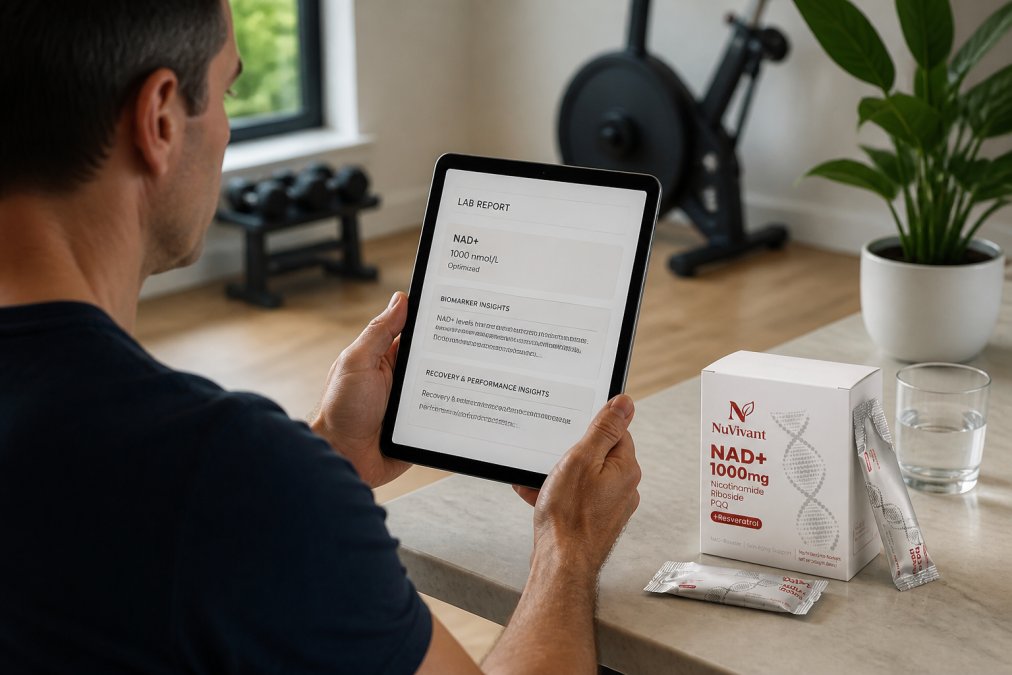
If your NAD+ level is below 300 µM, supplementation with NAD+ precursors is a logical first step. The Bien-Etre Starter Pack combines your baseline NAD+ test with one month of NAD+ supplementation, giving you a concrete intervention to measure. After 30 days, many people report improved energy and faster recovery, but the real validation comes from a follow-up test showing whether your NAD+ levels have actually risen.

For athletes or high-performing individuals, NAD+ data informs training recovery decisions. If your NAD+ is borderline low, you might prioritise sleep optimisation and reduce training intensity temporarily until supplementation raises your levels. If your NAD+ is optimal, you have confidence that your current recovery practices are working.
The 60 Day Cellular Recharge bundle takes this further, pairing your baseline test with two months of consistent NMN300 supplementation. This duration allows sufficient time for NAD+ levels to stabilise at a new, higher baseline. A follow-up test after 60 days shows whether the intervention has worked for your unique biology, because NAD+ response to supplementation varies significantly between individuals based on genetics and metabolism.
NAD+ data also contextualises other recovery metrics. If you're tracking HRV (heart rate variability), sleep quality, or workout recovery times, your NAD+ level provides a biological explanation for what you're observing. Low NAD+ might explain why your HRV is poor or why you're not recovering between training sessions. Raising NAD+ levels often improves these secondary metrics as a consequence.
The key insight: your NAD+ data personalises recovery strategy. Rather than following generic advice to "sleep more" or "supplement with this popular product," you're making decisions based on your actual cellular status. This is what data-driven recovery optimisation looks like, and it's why clinical-grade testing matters.
| Intervention | Timeframe | Best For | Expected Outcome |
|---|---|---|---|
| Baseline NAD+ test | 5-10 days | Establishing your starting point | Clear understanding of your NAD+ status |
| 30-day supplementation | 30 days | Quick assessment of your response to NR/NMN | Initial NAD+ improvement and energy gains |
| 60-day protocol | 60 days | Sustained NAD+ elevation and cellular repair | Measurable NAD+ increase, improved recovery |
| Follow-up testing | After intervention | Validating whether strategy worked | Data-backed evidence of improvement |
Clinical-grade NAD testing for recovery isn't trendy biohacking, it's personalised health optimisation based on measurable biology. When you understand your actual NAD+ level, you stop guessing why you feel fatigued or why recovery is slow. You start making informed decisions about supplementation, training intensity, and lifestyle choices that directly address your cellular capacity for repair.
The Bien-Etre NAD⁺ Intracellular Test gives you that clarity. Accredited labs run validated NAD⁺ testing to ensure your results are reliable and actionable. Rather than following population-average recommendations, you're working with data specific to your unique biology. Get started with the Starter Pack, baseline test plus one month of supplementation, and see how personalised NAD+ optimisation changes your recovery and energy levels.
Frequently Asked Questions
Is NAD+ scientifically proven to aid physical recovery?
Clinical research shows NAD+ plays a central role in cellular energy production and mitochondrial function, both essential for recovery. Studies demonstrate that NAD+ supports ATP production, the energy currency your cells use to repair muscle, reduce inflammation and restore homeostasis after exercise. However, individual results vary based on baseline NAD+ levels, age and training intensity. Clinical-grade testing reveals your specific NAD+ status, helping you understand whether supplementation is likely to benefit your recovery profile.
What is the difference between clinical-grade and standard NAD testing?
Clinical-grade NAD testing uses validated pharmacokinetics protocols and whole blood analysis to measure intracellular NAD+ with diagnostic accuracy. Standard testing often relies on less rigorous methods or population averages. Clinical-grade testing provides precise biomarker data tied to your individual cellular repair capacity, enzyme activity and sirtuin activation patterns. This precision allows you to track dosage optimisation and recovery-specific metrics over time, rather than guessing whether supplementation is working.
How do I know if my NAD+ levels are low, and what should I do about it?
Clinical-grade NAD testing measures your intracellular NAD+ concentration and compares it to age-related baselines, revealing whether age-related decline is affecting your energy or recovery. Low NAD+ typically manifests as unexplained fatigue, slower recovery from exercise or cognitive fog. Your test report should explain what your specific level means for your recovery profile. From there, you can discuss supplementation strategies, oral precursor compounds like NR or NMN, lifestyle changes, or monitoring, with your healthcare provider based on your personalised data.
Can I use NAD+ testing to track my recovery progress over time?
Yes. Repeat clinical-grade NAD testing allows you to measure whether your supplementation, training or lifestyle changes are actually raising your NAD+ levels and supporting cellular repair. Athletes and fitness enthusiasts benefit from tracking NAD+ alongside other recovery biomarkers to validate whether their optimisation strategy is working. Longitudinal studies show that consistent monitoring helps identify which interventions improve your specific metabolic pathways and enzyme activity, enabling data-driven adjustments to your recovery protocol.
This article was written using GrandRanker