
Personalized Supplement Routine Based on DNA
Table of Contents
- What Nutrigenomics Actually Tells You About Your Body
- Nutrigenomics Testing UK: What to Expect Step by Step
- Building a Personalized Supplement Routine Based on DNA Results
- DNA Health Test Accuracy: What the Evidence Says
- GDPR and Genetic Data Privacy: What You Need to Know
- Cost-Benefit Analysis: Is a DNA-Based Supplement Plan Worth It?
- Conclusion
Last Updated: August 11, 2026
What Nutrigenomics Actually Tells You About Your Body
Nutrigenomics is the science of how your genetic makeup influences the way your body processes, absorbs, and responds to nutrients. Rather than applying population-wide guidelines to your diet, nutrigenomics analyses specific variations in your DNA to map where your metabolism may be working against you.
Generic supplement advice is built on averages. The recommended daily intake for vitamin D, for instance, is calculated across millions of people. Your genotype may mean you need significantly more, or that you convert it poorly regardless of intake. At Bien-Etre, we see this constantly: people who follow textbook nutrition plans and still feel exhausted, foggy, or nutritionally depleted.
According to the British Nutrition Foundation's guidance on personalised nutrition, genetic variation shapes individual micronutrient requirements. Nutrigenomics makes those variations visible.
Key Genetic Markers Analysed in a DNA Nutrition Test
A DNA nutrition test examines single nucleotide polymorphisms (SNPs), specific positions in your genome where variation affects biological function. The most relevant markers include:
- MTHFR, affects folate metabolism and methylation, with implications for B12 and homocysteine regulation
- VDR, governs vitamin D receptor sensitivity; variations explain why some people remain deficient despite supplementation
- FTO and PPARG, associated with fat metabolism and metabolic rate
- BCMO1, determines how efficiently you convert beta-carotene into active vitamin A
- CYP1A2, influences caffeine and nutrient metabolism speeds
These markers indicate predisposition, not certainty. But knowing your genetic predisposition shifts supplementation from guesswork into something considerably more targeted.
How Genotype Shapes Micronutrient Requirements
Your genotype creates a biological context that affects how much of any given nutrient your body can actually use. Two people with identical diets may end up with very different tissue-level nutrient status because their genotypes alter absorption rates, conversion efficiency, and excretion speed.
A person carrying two copies of a common MTHFR variant may struggle to convert standard folic acid into the active methylfolate form the body needs. The practical implication: standard supplementation does nothing, while methylated B vitamins make a measurable difference. This is dosage optimisation grounded in biology.
Nutrigenomics Testing UK: What to Expect Step by Step
At-Home Collection to Lab Report
The Bien-Etre DNA Nutrition Test arrives as an at-home kit. Collection involves a simple buccal swab rubbed against the inside of your cheek for roughly 30 seconds. No blood draw, no appointment. The sample goes back in the prepaid envelope and is processed in an accredited laboratory.
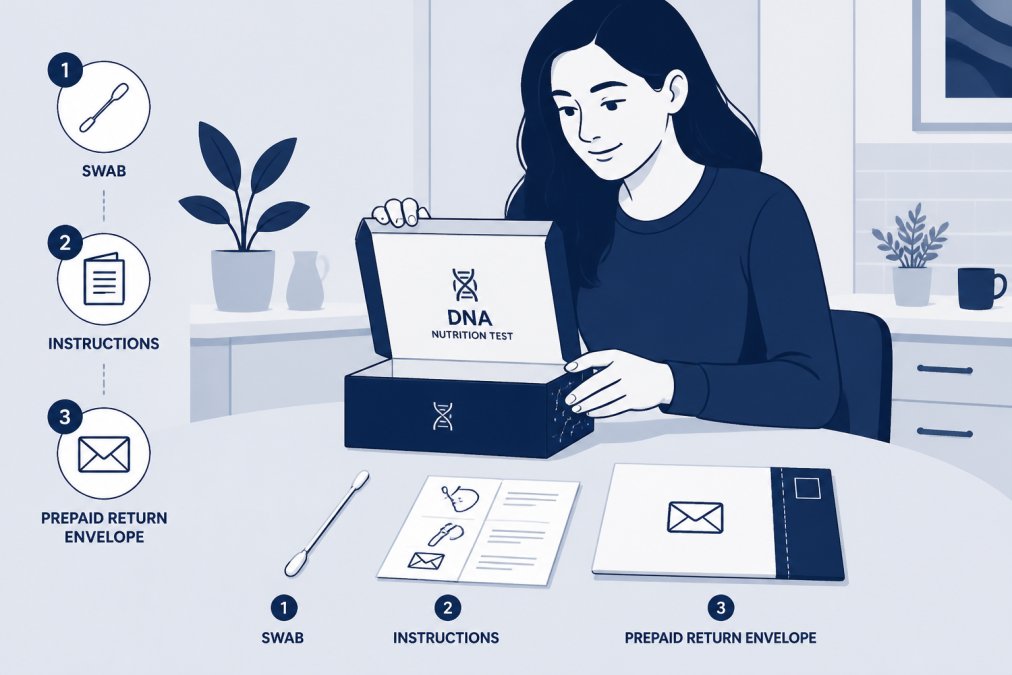
Most at-home DNA nutrition tests return results within two to four weeks. The report maps your SNP variants against established research on nutrient metabolism, producing a personalised nutrition and fitness profile built around your specific genes.
Reading Your Genetic Report Without the Jargon
Most people open their genetic report and hit a wall of terminology. A good report translates genotype into practical guidance: not "you carry the rs1801133 variant" but "your body processes folate less efficiently than average, so consider methylated B vitamins."
Bien-Etre's reports are designed to be jargon-free and actionable, so you can take them directly into a conversation with your GP or nutritionist.
Building a Personalized Supplement Routine Based on DNA Results
The biggest mistake people make after receiving DNA results is treating the report as a shopping list. A personalised supplement routine is not about adding everything flagged as suboptimal. It is about prioritising the interventions most likely to address your specific symptoms and health goals.
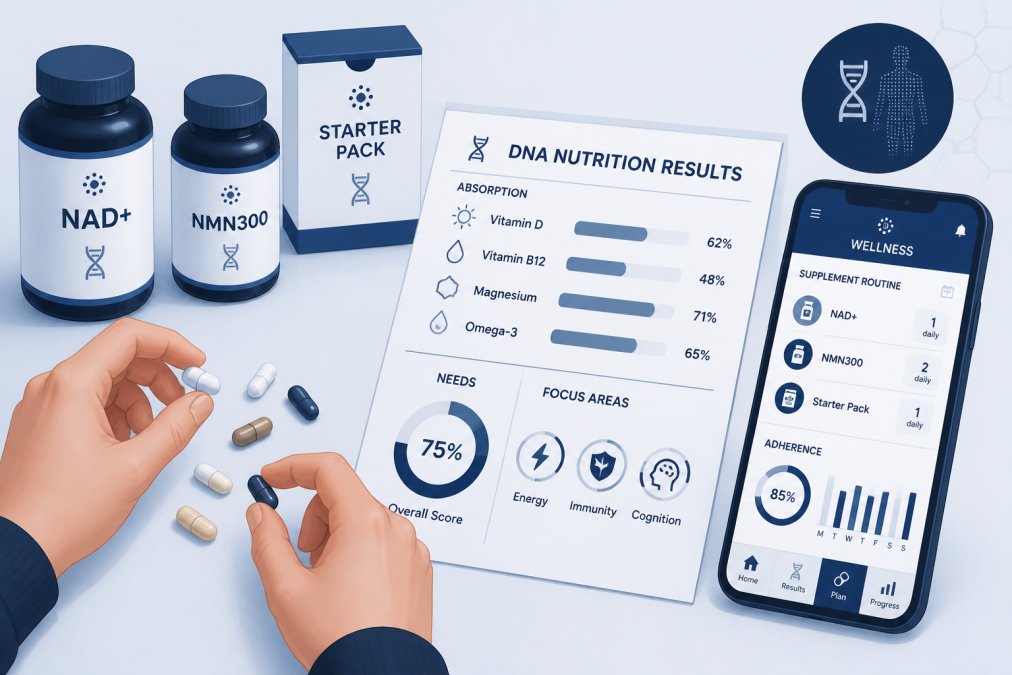
Start with the markers that map directly to your current complaints. If your primary concern is fatigue, focus on findings related to B vitamins, vitamin D, and iron metabolism before addressing secondary markers around omega-3 conversion. Targeted nutrition means working in order of impact.
| Genetic Marker | Potential Implication | Supplement Consideration |
|---|---|---|
| MTHFR variant | Reduced folate conversion | Methylated B vitamins |
| VDR variant | Lower vitamin D receptor sensitivity | Higher-dose D3 with K2 |
| BCMO1 variant | Poor beta-carotene conversion | Preformed vitamin A |
| FTO variant | Altered fat metabolism | Omega-3 dosage review |
| CYP1A2 variant | Slower antioxidant metabolism | Adjusted vitamin C timing |
Dosage Optimisation and Nutrient Absorption
Standard supplement labels list doses calibrated for the general population. Your personalised routine may require adjustments above or below those figures, depending on your variant profile.
Nutrient absorption is shaped by the form of the nutrient, timing relative to meals, and interactions with other supplements. Magnesium glycinate absorbs more readily than magnesium oxide for most people. Genetic data can further refine whether you need a higher dose, a different cofactor, or a split-dose approach.
Where Lifestyle Factors and Environment Fit In
Genetics sets the parameters. Lifestyle determines whether those parameters are ever reached.
A person with a VDR variant who spends eight hours a day outdoors in summer will likely maintain adequate vitamin D levels without supplementation. The same person working night shifts in winter will almost certainly be deficient. Sun exposure, sleep quality, alcohol intake, and gut microbiome health all modulate how your genetic predispositions express themselves in practice.
A personalised supplement routine based on DNA should be reviewed periodically, not set once and forgotten. Lifestyle factors shift, seasons change, and what your body needs at 45 may differ from what it needs at 55.
DNA Health Test Accuracy: What the Evidence Says
DNA health test accuracy is important to understand before investing in any genetic testing service. The honest answer is nuanced.
The underlying SNP analysis performed by accredited laboratories is technically reliable. Where accuracy becomes more complicated is in the interpretation layer, translating a genetic variant into a specific supplementation recommendation.
Long-Term Efficacy and Clinical Validation
The science of nutrigenomics is younger than the marketing around it suggests. Many gene-nutrient associations are well-established; the MTHFR-folate relationship has decades of clinical research behind it. Others are based on smaller studies or associations not yet replicated at scale.
According to the NHS's overview of genetic testing and its uses, genetic tests can provide useful information about health risks, but results should always be interpreted alongside other clinical information. Treat your DNA report as one input, not the final word.
Long-term efficacy studies on personalised supplementation based on genetic data are still emerging. The most credible evidence supports targeted interventions for specific, well-characterised variants. The broader claim that a fully customised supplement stack will transform health outcomes for everyone remains an area of active research.
DNA Testing vs Blood Testing for Nutritional Gaps
DNA testing reveals genetic predisposition, what your body is structurally inclined to do. Blood testing reveals current status, what is actually happening in your body right now. They answer different questions.
A blood test showing low vitamin D tells you that you are deficient today. A DNA test showing a VDR variant tells you why you are likely to become deficient repeatedly, and why standard doses may not resolve it. The two tests are complementary. Using blood testing alone means treating a symptom without understanding the mechanism. Using DNA testing alone means knowing the predisposition without confirming whether it has manifested.
GDPR and Genetic Data Privacy: What You Need to Know
Genetic data is classified as a special category of personal data under the UK General Data Protection Regulation, receiving the highest level of legal protection available. Any organisation processing your DNA in the UK must have an explicit lawful basis for doing so, and consent must be freely given, specific, and informed.
Before submitting a DNA sample, ask four questions:
- Where is my sample processed? Accredited UK laboratories operate under UK GDPR and the Data Protection Act 2018.
- How long is my raw genetic data retained? Some providers retain raw sequencing data indefinitely; others delete it after report generation.
- Is my data shared with third parties? This includes research partners, insurance companies, and pharmaceutical firms. Read the privacy policy carefully.
- Can I request deletion? Under UK GDPR, you have the right to erasure. Confirm the provider can action this for genetic data.
According to the Information Commissioner's Office guidance on special category data, organisations must implement appropriate technical and organisational measures when handling genetic information. This is a legal obligation.
Your genetic data is uniquely identifying and permanent. Unlike a compromised password, you cannot change your genome. Choose providers who treat this with seriousness and who are transparent about their data handling.
Cost-Benefit Analysis: Is a DNA-Based Supplement Plan Worth It?
The cost-benefit calculation depends on what you are comparing it against.
Many people spend considerable sums each year on supplements chosen without any personalised basis. A multivitamin, vitamin D, B-complex, probiotic, and omega-3, purchased because they seem sensible, not because there is evidence they address a specific gap. This approach is not cost-free; it is just cost-invisible.
A DNA nutrition test from Bien-Etre costs £199 and produces a personalised nutrition and fitness report built around your specific genes. That is a one-time cost that informs your supplementation decisions for years, because your DNA does not change. The value proposition is the reduction in wasted spend on supplements that do not address your actual biology.
For those who want to combine genetic insight with direct cellular health data, Bien-Etre also offers the Starter Pack combining a clinical-grade NAD⁺ test with one month of NAD+ supplementation at £299, or the 60 Day Cellular Recharge at £199, which adds two months of NMN300 to the clinical NAD⁺ baseline test.

If your primary health concerns are better addressed by a GP referral or specialist consultation, a DNA test is not a substitute. It is a precision tool for people who already have a reasonable baseline of health and want to optimise beyond generic advice.
Conclusion
Building a personalised supplement routine based on DNA is one of the most rational approaches to health optimisation available, but only if the science is applied honestly and the data is interpreted correctly. The gap between a useful genetic insight and an effective supplementation plan requires careful translation, good data, and the willingness to treat your results as a starting point rather than a prescription.
Bien-Etre's DNA Nutrition Test (£199) delivers a personalised nutrition and fitness report built around your genes, with clear, jargon-free findings designed to support informed conversations with your GP or nutritionist. If you are ready to stop guessing and start working with your biology, this is where that process begins.
Frequently Asked Questions
How does DNA testing for supplements work?
A DNA nutrition test analyses specific genetic markers linked to nutrient absorption, metabolism, and genetic predispositions such as vitamin D processing or MTHFR variants affecting folate metabolism. You collect a saliva or cheek swab sample at home, send it to an accredited lab, and receive a report mapping your genotype to personalised supplement recommendations. The result is a targeted nutrition plan built around your biology rather than population averages, helping you address genuine nutrient deficiencies rather than guessing.
Are DNA-based vitamin plans scientifically proven?
The field of nutrigenomics has a growing evidence base, particularly for well-studied genetic variants such as those affecting vitamin D, omega-3 metabolism, and folate pathways. However, the science is still maturing. Individual genetic markers are evidence-based, but translating an entire genetic profile into a precise supplement formulation involves interpretation that varies between providers. Choosing a service that uses accredited labs and is transparent about its methodology gives you the most clinically grounded foundation for a personalized supplement routine based on DNA.
Is it safe to share my genetic data for supplement recommendations?
Under UK GDPR, genetic data is classified as a special category of personal data, meaning providers must meet strict standards for collection, storage, and processing. Before submitting a sample, check that the provider states clearly how long data is retained, whether it is shared with third parties, and how you can request deletion. Reputable at-home testing services publish a transparent privacy policy covering these points. Reading it before purchase is the single most important step you can take to protect your genetic information.
How much does a DNA-based supplement routine cost in the UK?
Costs vary depending on the depth of analysis. A focused DNA nutrition test that covers dietary and fitness-relevant genetic markers, such as Bien-Etre's DNA Nutrition Test, is priced at £199. Bundled plans that combine a clinical-grade NAD⁺ test with supplementation support start from £199 for a 60-day programme or £299 for the Starter Pack. These one-off or short-term costs are often lower than months of trial-and-error spending on generic supplements that may not suit your genetic makeup.
This article was written using GrandRanker