
Is At-Home Health Testing Private? What to Know
Table of Contents
- How At-Home Health Testing Works: From Finger-Prick to Results
- Is At-Home Health Testing Private? The Short Answer on Confidentiality
- GDPR Compliance for Health Testing Kits: How Your Data Is Protected
- Accuracy of At-Home Diagnostic Kits: What the Lab Accreditation Means
- How to Choose a Reputable Private Health Test Provider
- What Happens After Your Results: Post-Test Clinical Pathways
- Conclusion: Balancing Privacy, Accuracy, and Actionable Insights
- Frequently Asked Questions
Last Updated: September 8, 2026
How At-Home Health Testing Works: From Finger-Prick to Results
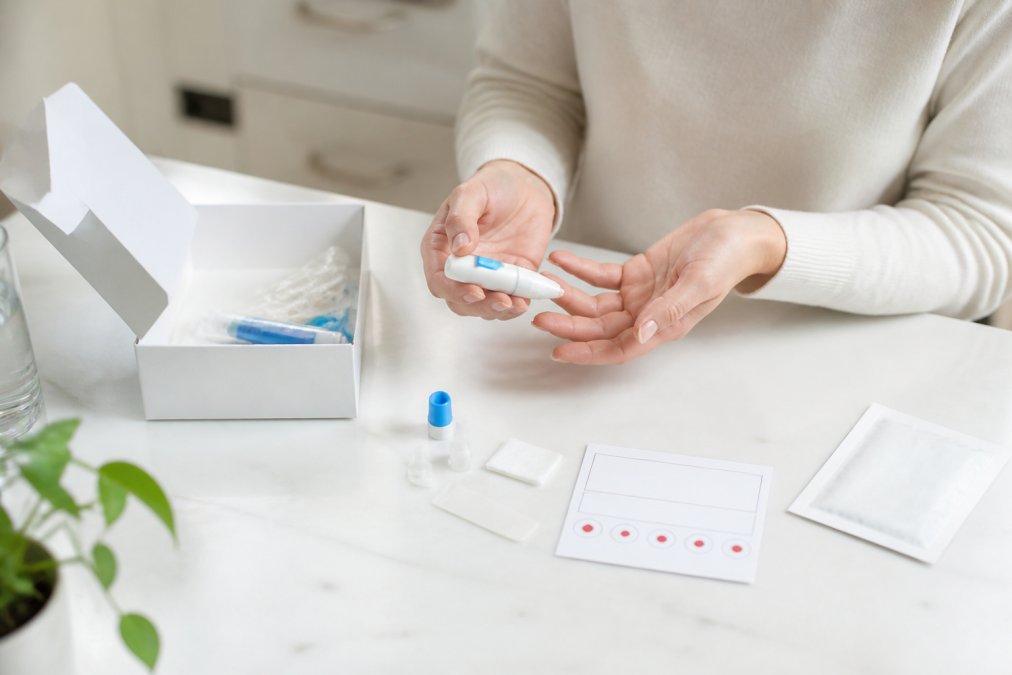
Private at-home health testing follows a straightforward sequence: you order a kit online, collect a small sample yourself, post it to a laboratory, and receive results through a secure online portal. At-home health testing has grown rapidly because it removes the friction of clinic visits, GP appointments, and phlebotomy waiting rooms. Most kits rely on either a finger-prick blood spot or a saliva sample, which you collect in minutes and send back in a prepaid envelope.
The process is designed for people who want measurable data about their biology without scheduling time off work or sitting in a waiting room. Once the laboratory receives your sample, it is logged, assigned a unique identifier, and processed alongside samples from clinics and hospitals.
Is At-Home Health Testing Private? The Short Answer on Confidentiality
Yes, reputable at-home health testing is private, but the level of privacy depends entirely on the provider you choose. A legitimate provider treats your sample, your results, and your personal data under the same confidentiality obligations that apply to traditional pathology services. This means your information is not shared with employers, insurers, or marketing companies without your explicit consent.
The key distinction is who initiates the test. In patient-initiated testing, you are the customer, and the results belong to you. Unlike tests ordered through the NHS, your results are not automatically added to your GP record unless you choose to share them.
Who Sees Your Results
Only you should see your results by default. The laboratory technicians who process your sample see an anonymised identifier, not your name and address. The provider's clinical team may review your results to ensure quality, but you control whether anyone else, including your doctor, receives a copy.
That control is the defining feature of private testing. Your data is not sold to third parties, and you decide what happens next. This contrasts sharply with the consumer DNA ancestry market, where your genetic information may be used for research or shared with partners. Clinical health testing operates under different rules.
GDPR Compliance for Health Testing Kits: How Your Data Is Protected
Health data is classified as special category data under the UK GDPR, which means it receives the highest level of legal protection. At-home health testing providers must comply with the UK GDPR and the Data Protection Act 2018, which sets strict conditions for processing health information. This includes requirements for lawful basis, data minimisation, and secure storage.
Before you buy, check the provider's privacy policy for three specific things: how your sample is stored after analysis, whether your data is anonymised, and who has access to your results. A reputable provider will state clearly that your biological sample is destroyed after testing and that your data is encrypted in transit and at rest.
Data encryption matters at every stage. Your results should only be accessible through a secure, password-protected health dashboard, not sent as unencrypted email attachments. The Information Commissioner's Office guidance on health data sets out the standards providers must meet, and you can check whether a provider is registered with the ICO.
Accuracy of At-Home Diagnostic Kits: What the Lab Accreditation Means
The accuracy of your results depends less on where you collect the sample and more on where the sample is analysed. A finger-prick sample is only as good as the laboratory that processes it. Look for providers that use accredited laboratories, which means the lab has passed independent inspections covering staffing, equipment, and quality assurance procedures.
Accreditation is not a marketing badge. It is a formal recognition that a laboratory meets internationally recognised standards for diagnostic testing. When a provider states that its tests are run in an accredited laboratory, it means the same quality controls apply to your at-home sample as to samples collected in a hospital.
The Statistical Reality: False Positives and False Negatives
Most provider websites avoid discussing a crucial limitation: no diagnostic test is 100% accurate, and at-home collection introduces variables that clinical phlebotomy does not. Every test has a sensitivity (the rate at which it correctly identifies a true positive) and a specificity (the rate at which it correctly identifies a true negative). For a well-validated test, sensitivity and specificity often exceed 90%, but that still leaves room for error.
Consider a biomarker with 95% sensitivity and 95% specificity in a population where 10% of people actually have the condition. Out of 1,000 tests, 100 true positives will be detected in 95 cases, but 5 will be missed (false negatives). Meanwhile, of the 900 people without the condition, 45 will receive a falsely elevated result (false positives). This means that even a high-quality test produces more false positives than true positives when the condition is relatively uncommon. This is not a flaw in the laboratory; it is the mathematics of screening.
Self-collection adds another layer of variance. A finger-prick sample can be compromised by inadequate blood volume, insufficient drying of the blood spot card, or contamination from hand cream or food residue. Most accredited laboratories reject samples that do not meet their quality thresholds, but a rejected sample means a repeat collection and a delayed result, not an accurate one.
Finger-Prick vs. Venous Blood Sample: Does Collection Method Matter?
For most biomarkers, a finger-prick dried blood spot produces results comparable to a venous blood sample taken by a phlebotomist. The difference matters mainly for specific analytes that are sensitive to collection method or sample stability.
- Finger-prick (dried blood spot): Convenient, minimally invasive, stable at room temperature for several days. Suitable for hormones, vitamins, metabolic markers, and many intracellular measurements.
- Venous blood sample: Requires a clinic visit and trained phlebotomist. Necessary for tests requiring larger blood volumes or where fresh serum is needed within hours.
A common pattern is that providers validate their finger-prick method against venous samples for each specific biomarker, and this validation data should be published or available on request. If a provider cannot tell you which of its tests have been formally validated for dried blood spot collection, treat that as a gap in evidence.
Who Should NOT Use an At-Home Test
At-home testing is not suitable for everyone. If you are experiencing acute symptoms such as chest pain, severe shortness of breath, unexplained bleeding, or sudden neurological changes, you need urgent medical attention, not a postal kit. Similarly, people on anticoagulant therapy may struggle to stop bleeding from a finger-prick, and individuals with poor circulation or conditions affecting the hands may not produce an adequate sample. If you are being actively monitored for a chronic condition, your specialist's venous blood tests remain the gold standard; an at-home test is a supplement, not a replacement.
The practical guidance is simple: choose a provider that matches the collection method to the biomarker, not one that uses a single method for everything. A provider offering clinical-grade testing will have validated its finger-prick method against venous samples to confirm diagnostic accuracy.
The question is not whether finger-prick testing is accurate. It is whether the specific test you are taking has been clinically validated for that collection method, and whether you are an appropriate candidate for self-collection in the first place.
How to Choose a Reputable Private Health Test Provider
Choosing a provider comes down to four factors: laboratory accreditation, clinical validation, data protection, and post-test support. A provider that scores well on all four is worth your money; one that scores well on only convenience is not.
Start by checking whether the provider publishes its laboratory accreditations and the clinical validation behind each test. The UKAS accreditation explained is the recognised body for laboratory accreditation in the UK, and its website explains what accreditation covers. A provider that is transparent about its laboratory partnerships is usually confident in its quality.
Red Flags to Avoid in Patient-Initiated Testing
Several warning signs should make you pause before handing over your health data:
- No named laboratory or accreditation details on the website
- Vague privacy policies that mention data sharing with "partners"
- Results that come with no explanation, reference ranges, or guidance
- No option to share results with your GP or a qualified professional
- Prices that seem too low for the claimed scope of testing
A reputable provider explains what each biomarker means, provides reference ranges, and tells you what to do if a result falls outside those ranges. This is not optional extras, it is the core of responsible testing.
What Happens After Your Results: Post-Test Clinical Pathways
Receiving your results is the beginning, not the end. A responsible provider gives you a report you can actually use, with clear explanations of what each marker means in the context of your age, sex, and health history. The report should be jargon-free enough to discuss with your GP or a specialist.
Post-test support varies widely between providers. Some simply send a PDF and leave you to interpret it. Others provide reports designed for meaningful discussions with your healthcare provider. The difference matters most when a result falls outside the reference range.
What to Do If a Result Is Abnormal
First, do not panic. A single out-of-range marker does not mean you have a disease. It means there is a signal worth investigating. Before you contact anyone, re-read the report's explanation of that marker, including the reference range and any notes about factors that can influence it (recent food intake, time of day, stress, or exercise).
Second, consider a repeat test if the provider recommends one. Some biomarkers fluctuate naturally, and a single elevated reading may normalise on retesting. If the result remains abnormal, or if it is significantly outside the range, your next step is a medical consultation.
How to Present Private Results to an NHS GP
Many people worry that NHS doctors will dismiss results from a private test. In practice, most GPs are willing to review a well-organised report, but how you present it affects how it is received. Bring a printed copy of the full report, not just a screenshot of a number. Highlight the specific markers that are out of range and note any symptoms you have been experiencing. Be clear that you are seeking their clinical interpretation, not demanding a particular treatment.
A common pattern is that GPs will acknowledge the result, may order an NHS confirmatory test, and will then decide whether referral to a specialist is appropriate. This is the correct pathway: private tests are screening tools, and the NHS retains responsibility for diagnosis and treatment. If your GP is unfamiliar with a particular biomarker (for example, an intracellular NAD⁺ level), ask them to note the result in your record and explain that you are interested in understanding its clinical significance.
When a Private Result Should Not Replace NHS Care
At-home tests are not diagnoses. They help you identify areas worth investigating, but they cannot replace clinical judgement. If your result suggests a condition that requires urgent attention, such as significantly elevated cardiac markers or very low haemoglobin, do not wait for a routine GP appointment. Call NHS 111 or see a doctor promptly.
A provider that claims its results are definitive, or that sells supplements or treatments directly based on a single test, is overstepping. Responsible providers will tell you when to seek medical advice and will not attempt to manage a clinical condition remotely.
Conclusion: Balancing Privacy, Accuracy, and Actionable Insights
Private at-home health testing is genuinely private when you choose a provider that takes data protection and clinical validation seriously. The convenience of testing from home does not require sacrificing accuracy or confidentiality, but you must do your homework before you buy.
At Bien-Etre, we provide measurable data through tests like clinical-grade NAD⁺ and DNA skin analysis, helping you understand your unique biology to stop guessing why you feel run down and how your skin ages. Designed for those seeking a personalized path for health and recovery, Bien-Etre delivers clear, jargon-free reports that enable informed decisions and meaningful discussions with your healthcare provider. Whether you are investigating unexplained fatigue, tracking recovery as an athlete, or understanding how your skin ages, the goal is the same: measurable data that leads to informed decisions.
Get started with Bien-Etre and stop guessing why you feel run down.
Frequently Asked Questions
Are at-home blood tests worth it compared to visiting a GP?
At-home tests are worth it when you want specific biomarkers checked without waiting for a GP referral or clinic visit. They suit preventative health monitoring, like tracking NAD+ levels or hormone changes. The key is choosing an accredited laboratory and using the report to inform a medical consultation, not as a replacement for one. If you have symptoms, always discuss them with your doctor.
Do private health test providers share results with my GP?
Reputable providers do not share your results with your GP without your explicit consent. You own the data. Under GDPR compliance for health testing kits, you control who sees your report. Most providers, including Bien-Etre, give you a downloadable report you can choose to share with your doctor or coach. Read the privacy policy before ordering to confirm this.
How is my medical data protected when using private testing kits?
Your data should be protected through data encryption both in transit and at rest, and processed under UK GDPR rules. The laboratory should not receive your identity, only a barcode linked to your sample, a practice called pseudonymisation. Before buying, check the provider's privacy policy for details on data storage, retention periods, and whether they sell or share anonymised data with third parties.
Can I get a private blood test done at home in the UK?
Yes. At-home testing kits are widely available in the UK. You collect a small finger-prick blood sample, post it to an accredited laboratory in a prepaid envelope, and receive results through a secure health dashboard. Turnaround times vary from a few days to two weeks depending on the biomarker. Choose a provider with UKAS-accredited labs for reliable results.