
Is At-Home DNA Testing Accurate? A Complete Guide
Table of Contents
- How At-Home DNA Tests Work
- Accuracy Rates: What the Data Shows
- DNA Sample Collection Best Practices
- Medical-Grade vs Consumer Tests: Key Differences
- ISO 17025 DNA Testing Standards and Laboratory Accreditation
- Legal vs Peace of Mind DNA Tests: What You Need to Know
- Privacy, Data Security, and What Happens After Your Results
- Conclusion
Last Updated: August 26, 2026
How At-Home DNA Tests Work
At-home DNA testing captures a biological sample, usually saliva or a fingerprick blood spot, that you collect and mail to an accredited laboratory. The lab extracts DNA and analyzes specific genetic markers to provide insights into ancestry, health predispositions, or nutritional responses.
Most consumer tests use a saliva swab, which is non-invasive. Some tests, like Bien-Etre's clinical-grade offerings, use dried blood spot collection, a fingerprick method that captures a more concentrated sample. You seal your sample in a stabilization buffer or allow it to dry, then mail it in a prepaid envelope.
At the laboratory, technicians extract DNA from your sample, then amplify specific regions using polymerase chain reaction (PCR) technology, creating millions of copies of targeted genetic sequences. This amplification allows the laboratory to identify genetic variants, specific locations where your genetic code differs from a reference sequence. These variants, called SNPs (single nucleotide polymorphisms), form the foundation of your report.
The laboratory compares your genetic data against established reference databases and scientific literature. For ancestry tests, this means comparing your DNA to population databases to estimate geographic origins. For health-related tests, laboratories cross-reference your variants against research linking specific markers to traits, conditions, or nutritional responses. The process typically takes 4-8 weeks from sample receipt to report delivery.
Accuracy Rates: What the Data Shows
When asking "is at-home DNA testing accurate," people often conflate several different concepts: analytical validity, clinical validity, and clinical utility.
Analytical validity refers to whether the laboratory correctly identifies genetic variants in your sample. Accredited laboratories using validated methods achieve analytical accuracy rates above 99% for SNP detection (peer-reviewed research). The technology is mature and reliable.
Clinical validity is whether the genetic variant actually correlates with the trait or condition the test claims to measure. For some traits like certain ancestry markers or straightforward genetic conditions, clinical validity is well-established. For complex health conditions influenced by multiple genes and environmental factors, clinical validity is weaker. A genetic predisposition is not a diagnosis; it's a statistical association.
Clinical utility is whether knowing your genetic information will meaningfully change your health decisions or outcomes. This is where most consumer DNA tests struggle. Knowing you carry a variant associated with caffeine sensitivity may be interesting but may not change your approach if you're already managing caffeine intake based on how you feel.
For direct-to-consumer genetic tests marketed for health insights, many provide information with clinical validity but limited clinical utility. The variant exists and the association is real, but practical implications for your individual health are often unclear without professional interpretation.
DNA Sample Collection Best Practices
The accuracy of your at-home DNA test begins with proper collection. Poor technique can compromise results through contamination or insufficient DNA, leading to failed analysis or false negatives.
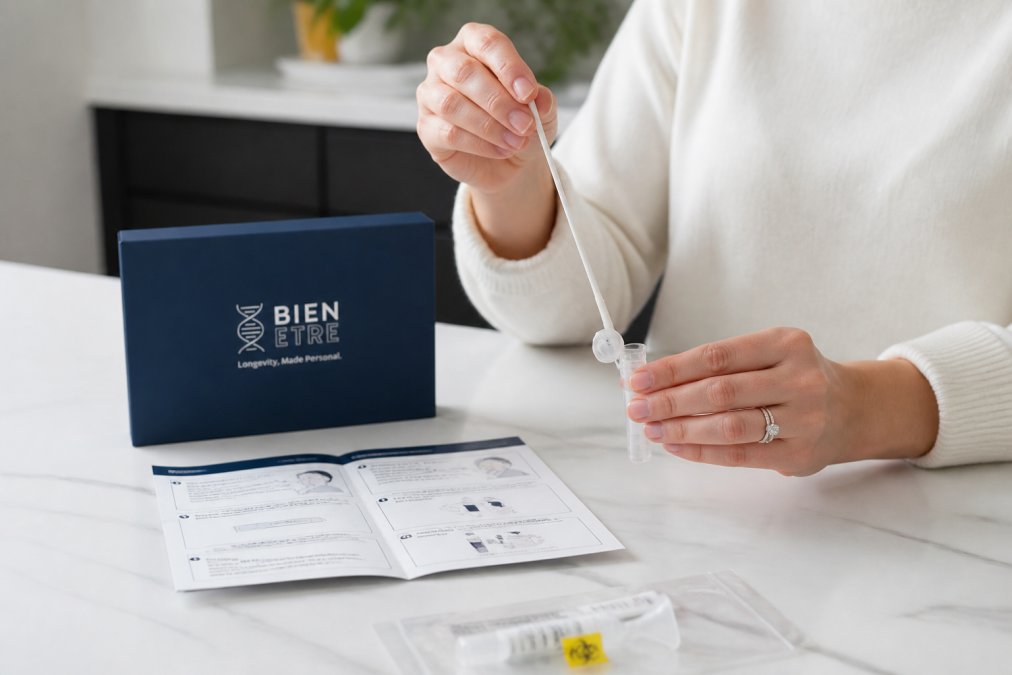
If using a saliva collection kit, avoid eating, drinking, smoking, or chewing gum for at least 30 minutes before collection ([EXTERNAL_LINK: guidance from public health bodies | gov.uk]). Rinse your mouth with water 30 minutes before collection to remove food particles. When ready, follow kit instructions precisely, spitting into the collection tube up to the marked line. Volume matters for proper DNA extraction.
For fingerprick blood spot collection, wash your hands thoroughly and dry them completely. Warm hands improve blood flow. Prick the side of your fingertip using the provided lancet and allow blood to flow naturally without excessive squeezing. Fill the designated circles on the collection card completely.
After collection, seal your sample in the stabilization buffer or allow it to air-dry completely. Store at room temperature in a dry location until mailing. Mail promptly; don't let samples sit for weeks, as extreme heat or moisture degrades DNA.
The chain of custody, the documented process tracking your sample from collection through analysis, is critical for ensuring reliable results. Reputable laboratories maintain detailed records of sample arrival, processing, and quality-control checks.
Medical-Grade vs Consumer Tests: Key Differences
Not all at-home DNA tests are created equal. The distinction between medical-grade and consumer-grade tests reflects significant differences in validation, interpretation, and intended use.
Consumer-grade tests, like those offered by ancestry companies, are designed for general interest and validated for the traits they measure, but they're not regulated as medical devices. They don't require healthcare provider involvement, and reports are presented in accessible language without clinical context. These tests are accurate at what they're designed to do but aren't intended to diagnose conditions or guide medical decisions.
Medical-grade tests are developed and validated to clinical standards, often regulated as in vitro diagnostic devices (IVDs). They undergo rigorous validation for both analytical accuracy and clinical validity. They're typically ordered through a healthcare provider or require genetic counsellor consultation. Reports include clinical context, limitations, and recommendations for next steps. Bien-Etre's clinical-grade NAD⁺ testing and DNA skin analysis fall into this category, designed with diagnostic rigor and delivered with professional interpretation.

The key difference isn't the technology itself but the validation framework and clinical context. A consumer test might accurately detect a genetic variant, but a medical-grade test explains what that variant means for your health and what you should do about it. Medical-grade tests also undergo more rigorous quality control and regulatory oversight.
When evaluating whether at-home DNA testing is accurate for your situation, ask whether you need a consumer-grade answer to a general question or a clinical-grade answer to a health question. For ancestry or general wellness traits, a consumer test may suffice. For health decisions based on results, a medical-grade test with professional interpretation is more appropriate.
ISO 17025 DNA Testing Standards and Laboratory Accreditation
Laboratory accreditation is the foundation of test accuracy and reliability. ISO 17025 is an international standard specifying general requirements for testing and calibration laboratory competence. For DNA testing, ISO 17025 accreditation means the laboratory has been independently assessed and verified to meet rigorous standards for technical competence, quality management, and proficiency.
An ISO 17025-accredited laboratory demonstrates:
- Validated, documented methods for sample analysis
- Equipment regularly calibrated and maintained
- Trained, qualified personnel
- Quality control procedures to detect errors
- Participation in proficiency testing to verify accuracy against external standards
- Detailed records and traceability for every sample
In the UK, the United Kingdom Accreditation Service (UKAS) is the national accreditation body assessing laboratories against ISO 17025 standards. UKAS accreditation is the gold standard for laboratory credibility in the UK market. holistic health monitoring.
Not all at-home DNA testing laboratories are ISO 17025-accredited. Some consumer-grade companies use non-accredited facilities or don't publicly disclose accreditation status. When evaluating test accuracy, check whether the laboratory is accredited. Ask directly: Is your laboratory ISO 17025-accredited? Is it accredited by UKAS or an equivalent body? Reputable companies provide this information transparently. Bien-Etre partners with accredited laboratories for clinical-grade testing, ensuring results meet the highest standards.
Legal vs Peace of Mind DNA Tests: What You Need to Know
The term "DNA test" encompasses two categories: legal DNA tests and peace-of-mind tests. Understanding this distinction is crucial, as a peace-of-mind test cannot legally establish paternity, inheritance rights, or other matters requiring legal certainty.
Peace-of-mind DNA tests are what most at-home companies offer. They're designed for personal interest, discovering ancestry, exploring health traits, or satisfying curiosity. They're not collected under chain-of-custody protocols and aren't admissible in court. If an at-home test reveals unexpected family connections, that result is accurate for personal knowledge but has no legal standing.
Legal DNA tests are conducted under strict protocols ensuring result integrity and admissibility. Chain of custody is meticulously documented. Samples are collected by authorised personnel, often witnessed by a third party. The laboratory is accredited for legal testing specifically. Results can establish paternity for child support, inheritance, or immigration purposes.
The difference isn't the accuracy of DNA analysis itself but the framework surrounding collection, handling, and documentation. A peace-of-mind test might accurately identify genetic relationships, but without legal chain of custody, results can't establish rights or obligations.
If you suspect a legal question might arise, paternity, inheritance, or immigration status, you need a legal DNA test, not a consumer test. For personal health insights, ancestry exploration, or fitness optimisation, peace-of-mind tests are appropriate and accurate.
Privacy, Data Security, and What Happens After Your Results

Your genetic data is sensitive, revealing information about you and potentially your biological relatives. Understanding how your data is handled, stored, and protected is essential before submitting a sample.
Most reputable at-home DNA testing companies encrypt your data in transit and at rest using secure servers and access controls. However, you also need to understand data retention policies and whether companies share data with third parties. Some companies retain data indefinitely for research or sell anonymised data to pharmaceutical companies. Others allow deletion after results or never retain data beyond analysis. Review the company's privacy policy carefully before submitting a sample.
Law enforcement can request access to DNA databases in some jurisdictions to investigate crimes. If your DNA is in a database, it could theoretically be matched to crime scene samples. This risk is small for most people but worth considering if privacy is a significant concern.
Bien-Etre's approach emphasises your control. Genetic data is used solely for generating your personalised report. You receive clear results to discuss with your healthcare provider or coach, with focus on helping you with your own biological data rather than building a research database.
After receiving results, the real work begins. A positive genetic finding isn't a diagnosis; it's a starting point for conversation with a healthcare professional. Genetic counsellors are trained to interpret results in the context of personal and family history. If your test reveals something concerning, consulting a genetic counsellor or your GP is appropriate.
Many at-home companies provide limited guidance on what to do with results. This is where the gap between analytical accuracy and clinical utility becomes apparent. Medical-grade testing with professional interpretation, like Bien-Etre's offerings, is valuable. You get accurate results plus guidance on interpretation and action.
The question "is at-home DNA testing accurate" has a straightforward technical answer: yes, when performed by accredited laboratories using validated methods, at-home DNA testing accurately detects the genetic variants it's designed to identify. Analytical accuracy is high.
The more complex answer involves clinical validity and utility. Your test accurately identifies a genetic variant, but what that variant means for your health and whether you should act on it requires professional interpretation. This is where Bien-Etre's clinical-grade approach makes a difference. The NAD⁺ Intracellular Test and DNA Skin Test deliver accurate results paired with clear, actionable reports you can discuss with your healthcare provider or coach. Get started with Bien-Etre and move beyond generic wellness advice to personalised, lab-backed insights that guide your health decisions.
Frequently Asked Questions
Can at-home DNA testing be wrong?
At-home DNA tests can produce inaccurate results if the sample is contaminated, improperly collected, or if the laboratory fails to follow proper analytical procedures. Analytical validity (the test's ability to detect what it measures) is typically high when samples are handled correctly, but clinical validity (whether a genetic variant actually predicts a health outcome) varies widely. False positives and false negatives occur, particularly with health predictions based on genetic variants. For medical decisions, confirmatory testing through a healthcare provider is always recommended.
What is the difference between a peace-of-mind test and a legal DNA test?
Peace-of-mind DNA tests are for personal information only and do not follow strict chain of custody procedures required for legal purposes. Legal DNA tests, such as those used for paternity confirmation or inheritance matters, must be collected by an accredited professional, maintain documented chain of custody, and meet regulatory requirements. Legal tests cost more but provide results admissible in court. Peace-of-mind tests are less expensive but cannot be used for legal proceedings.
How do I know if a DNA test is accurate and trustworthy?
Look for laboratories accredited to ISO 17025 standards, which verify that testing meets strict quality and analytical standards. Check whether the provider clearly explains clinical validity (whether findings apply to you personally) and acknowledges limitations. Reputable providers offer clear, jargon-free reports and recommend discussing results with a healthcare provider before making health decisions. Avoid tests making absolute cure or diagnostic claims without supporting evidence.
What should I do if my at-home DNA test shows a concerning health result?
Do not assume the result is definitive. Schedule a consultation with your GP or a genetic counsellor to discuss the finding. They can order confirmatory testing, evaluate your personal and family history, and determine whether the genetic variant actually affects your health. Many genetic variants identified in at-home tests have limited clinical utility, they may indicate a predisposition, not a diagnosis. Professional guidance helps you understand what the result means for your specific situation and whether any action is needed.
This article was written using GrandRanker