
DNA Testing for Skin Aging: How It Works & What It Reveals
Table of Contents
- What Is DNA Testing for Skin Aging?
- How Do DNA Skin Tests Work?
- Key Skin Traits Revealed by Genetic Analysis
- Genetic Skin Analysis Accuracy: What the Science Shows
- Best Anti-Ageing Skincare Ingredients for Your DNA
- Privacy, Limitations, and When to Consult a Professional
- Interpreting Your Results and Building a Personalized Routine
- Conclusion
Last Updated: August 12, 2026
What Is DNA Testing for Skin Aging?
DNA testing for skin aging is a genetic analysis that examines specific variants in your DNA to reveal how your skin is predisposed to age. Rather than guessing which skincare approach might work for you, these tests identify the genetic factors that influence collagen production, antioxidant capacity, UV sensitivity, and inflammation response. Your genes determine how well your skin produces collagen, defends against oxidative stress, and repairs itself from sun damage. Two people using identical skincare routines will see different results because their genetic predispositions differ.
Most tests use a simple at-home cheek swab and examine between 13 and 21 genetic traits linked to skin aging, elasticity, sensitivity, and inflammation. Results typically arrive within 3-8 weeks.
How Do DNA Skin Tests Work?
DNA skin tests analyze specific genetic variants (called SNPs, or single nucleotide polymorphisms) that influence how your skin ages. The process involves three stages: sample collection, genetic sequencing, and results interpretation.

Sample Collection and Lab Analysis
All DNA skin tests start with a simple, non-invasive sample collection. You'll receive a kit with a cheek swab, rub it inside your mouth for a few seconds, seal it in a collection tube, and mail it back using prepaid packaging.
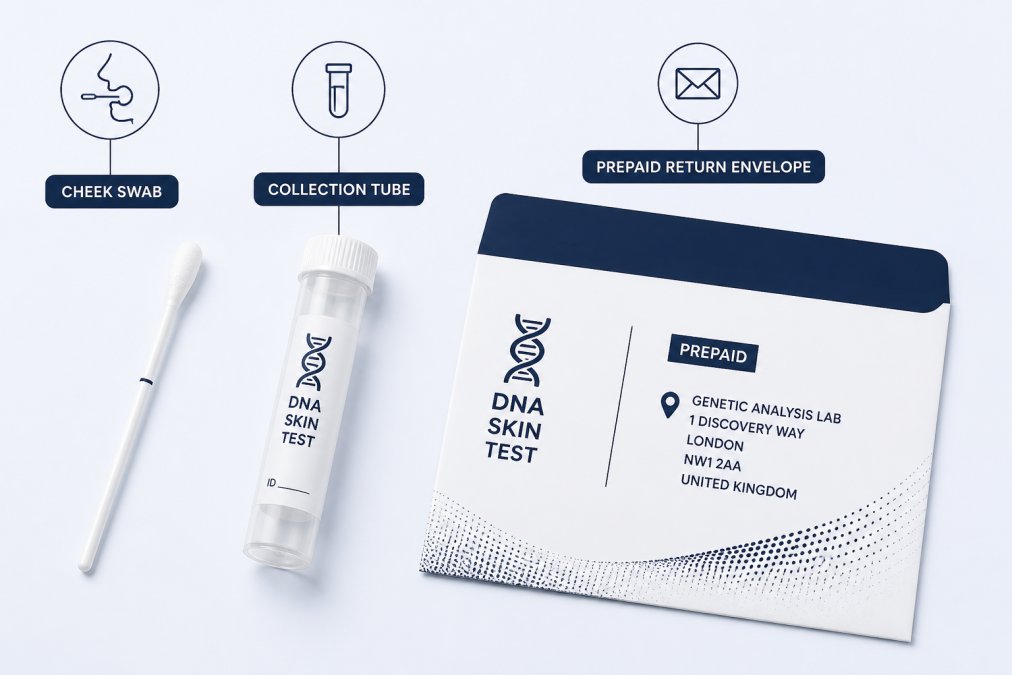
Once the lab receives your sample, technicians extract the DNA and sequence the genes relevant to skin aging. Most tests examine between 13 and 21 genetic markers across five key biological pathways: collagen synthesis, antioxidant defense, glycation, UV sensitivity, and inflammation response. The lab then compares your genetic variants against established research showing which versions are associated with faster skin aging, higher photoaging risk, or weaker antioxidant defense.
Genetic Variants That Affect Skin Aging
Your genetic profile influences skin aging through several well-established pathways. Collagen synthesis genes determine how efficiently your body produces and maintains collagen, the structural protein that keeps skin firm and elastic. If you carry variants associated with lower collagen production, you'll benefit more from ingredients that stimulate collagen synthesis.
Antioxidant defense genes code for enzymes that neutralize free radicals created by sun exposure, pollution, and normal cellular metabolism. If your genetic profile shows weaker antioxidant capacity, you'll see stronger results from antioxidant-rich ingredients like vitamin C, vitamin E, and polyphenols.
UV sensitivity variants influence how much DNA damage your skin cells sustain from sun exposure and how efficiently they repair it. This genetic information explains why some people develop age spots and photoaging earlier despite similar sun exposure.
Key Skin Traits Revealed by Genetic Analysis
A comprehensive DNA skin test reveals your genetic predispositions across multiple aging pathways, helping you prioritize which skincare concerns matter most for your unique biology.
Collagen Production and Dermal Elasticity
Collagen is the primary structural protein in your dermis, providing firmness and elasticity. As you age, collagen breaks down faster than your body can replace it, leading to wrinkles and sagging. Your genetic profile determines how efficiently your fibroblasts produce collagen and how quickly enzymes break it down.
If your results show variants associated with faster collagen breakdown or slower collagen synthesis, retinoids (vitamin A derivatives) and peptides are particularly valuable. These ingredients stimulate fibroblasts to produce more collagen. Sunscreen becomes even more critical if you carry variants linked to faster collagen degradation, because UV exposure accelerates collagen breakdown.
Antioxidant Defense and Oxidative Stress
Oxidative stress occurs when free radicals accumulate faster than your body can neutralize them, damaging skin cells and accelerating collagen breakdown. Your genetic profile determines how efficiently your cells defend against oxidative stress.
Tests examine variants in genes encoding antioxidant enzymes like superoxide dismutase (SOD), catalase, and glutathione peroxidase. If your genetic profile shows weaker antioxidant defense capacity, your skin is more vulnerable to oxidative damage. People with genetically weaker antioxidant defense see stronger results from topical antioxidants like vitamin C, vitamin E, ferulic acid, and polyphenols.
UV Sensitivity and Photoaging Risk
Photoaging, premature skin aging caused by sun exposure, varies dramatically between individuals with similar sun exposure histories. Your genes influence how efficiently your skin repairs UV-induced DNA damage and your predisposition to developing age spots.
If your test shows high photoaging risk, aggressive sun protection becomes non-negotiable. You'll also benefit from ingredients that address photoaging specifically: vitamin C (which fades age spots), niacinamide (which strengthens the skin barrier), and retinoids (which improve skin texture).
Genetic Skin Analysis Accuracy: What the Science Shows
DNA testing for skin aging is based on established genetics research, but it's important to understand what these tests can and cannot predict. The genetic variants tested come from peer-reviewed studies linking specific SNPs to skin aging traits. These associations are real.
However, genetics is only part of the story. Your actual skin aging rate depends on genetics (approximately 30-40% of variation) plus environmental factors (sun exposure, pollution, smoking, sleep, diet, stress) and skincare habits. Additionally, most commercial tests analyze a relatively small number of genetic variants. Your skin aging is influenced by hundreds of genes, not just the 13-21 typically tested.
Best Anti-Ageing Skincare Ingredients for Your DNA
Once you understand your genetic profile, you can choose skincare ingredients that address your specific vulnerabilities.

For weak collagen synthesis: Prioritize retinoids (retinol, retinaldehyde, prescription retinoids) and peptides. These ingredients stimulate fibroblasts to produce more collagen. Start with lower concentrations (0.25-0.5% retinol) and increase gradually to minimize irritation.
For weak antioxidant defense: Focus on topical antioxidants like vitamin C (L-ascorbic acid at 10-20% concentration), vitamin E, ferulic acid, and green tea extract. Vitamin C is particularly valuable because it also brightens skin and fades age spots.
For high photoaging risk: Sunscreen is non-negotiable; use SPF 30+ daily. Additionally, choose ingredients that address photoaging: vitamin C (fades age spots), niacinamide (strengthens barrier), retinoids (improve texture), and azelaic acid (reduces hyperpigmentation).
For inflammation-prone skin: Niacinamide, azelaic acid, centella asiatica, and ceramides are particularly valuable. These ingredients reduce inflammation and strengthen the skin barrier. Avoid over-exfoliating, which can trigger inflammation.
The key advantage of DNA-informed skincare is specificity. Rather than using a generic anti-aging routine, you're targeting your skin's actual vulnerabilities.
Privacy, Limitations, and When to Consult a Professional
DNA testing for skin aging offers valuable insights, but it comes with important caveats about privacy, accuracy, and appropriate use.
Data Security and Genetic Privacy
Your genetic data is sensitive. Before submitting a sample, review the provider's privacy policy carefully. Key questions to ask: Where is your DNA stored? Can the company sell or share your genetic data? Do you have the right to request deletion?
Reputable providers store genetic data securely, do not sell it to third parties without explicit consent, and allow customers to request deletion. However, no system is completely risk-free.
What DNA Testing Cannot Do
DNA skin tests reveal genetic predispositions, not current skin conditions. A test cannot diagnose skin diseases, identify active skin cancer, or assess your current collagen levels. If you have active acne, rosacea, eczema, or other skin conditions, you need a dermatologist's evaluation.
Additionally, DNA testing cannot account for lifestyle factors that dramatically influence skin aging: sun exposure history, smoking, sleep quality, diet, and stress. DNA tests provide general guidance, not personalized prescriptions.
When to Consult a Professional
Consider consulting a dermatologist if you have active skin concerns, your skin is not responding to a DNA-informed routine after 8-12 weeks, you're considering professional treatments, or you have a family history of skin cancer. A dermatologist can examine your actual skin and recommend treatments that complement your genetic insights.
Interpreting Your Results and Building a Personalized Routine
When your DNA skin test results arrive, you'll receive a report detailing your genetic profile across key aging pathways. Most reports score your genetic predisposition in each category as low, moderate, or high risk.
Start by identifying your top 2-3 genetic vulnerabilities. Build your routine systematically:
- Cleanser and moisturizer: Choose products appropriate for your skin type.
- Sunscreen: Non-negotiable, use SPF 30+ daily.
- First targeted ingredient: Add one ingredient addressing your primary genetic vulnerability. Use it consistently for 8-12 weeks before assessing results.
- Second targeted ingredient: Once you've adapted to the first, add a second ingredient addressing your second vulnerability. Introduce it slowly.
- Optional advanced ingredients: After establishing a solid foundation, consider additional ingredients based on your specific profile.
The advantage of a DNA-informed approach is that you're building a routine based on your actual genetic predispositions, which increases the likelihood of visible results.
Bien-Etre's DNA Skin Test analyzes 13 clinically validated genes across five biological pathways, providing a detailed genetic profile of how your skin ages, reacts, and repairs. The test costs £199.00 and delivers results within 2-3 weeks. The report includes actionable recommendations for skincare ingredients and habits tailored to your genetic profile.
DNA testing for skin aging reveals your genetic predispositions to collagen loss, oxidative stress, and photoaging, information that transforms skincare from guesswork into strategy. The real value lies in specificity. Rather than using a generic anti-aging routine, you can prioritize ingredients addressing your actual genetic vulnerabilities.
However, genetics is only part of the story. Environmental factors, sun exposure, sleep, diet, stress, and skincare habits often matter more than genetics in determining actual skin aging outcomes. DNA testing is most valuable when combined with consistent sun protection, a solid skincare routine, and realistic expectations about what topical products can achieve.
If you're ready to understand your skin's genetic profile and build a truly personalized routine, Bien-Etre's DNA Skin Test provides lab-backed analysis with clear, actionable results. For those with active skin concerns or seeking professional-grade treatments, consulting a dermatologist alongside DNA testing offers the most comprehensive approach to optimizing skin health.
Frequently Asked Questions
How accurate is DNA testing for skin aging?
DNA testing identifies genetic variants that influence how your skin ages, but it reveals predisposition, not destiny. Your genes account for roughly 30% of skin aging; environmental factors like sun exposure, lifestyle, and skincare habits drive the remaining 70%. A reputable DNA test analyses clinically validated genetic markers related to collagen synthesis, antioxidant defence, and UV sensitivity. Accuracy depends on the provider's scientific backing, look for tests that specify which genes are analysed and reference peer-reviewed research. Results are most useful when combined with professional skincare advice rather than used alone.
What specific skin traits can DNA testing identify?
DNA testing examines genetic variants affecting multiple skin aging pathways. These typically include collagen and elastin production (which determine firmness and elasticity), antioxidant defence systems (how well your skin resists oxidative stress), glycation risk (a process that damages skin proteins), UV sensitivity and photoaging susceptibility, skin barrier function and hydration capacity, and inflammation markers that influence conditions like sensitivity or rosacea. Some tests also analyse predisposition to cellulite, varicose veins, and pigmentation changes. The breadth depends on the test, basic versions focus on aging factors, while comprehensive versions examine 15-21 traits.
Is a DNA skin test worth the cost compared to seeing a dermatologist?
DNA testing and dermatology serve different purposes. A dermatologist diagnoses and treats skin conditions; DNA testing reveals your genetic aging patterns to inform prevention. At £199 for Bien-Etre's DNA Skin Test, it costs less than a private dermatology consultation but provides lifetime insights since your DNA doesn't change. The value depends on your goal: if you want to understand your skin's genetic predispositions and personalise your skincare routine without clinic visits, it's worthwhile. If you have active skin conditions or suspect hormonal issues, consult a dermatologist first. Many people benefit from both, use DNA insights to guide product choices and professional advice for diagnosis.
What should I do after I receive my DNA skin test results?
Start by understanding your genetic risk profile across the key aging pathways your test analysed. Identify your highest-risk areas, for example, if your results show low antioxidant defence, prioritise antioxidant-rich ingredients like vitamins C and E in your routine. Match ingredients to your genetic profile rather than following generic skincare trends. Use your results to have informed conversations with a dermatologist or skincare professional; they can recommend specific products and treatments tailored to your genetics. Implement lifestyle changes that address your genetic weaknesses, if you have high photoaging risk, consistent SPF use becomes non-negotiable. Review your routine every 6-12 months as new products aligned with your DNA profile become available.
This article was written using GrandRanker