
Finger Prick Test vs Venous Blood Draw
Table of Contents
- Finger Prick Test vs Venous Blood Draw: Quick Comparison
- How Sample Collection Differs
- Accuracy and Reliability: At-Home Blood Test Reliability
- Venepuncture vs Finger Prick: Clinical Indications
- Patient Comfort, Pain, and Sample Volume
- How to Prepare for a Blood Test
- Cost and Access: At-Home vs Clinical Testing
- Which Method Should You Choose?
- Frequently Asked Questions
Last Updated: October 2, 2026
Finger Prick Test vs Venous Blood Draw: Quick Comparison
When you need blood work done, you face a choice that most people don't think about until they're sitting in the chair: finger prick or venous draw.
Capillary blood from a finger prick works for many common tests, glucose monitoring, allergy screening, certain hormone panels.
Below, we'll walk you through exactly how each method works, where each excels, and which one makes sense for your situation.
How Sample Collection Differs
The two methods start differently and that initial difference cascades through everything that follows.
Capillary Blood (Finger Prick)
A finger prick uses a small lancet, a disposable blade thinner than a standard needle, to puncture the skin on the side of your fingertip. The lancet penetrates just deep enough to reach capillaries, the smallest blood vessels running close to the surface (Capillary blood sampling, neonates (1057)). Within seconds, a small drop of blood pools at the puncture site. You then transfer that drop onto a collection card or into a collection tube, often using a dried blood spot (DBS) methodology where the sample dries on filter paper before being sent to the laboratory.
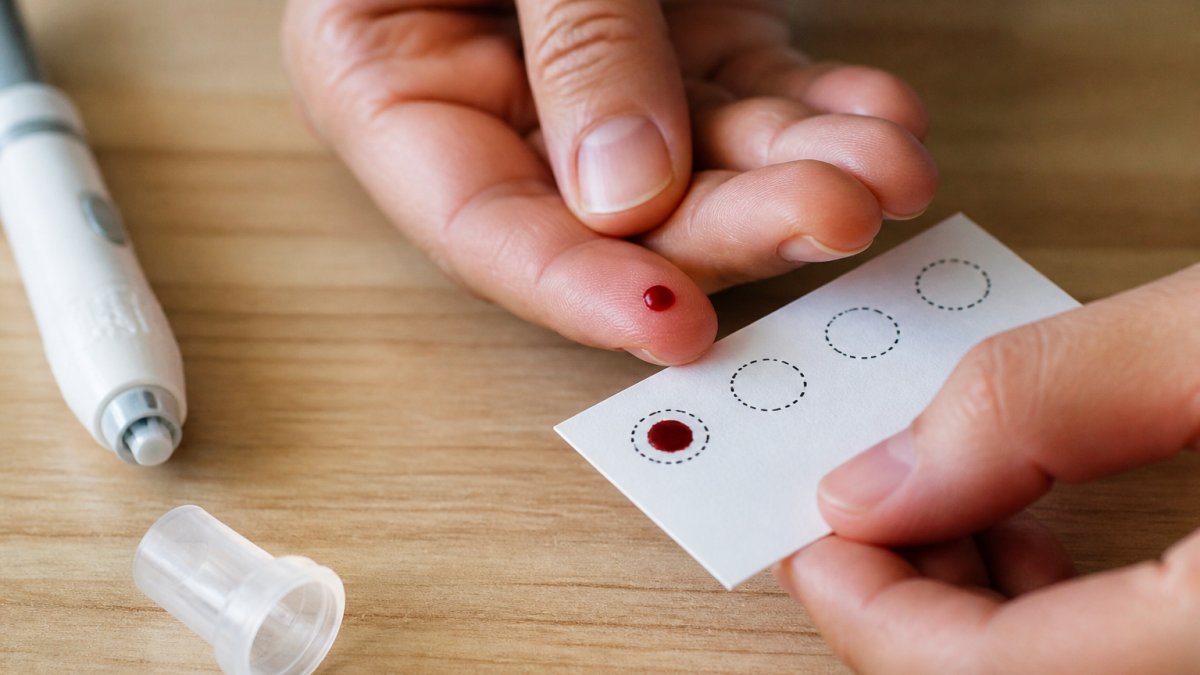
The entire process takes two to three minutes from start to finish. Most people report minimal pain, the lancet is designed to minimise tissue trauma.
Venous Blood (Blood Draw)
A venous draw requires a trained phlebotomist or nurse to locate a vein, usually in the inner crook of your elbow, clean the skin, insert a needle, and draw blood directly into one or more collection tubes.
This method demands a clinical or medical setting. You cannot perform a venous draw on yourself. The process takes five to ten minutes including preparation, and the needle insertion itself lasts only a few seconds.
Accuracy and Reliability: At-Home Blood Test Reliability
The question of accuracy hinges on pre-analytical variables, everything that happens to the sample before it reaches the laboratory.
Capillary blood collected via finger prick introduces specific risks.
Venous blood is more forgiving. The larger sample volume means labs have more material to work with.
That said, capillary samples work reliably for many tests when the collection protocol is followed precisely.
For tests requiring high precision or large sample volumes, venous blood remains the gold standard.
Venepuncture vs Finger Prick: Clinical Indications
Not every test can be done with every collection method.
Finger prick testing works well for:
- Blood glucose monitoring (diabetes screening and management)
- NAD⁺ and cellular health biomarkers
- Lipid screening (cholesterol and triglycerides)
Venous blood draw is required for:

- Complete blood count (CBC) and white blood cell differential
- Comprehensive metabolic panels requiring larger sample volumes
- Clotting studies and coagulation factors
- Bone marrow or cell morphology assessment
- Tests using advanced instrumentation like LC-MS/MS (liquid chromatography-tandem mass spectrometry) when sample volume constraints matter
- Therapeutic drug monitoring for certain medications like tacrolimus These specialized requirements often necessitate a more robust approach to diagnostics, which is why comprehensive biomarker health panels provide a deeper understanding of systemic physiological markers beyond the scope of routine individual tests.
The reason is straightforward: some tests demand more sample than a finger prick can provide. Others require specific handling that only venous collection tubes can guarantee.
Your healthcare provider will specify which method is appropriate for the test you need. For many common screening and monitoring tests, you have a choice.
Patient Comfort, Pain, and Sample Volume
Pain perception varies widely between individuals, but the data is clear: finger pricks cause less acute discomfort than venous draws for most people. (Source: NHS guidance on blood tests)
A lancet puncture is quick and shallow. The pain is brief and mild, often described as a small pinch.
Venous draws involve a larger needle, deeper penetration, and a longer duration of discomfort.
Sample volume, however, favours the venous draw. A single venous collection yields enough blood for multiple tests without additional punctures.
For at-home testing, the finger prick advantage is obvious: you do it yourself in your own environment, without needles or professional staff.
How to Prepare for a Blood Test
Preparation differs between the two methods, though the principle is the same: optimise sample quality.
For a finger prick test:
- Wash your hands thoroughly with warm water and soap. Dry completely.
- Choose the side of your middle or ring finger, avoid the pad, where nerves are denser.
- Warm your finger gently under running water or by rubbing it for a few seconds. Warmth increases blood flow, making collection easier.
- Do not squeeze the finger before the lancet puncture. Squeezing introduces tissue fluid and dilutes the sample.
- After the lancet puncture, let the blood flow naturally. If flow is slow, gentle massage of the finger (not squeezing) can help.
- Transfer the blood to the collection medium immediately. Do not let it sit on the skin.
- If using a dried blood spot card, allow the sample to dry completely before sealing or returning it, typically 2 to 3 hours at room temperature.
For a venous draw:
- Eat and drink normally unless your test requires fasting. Your healthcare provider will specify if fasting is needed.
- Wear loose, short-sleeved clothing to make arm access easy.
- Stay hydrated. Dehydration makes veins harder to locate and increases the risk of a difficult draw.
- Arrive on time. Stress and rushing can raise cortisol and other hormones, skewing some results.
- Inform the phlebotomist of any anxiety or previous difficult draws. They can take extra time or use smaller needles if available.
- After the draw, apply gentle pressure to the puncture site for a few minutes to minimise bruising.
Both methods benefit from consistency in timing. If you're doing repeat testing to track changes over time, collect samples at the same time of day when possible. Hormones, glucose, and many biomarkers fluctuate throughout the day.
Cost and Access: At-Home vs Clinical Testing
Cost is where the two methods diverge sharply.
At-home finger prick testing is cheaper upfront.
The Starter Pack, NAD⁺ Test + 1 Month of NAD+ at £299.00, bundles the test with a month's supply of supplementation at no additional cost, making it a practical entry point for baseline measurement and optimisation. For longer-term monitoring, the 60 Day Cellular Recharge at £199.00 combines the test with two months of NMN300, offering better value if you plan to supplement.

Venous blood draws in a clinical setting typically cost £30 to £100 per test, depending on the complexity and your location.
Access is the other consideration. At-home finger prick testing is available to anyone with a mailing address.
Venous draws require a clinic visit.
For remote or at-home testing, the finger prick method is the only practical option.
Which Method Should You Choose?
The decision depends on three factors: the test you need, your comfort level, and your practical constraints.
Choose finger prick if:
- You want to test at home without a clinic visit
- You're monitoring a single biomarker (NAD⁺, glucose, allergy status, hormones)
- You're needle-phobic or anxious about medical settings
- You're budget-conscious and want a straightforward, affordable test
- You need results quickly without scheduling delays
Choose venous draw if:
- Your test requires a large sample volume or specific collection tube
- You're getting multiple tests and want one puncture instead of several
- You need advanced testing like LC-MS/MS analysis for drug levels or complex metabolites
- You're in a clinical setting already and your provider recommends it
- You want the reliability and standardisation of professional phlebotomy
For most people seeking personalised health insights, tracking NAD⁺ levels, monitoring recovery markers, a finger prick test at home is practical, affordable, and reliable when collected correctly. Bien-Etre's at-home tests use CLIA-accredited laboratory analysis and dried blood spot methodology validated for clinical accuracy. You get the data you need without the friction of clinic visits.
If your test requires venous blood, your healthcare provider will make that clear. For everything else, the finger prick method puts control in your hands and results on your timeline.
Frequently Asked Questions
Is a finger prick blood test as accurate as a venous blood draw?
Finger prick tests (capillary blood sampling) and venous blood draws can both be accurate when collected and processed correctly. Capillary samples work well for many analytes including NAD⁺ levels. However, venous samples are preferred for tests requiring large volumes or those sensitive to dilution effects. The key difference lies in pre-analytical variables: capillary samples are more prone to haemolysis and contamination if technique is poor. When performed by trained individuals or with validated at-home kits analysed by CLIA-accredited laboratories, finger prick tests show strong concordance with venous results for most health markers.
What factors can affect the accuracy of a capillary finger prick test?
Several pre-analytical variables influence capillary sample quality. Inadequate hand warming before collection can reduce blood flow and force excessive squeezing, which dilutes the sample. Contamination from alcohol or other substances on the skin introduces error. Improper application to the collection card, air bubbles in the dried blood spot, and delays in returning the sample to the laboratory also compromise accuracy. Storage conditions matter: samples must be kept dry and cool. Using validated collection kits from accredited providers like those analysed by CLIA-accredited laboratories minimises these risks significantly.
Why might a doctor prefer a venous blood draw over a finger prick?
Doctors typically request venous draws (phlebotomy) when large sample volumes are needed, such as for comprehensive metabolic panels or clotting studies. Venous blood is less prone to haemolysis and dilution, making it the gold standard for tests requiring high precision. Some analytes, particularly those sensitive to contact with tissue fluid, require venous sampling. Additionally, venous draws are preferred for patients with poor peripheral circulation or those unable to produce adequate capillary flow. For routine screening and many modern biomarker tests, however, validated capillary methods are increasingly accepted as equivalent.
How does at-home blood testing differ from clinical venous blood work?
At-home testing typically uses dried blood spot (DBS) methodology via finger prick, offering convenience and eliminating clinic visits. Clinical venous draws provide larger volumes and are performed by trained phlebotomists in controlled settings. At-home samples are posted to CLIA-accredited laboratories for analysis using technologies like LC-MS/MS, delivering results in 7-10 working days. The main trade-off is convenience versus immediate results. Bien-Etre's NAD⁺ test uses this at-home finger-prick approach with laboratory analysis, making baseline testing and progress monitoring accessible without appointment scheduling.
Understanding your health shouldn't require clinic appointments and generic advice. Bien-Etre's at-home diagnostic testing, including our clinical-grade NAD⁺ Intracellular Test, gives you measurable data on your own terms. Collect your sample at home, get a personalised report in 7-10 working days, and discuss real numbers with your healthcare provider. Start with your baseline today and track what actually matters for your recovery and optimisation.