
DNA Skin Analysis vs Dermatology: What Works
Table of Contents
- What Is DNA Skin Analysis?
- How DNA Testing for Skin Aging Works
- Traditional Dermatology: Clinical Assessment and Diagnosis
- Limitations of At-Home Skin DNA Tests
- Personalized Skincare Based on Genetics
- DNA Analysis and Dermatology: Complementary Approaches
- Making Your Choice: Which Approach Fits Your Needs
Last Updated: August 24, 2026
What Is DNA Skin Analysis?
DNA skin analysis is a genetic test that examines your DNA to predict how your skin ages, reacts to environmental stressors, and repairs itself. Rather than making assumptions based on your age or skin type, the test identifies specific genetic markers that influence five key biological pathways: firmness and elasticity, glycation, sun damage and pigmentation, free radical damage, and sensitivity or inflammation.
The science behind this approach is straightforward. Your genes don't change, but they do influence how your skin behaves. Some people inherit genetic predisposition toward strong collagen synthesis. Others carry markers that make them more susceptible to photoaging or oxidative stress. By understanding your genetic profile, you can tailor your skincare routine to address your actual biological vulnerabilities rather than guessing based on generic advice.
Bien-Etre's DNA Skin Test analyses 13 clinically validated genes across these five pathways, delivered through a simple saliva swab you collect at home (peer-reviewed research). The test costs £199 and includes a personalised report explaining what your results mean for your skincare strategy. The appeal is obvious: actionable genetic data without a clinic visit, and without paying for a dermatology appointment to get there.

But here's where the conversation gets interesting. DNA skin analysis tells you what your genetics predispose you toward. It doesn't diagnose skin conditions, and it doesn't replace clinical assessment. That distinction matters more than most marketing materials suggest.
How DNA Testing for Skin Aging Works
The process begins with a saliva sample collected using a kit delivered to your home. You swab the inside of your cheek, seal the sample, and post it to an accredited laboratory. From there, the lab extracts your DNA and sequences specific genes known to influence skin ageing and repair.

The genes analysed typically fall into five categories. Firmness and elasticity genes influence collagen synthesis and skin structural integrity. Glycation markers reveal how prone your skin is to sugar-induced protein damage, which accelerates visible ageing. Sun damage and pigmentation genes determine your melanin production and sensitivity to UV exposure. Free radical damage markers show your antioxidant capacity and vulnerability to oxidative stress. Sensitivity and inflammation genes predict how easily your skin barrier function becomes compromised and how quickly inflammation resolves.
Each gene is scored, and the results are combined into a personalised report. The report typically explains your genetic predisposition in plain language, then recommends specific skincare ingredients or approaches that address your particular vulnerabilities. Someone with high glycation risk might be advised to prioritise anti-glycation ingredients. Someone with weak collagen synthesis markers might focus on collagen-supporting compounds.
The turnaround time is usually 2-4 weeks from sample receipt to report delivery. Results are presented through an online portal with downloadable PDFs, making them easy to share with a dermatologist or skincare professional if you choose.
Traditional Dermatology: Clinical Assessment and Diagnosis
A dermatologist's approach is fundamentally different. Rather than analysing your genes, a dermatologist performs a visual and tactile examination of your skin, asks about your medical history, and may order additional tests if a skin condition is suspected.
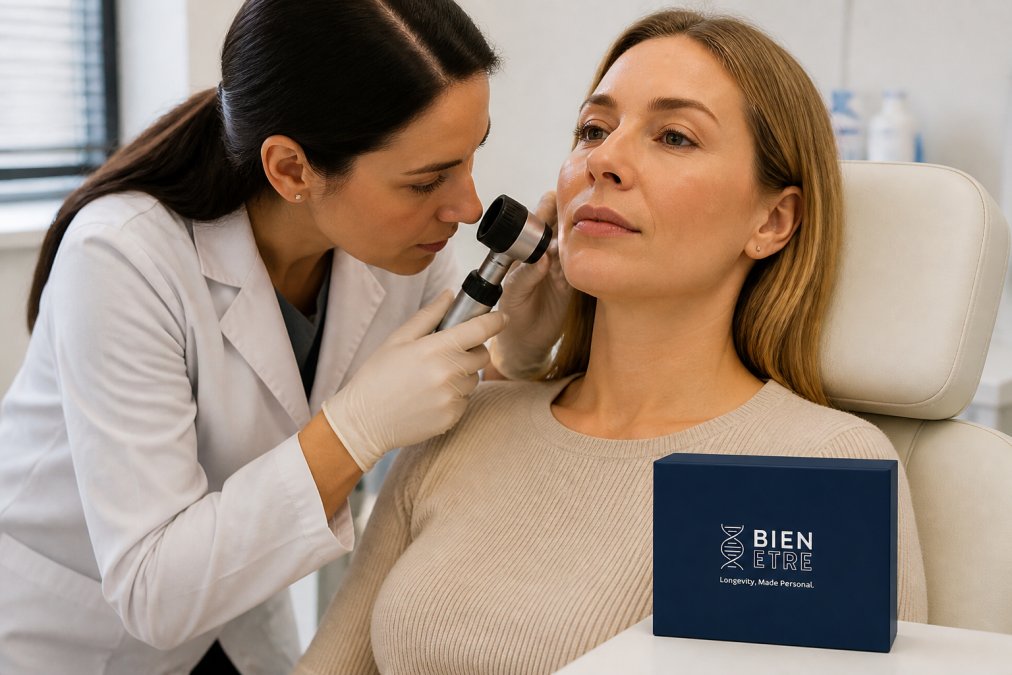
This clinical assessment is diagnostic. A dermatologist can identify acne, eczema, psoriasis, melanoma, rosacea, and dozens of other conditions. They can prescribe medications or recommend procedures. They can distinguish between what your skin looks like and what's actually happening beneath the surface, often using tools like dermoscopy or Wood's lamp examination.
The dermatologist's strength is pattern recognition built on years of training and thousands of patient encounters. They see skin conditions across diverse populations and can spot subtle signs that indicate something beyond cosmetic concern. They can also recognise when a skin issue reflects an underlying systemic problem, thyroid dysfunction, nutritional deficiency, or medication side effect, that requires broader medical attention.
The limitations are practical. Dermatology appointments typically involve a waiting list. NHS dermatology services can have waits of several months for non-urgent cases ([EXTERNAL_LINK: NHS guide to waiting times | nhs.uk]). Private dermatology is faster but significantly more expensive, often £150-300+ per consultation. And a dermatologist's assessment is based on what they observe on the day of your visit, not your genetic predisposition.
Limitations of At-Home Skin DNA Tests
This is where the conversation needs to be honest. DNA skin analysis has meaningful limitations that marketing rarely emphasises.
First, the test predicts genetic predisposition, not destiny. Having a genetic marker for photoaging doesn't mean you will develop severe sun damage, it means you're at higher risk if you don't protect your skin. The same applies to every marker in the test. Genetic predisposition is one factor among many. Environment, lifestyle, diet, stress, sleep, and skincare habits all influence how your skin actually ages. A test can't account for all of those variables.
Second, the test doesn't diagnose skin conditions. If you have acne, eczema, rosacea, or any other skin disorder, a DNA test won't tell you what it is. It won't identify melanoma or distinguish between a benign mole and a concerning one. It can't detect fungal infections, bacterial infections, or viral infections. For any of those situations, you need a dermatologist.
Third, the clinical validation of DNA skin tests varies. Some tests analyse genes with strong peer-reviewed evidence linking them to skin ageing. Others include genes with weaker or more contested evidence. The quality of the underlying science matters, and it's not always transparent in marketing materials. Bien-Etre's test uses 13 clinically validated genes, but "clinically validated" is a broad category that includes everything from gold-standard research to preliminary findings.
Fourth, the actionability of results depends on the quality of the report and your access to appropriate skincare. A report telling you that you have high oxidative stress risk is only useful if you know which ingredients address oxidative stress and can find products containing them. Not all recommendations are equally practical or evidence-backed.
Finally, privacy and data security matter. Your genetic data is sensitive information. Any at-home DNA test requires you to send a biological sample to a third party. You should understand how that data is stored, who has access to it, and what happens to it after testing is complete. Before using any at-home DNA test, review the company's privacy policy carefully.
Personalized Skincare Based on Genetics
Where DNA skin analysis becomes genuinely useful is in optimising skincare for prevention and maintenance when you don't have an active skin condition.
If your genetic profile shows high photoaging risk, you know that sun protection is non-negotiable for you. Not because everyone should use sunscreen, they should, but because your genetics suggest you're particularly vulnerable to UV damage. That knowledge can motivate consistent daily application rather than occasional use.
If your results show weak collagen synthesis markers, you might prioritise skincare ingredients that support collagen production: retinoids, vitamin C, peptides, or growth factors. Someone without that genetic vulnerability might get similar results from a simpler routine.
If your test reveals high glycation risk, you could focus on anti-glycation ingredients like niacinamide, carnosine, or alpha-lipoic acid. Again, this is personalisation based on your actual biology rather than generic advice.
The concept of genotype-phenotype correlation, understanding how your specific genetic profile relates to your observable skin characteristics, allows for truly customised skincare. Rather than following a one-size-fits-all routine, you're building a regimen based on your particular vulnerabilities.
This is where Bien-Etre's approach adds value. The DNA Skin Test includes personalised recommendations that translate your genetic data into specific skincare strategies. Instead of receiving raw genetic information, you get actionable guidance: here's what your genes suggest about how your skin ages, and here's how to address it.
The limitation, again, is that personalised recommendations are only as good as the science behind them. If a recommendation is based on weak evidence or oversimplified interpretation of genetic data, personalisation becomes pseudoscience. The best DNA skin tests are transparent about which recommendations have strong evidence and which are more speculative.
DNA Analysis and Dermatology: Complementary Approaches
Here's the insight that most comparisons miss: DNA skin analysis and traditional dermatology aren't competing approaches. They address different questions.
A dermatologist answers: "What is this skin condition, and how do I treat it?" They diagnose and manage active problems.
DNA skin analysis answers: "What is my genetic predisposition toward skin ageing, and how can I optimise my skincare to address it?" It informs prevention and maintenance.
The two approaches work best together. A dermatologist can identify any active skin conditions and rule out anything medically significant. Once you know you don't have a dermatological disorder, DNA skin analysis can help you build a preventative skincare strategy tailored to your genetic vulnerabilities.
Consider a 45-year-old woman with no active skin problems who wants to optimise her skincare for the next 10-15 years. She might start with a dermatology consultation to confirm she has no underlying conditions. Then she could use DNA skin analysis to understand her genetic predisposition toward photoaging, collagen loss, or inflammation. That combination, clinical assessment plus genetic insight, gives her the most complete picture.
Alternatively, someone with active acne or rosacea needs dermatological treatment first. Once the condition is managed, DNA analysis could inform long-term maintenance skincare. The dermatologist treats the problem; the genetic test helps prevent future problems.
The integration of DNA results into clinical practice is still emerging. Not all dermatologists are familiar with genetic skin analysis or comfortable incorporating it into their recommendations. But the most forward-thinking practitioners recognise that genetic data can complement clinical judgment. Your dermatologist might not order a DNA test themselves, but they can interpret your results and advise whether the recommendations align with your skin's needs.
:::bestfor DNA skin analysis works best for adults with no active skin conditions who want to optimise prevention and maintenance based on their genetic profile. It's particularly valuable for people aged 40-60 who are proactive about skin health and want data-driven guidance rather than generic advice.
Making Your Choice: Which Approach Fits Your Needs
The decision between DNA skin analysis and dermatology depends on your situation.
Choose dermatology if: You have a visible skin problem (acne, rashes, discolouration, growths, or lesions). You have a family history of melanoma or other skin cancer. You're unsure whether something on your skin is normal or concerning. You want a diagnosis or prescription treatment. You need expert assessment of whether a skin issue reflects something more serious.
Choose DNA skin analysis if: You have no active skin problems. You want to understand your genetic predisposition toward skin ageing. You're looking for personalised skincare recommendations based on your biology. You want to optimise prevention and maintenance without a clinic visit. You prefer data-driven guidance over generic skincare advice.
Choose both if: You want comprehensive skin health management. Start with dermatology to rule out any conditions, then use DNA analysis to optimise your long-term skincare strategy.
The cost calculation matters. A dermatology consultation ranges from £150-300+ privately, or free through the NHS with a wait. DNA skin analysis through Bien-Etre costs £199 for a one-time test. If you're paying privately for dermatology, the DNA test is comparable in cost and offers different information. If you have NHS access, the DNA test is an addition to, not a replacement for, dermatological care.
The time factor also differs. DNA testing takes 2-4 weeks but requires no appointment scheduling. Dermatology can be faster if you access private services, but NHS waits can be months. If you need answers quickly and have no active skin concerns, DNA analysis is more efficient.
The accuracy question deserves attention. Dermatological diagnosis by a trained professional is highly accurate for identifying skin conditions. DNA skin analysis is accurate at identifying your genetic markers, but the interpretation of what those markers mean for your skin is still evolving. The science is solid, but it's not as definitive as a dermatologist's diagnosis of, say, rosacea.
Privacy considerations matter if you're concerned about genetic data. Dermatology doesn't involve sharing your DNA. DNA testing does. If data security is a priority, understand the company's policies before proceeding.
The choice between DNA skin analysis and dermatology isn't binary. Both have value, and the best approach depends on whether you're addressing an active skin problem or optimising prevention. If you're looking for personalised skincare insights without clinic visits, Bien-Etre's DNA Skin Test provides genetic data and actionable recommendations for £199. If you have a skin concern that needs diagnosis or treatment, a dermatologist remains essential. Many people benefit from both: clinical assessment to rule out problems, genetic testing to inform prevention. The key is understanding what each approach actually does, then choosing accordingly.
Frequently Asked Questions
How does DNA skin analysis differ from a clinical dermatological assessment?
DNA skin analysis examines your genetic predisposition to skin ageing across five biological pathways: firmness and elasticity, glycation, sun damage, free radical damage, and sensitivity. It identifies your genetic profile but cannot diagnose skin conditions. Dermatologists perform visual examination, take medical history, and can diagnose conditions like melanoma, eczema, or acne. DNA testing reveals your skin's biological tendencies; dermatology addresses current skin health and disease. Many people benefit from both: genetic insights guide prevention, whilst dermatologists treat existing concerns.
Can genetic testing replace a consultation with a dermatologist?
No. Genetic testing cannot diagnose skin diseases, identify melanoma, or treat active skin conditions. A GMC-registered dermatologist provides clinical diagnosis, prescribes medications, and manages skin disorders. DNA analysis is complementary, it helps you understand your skin's genetic predisposition and tailor preventative skincare routines. If you have suspicious moles, persistent rashes, or skin symptoms, dermatology is essential. DNA testing works best alongside professional dermatological care, not instead of it.
What makes at-home DNA skin tests different from clinical-grade analysis?
At-home DNA skin tests analyse genetic markers through saliva samples sent to accredited laboratories. Clinical-grade tests like Bien-Etre's DNA Skin Test examine 13 clinically validated genes across five skin-ageing pathways and deliver personalised reports. The key difference lies in clinical validation and actionability: accredited tests use validated biomarkers and provide insights you can discuss with healthcare providers. Many commercial DNA tests offer general ancestry or health data without specific skincare application. When choosing an at-home DNA test, verify it's lab-backed, examines skin-specific genes, and comes from an accredited facility.
How should I use DNA skin analysis results with my dermatologist?
Bring your DNA report to your dermatology appointment. Share your genetic predispositions, for example, if your results show high oxidative stress risk or collagen synthesis concerns. Your dermatologist can then recommend targeted treatments or skincare ingredients that address your specific genetic profile. This integration of genetic data with clinical assessment helps create a personalised prevention and treatment plan. Your dermatologist may suggest prescription-strength products, professional treatments, or lifestyle adjustments based on both your genetics and current skin condition.
This article was written using GrandRanker