
DNA Skin Analysis Alternatives: A 2026 Guide
Table of Contents
- Why DNA Skin Analysis Matters for Personalized Skincare
- DNA Testing for Skin Aging: How It Works
- Comparison Table: DNA Skin Analysis Alternatives
- Personalized Skincare Based on Genetics: What You Actually Get
- At-Home Skin DNA Test Accuracy: What the Science Shows
- Privacy, Data Security, and Scientific Validity
- Cost-Benefit Analysis: Is a DNA Skin Test Worth It?
- Conclusion: Choosing the Right DNA Skin Test for Your Needs
Last Updated: August 18, 2026
Why DNA Skin Analysis Matters for Personalized Skincare
DNA skin analysis reveals your genetic predisposition to ageing, sensitivity, and skin barrier function, shifting skincare from generic routines to personalized science. Your genetic profile shapes how your skin ages, reacts, and repairs itself. Some people's skin is genetically prone to glycation, where sugar molecules damage collagen and accelerate visible ageing. Others have genetic markers that make them more sensitive to sun damage or prone to inflammatory responses. Understanding these biomarkers allows you to build a skincare protocol that addresses YOUR skin, not a theoretical average.
Bien-Etre offers clinical-grade DNA skin analysis that maps 13 validated genes across five biological pathways. As the market has expanded, alternatives have emerged with varying levels of scientific backing. Below, we'll show you how to evaluate DNA skin testing options and determine whether this approach is worth your investment.

DNA Testing for Skin Aging: How It Works
A DNA skin test works by analyzing your saliva sample to identify genetic markers associated with skin health and ageing. You collect your own sample at home using a provided swab, return it to an accredited laboratory, and receive a detailed report within weeks that breaks down your genetic risk profile across multiple skin-ageing pathways.
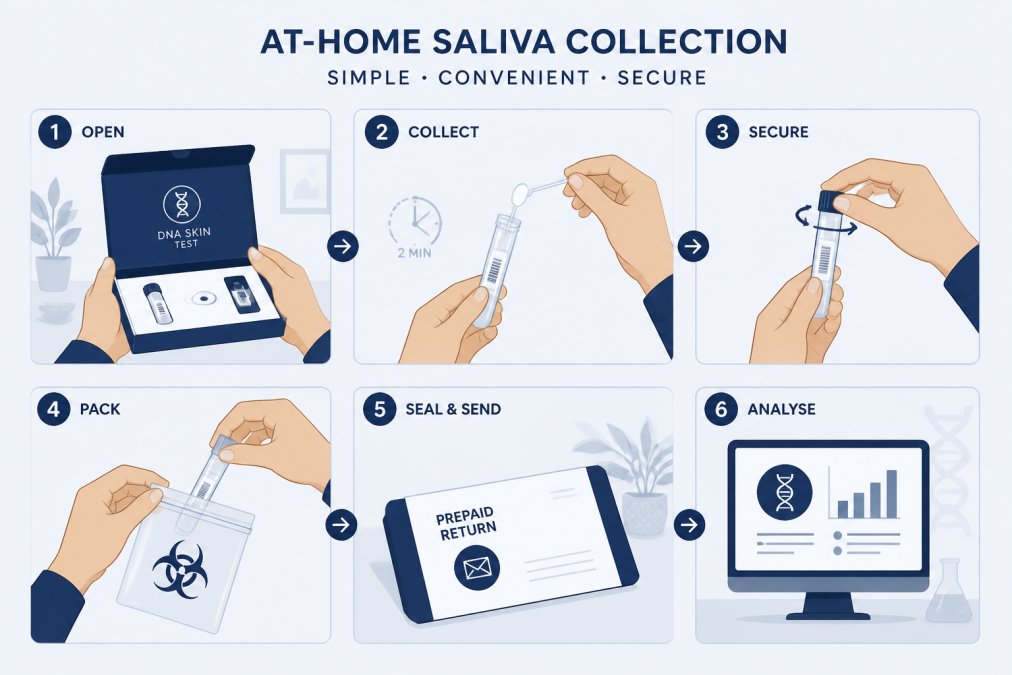
The science relies on bioinformatics, the computational analysis of your genetic data against established biomarkers. Most clinical-grade tests examine genes that influence collagen breakdown, antioxidant defence systems, glycation resistance, sun sensitivity, and inflammation response. Each pathway has documented genetic variations that correlate with how quickly your skin ages and how it responds to environmental stressors.
Your report shows your risk level (low, moderate, high) for each pathway, benchmarks your profile against population averages, and recommends specific skincare ingredients or habits that address your genetic predispositions. If your genetic markers show high glycation risk, the protocol might emphasize antioxidant-rich products and dietary choices that reduce sugar-induced collagen damage. If you have markers for high sun sensitivity, recommendations would prioritize broad-spectrum UV protection and repair ingredients.
The accuracy of these tests depends on the number of genes analysed, the clinical validation of those markers, and the laboratory quality. Not all DNA skin tests are equal. Some examine only a handful of genes with limited clinical backing, while others, like Bien-Etre's offering, analyse 13 clinically validated genes across established biological pathways.
Comparison Table: DNA Skin Analysis Alternatives
| Option | Price | Genes Analysed | Key Pathways | Report Clarity | Best For |
|---|---|---|---|---|---|
| Bien-Etre DNA Skin Test | £199 | 13 validated genes | Firmness, glycation, sun damage, free radical damage, sensitivity | Clear, actionable protocol | Serious skincare optimizers seeking clinical-grade analysis |
| Ancestry DNA (Skin Report Add-on) | ~£50-80 additional | Limited | General predispositions | Basic, general guidance | Budget-conscious users who already have Ancestry data |
| 23andMe (Ancestry with Traits) | ~£99-199 | Limited | General traits | Moderate detail | Users primarily interested in ancestry wanting skin insights as secondary feature |
| SelfDecode | £200-400 | Broad range | Multiple health pathways including skin | Technical, detailed | Biohackers and researchers comfortable with complex genetic data |
| Jinfiniti Precision Skincare | £250-350 | 10+ genes | Skin-specific pathways | Moderate detail | Those wanting detailed skincare recommendations alongside genetic data |
Bien-Etre offers clinical-grade analysis at an accessible price point, with a focus on actionable skincare protocols rather than broad health data. Most alternatives either lack the depth of Bien-Etre's 13-gene analysis or bundle skin testing with unrelated health information.
Personalized Skincare Based on Genetics: What You Actually Get
A personalized skincare protocol derived from DNA analysis should translate your genetic profile into specific, actionable recommendations. When you receive your report from a reputable provider, you should expect:
A breakdown of your genetic risk across each analysed pathway, showing where your profile places you relative to the general population. Specific ingredient recommendations tied to your genetic profile, if your test shows high collagen breakdown risk, the protocol should recommend peptides, retinoids, or vitamin C. Lifestyle and dietary guidance connected to your genetic predispositions, such as how sleep quality affects collagen synthesis or how dietary antioxidants support your genetic antioxidant defence capacity.
The critical question: does the report guide you through the implications, or does it dump genetic data on you to interpret yourself? The best reports present findings in plain language with clear next steps.
At-Home Skin DNA Test Accuracy: What the Science Shows
The scientific validity of at-home DNA skin tests hinges on the clinical validation of the genes being analysed and the accuracy of the laboratory performing the analysis.
Many genes examined in clinical-grade skin tests have been validated in peer-reviewed research linking specific genetic variations to measurable skin outcomes. Genes affecting collagen synthesis, melanin production, and antioxidant enzyme function have documented correlations with skin elasticity, pigmentation patterns, and ageing speed. However, genetics is probabilistic, not deterministic, your genes create predisposition, not certainty.
A genetic marker for high glycation risk doesn't guarantee severe glycation damage; it means your biological pathway is more vulnerable to sugar-induced collagen damage. This is why reports present risk as a spectrum rather than a binary outcome.
Laboratory accuracy depends on proper sample handling, validated testing protocols, and quality control measures. Accredited labs use standardised methods to extract DNA and analyse it against known genetic variations. The real limitation isn't identifying your genes, it's the predictive power of those genes for your individual skin. A genetic marker might correlate with faster collagen breakdown at the population level, but individual variation is substantial.
The best DNA skin tests position themselves as informative tools, not diagnostic instruments. They reveal your genetic predispositions and suggest evidence-based strategies to address them, but they're most powerful when combined with professional dermatological advice and your own observation of how your skin responds to different approaches.
Privacy, Data Security, and Scientific Validity
Before submitting your genetic material, understand three critical considerations: where your data goes, how it's protected, and whether the science behind the recommendations is legitimate.
Your genetic information is uniquely identifying and shared with biological relatives. Reputable providers like Bien-Etre maintain strict data governance: your sample is analysed in accredited laboratories, your genetic data is encrypted, and your report is delivered through secure digital channels. Verify that any provider explicitly states their data retention policy, whether they share data with third parties, and whether you can request deletion after testing.
Does the provider cite peer-reviewed research backing their gene selection? Do they explain which genes they're analysing and why? A provider claiming five genes can predict your entire skin profile is overselling. One that carefully explains 13 validated genes across five biological pathways is being appropriately cautious.
Many DNA skin test providers occupy a grey zone: they're not making medical claims, but they're implying clinical validity through language and presentation. Terms like "clinical-grade" should be backed by actual laboratory accreditation and validated testing protocols, not just marketing language.
Cost-Benefit Analysis: Is a DNA Skin Test Worth It?
DNA skin analysis alternatives range from around £50 (as an add-on to ancestry testing) to £400 for comprehensive, specialist-focused analysis. Bien-Etre's DNA Skin Test costs £199, reflecting clinical-grade analysis without premium pricing.
A DNA skin test makes sense if you've been trying generic skincare routines without success. If you've spent years testing products and still don't understand why your skin behaves the way it does, genetic insight can be transformative. It moves you from guessing to knowing, which often saves money on ineffective products over time.
The test is valuable if you're dealing with specific concerns, premature ageing, persistent sensitivity, unexplained dryness, and want to understand the biological basis. Rather than trying random solutions, you can target the specific pathways your genetics suggest are vulnerable.
For athletes and fitness enthusiasts, the value proposition is stronger. Your training intensity, recovery capacity, and skin barrier resilience all have genetic components. Understanding your genetic predispositions for inflammation response and collagen breakdown can inform both your training approach and your skincare strategy.
The long-term value is significant because your DNA doesn't change. One test informs your skincare strategy for life, making the investment a one-time cost for lifetime guidance.
Conclusion: Choosing the Right DNA Skin Test for Your Needs
DNA skin analysis alternatives vary substantially in depth, scientific rigour, and actionability. Your choice depends on what you're trying to solve and how much scientific detail you want.
If you want clinical-grade analysis focused specifically on skin health with clear, actionable recommendations, Bien-Etre's DNA Skin Test offers 13 validated genes across five biological pathways: firmness and elasticity, glycation, sun damage and pigmentation, free radical damage, and sensitivity and inflammation. The £199 investment includes a comprehensive report with a tailored skincare protocol you can discuss with your healthcare provider or skincare professional. The test is particularly valuable if you're 40 or older and concerned about premature ageing, or if you've struggled with unexplained skin sensitivity or barrier dysfunction.
If you're primarily interested in ancestry and want skin insights as a secondary feature, services like Ancestry DNA or 23andMe offer basic skin trait information at lower cost, though the skincare guidance is necessarily generic.
If you're a biohacker or researcher comfortable with dense genetic data and want broad health insights alongside skin analysis, SelfDecode or Jinfiniti might appeal, though they come at higher price points and require more interpretive effort.
The most important question before purchasing any test: does the provider explain their science transparently, protect your genetic data rigorously, and deliver recommendations in plain language you can actually use? If yes, the test is likely worth your investment. If the provider is vague about methodology, data security, or recommendations, skip it regardless of price.
Frequently Asked Questions
How accurate is DNA skin analysis for anti-ageing?
DNA skin analysis identifies genetic predisposition to specific aging pathways, collagen breakdown, glycation, sun sensitivity, and inflammation response, by examining validated biomarkers. Accuracy depends on the test's clinical validation: reputable providers analyze 10-13 clinically validated genes across established biological pathways. This reveals your genetic risk profile, not your current skin state. Paired with environmental factors and skincare consistency, DNA testing provides actionable direction for preventative skincare. However, it cannot predict exact aging speed or replace dermatological assessment of existing damage.
What specific skin traits can be identified through genetic testing?
DNA skin tests examine five core biological pathways: skin elasticity and firmness (collagen production and breakdown), glycation (sugar-protein cross-linking that stiffens skin), sun damage and pigmentation (melanin production and UV sensitivity), free radical damage (antioxidant defense capability), and sensitivity and inflammation response. Each pathway is measured through specific genetic markers. Your report benchmarks your genetic profile against population averages, showing where you face higher predisposition to premature aging, dryness, sensitivity, or hyperpigmentation. This guides targeted skincare selection rather than generic recommendations.
Are at-home DNA skin tests worth the investment?
Value depends on your priorities. At-home DNA skin tests (typically £199-£299) eliminate clinic visits and deliver personalized insights based on your genotype rather than population averages. They're most valuable if you're tired of generic skincare advice, want to understand why your skin behaves as it does, or seek preventative guidance before visible aging accelerates. They're less essential if you already have a dermatologist, prefer trial-and-error skincare, or have limited budget. Consider them a one-time investment: your DNA doesn't change, so results inform your skincare for life. Compare cost against buying multiple ineffective products.
Can DNA testing replace a consultation with a dermatologist?
No. DNA skin testing complements dermatology but does not replace it. A DNA report reveals genetic predisposition and recommends preventative skincare; a dermatologist diagnoses existing skin conditions, prescribes medical treatments, and assesses for skin cancer or disease. Use DNA testing to optimize your routine and inform discussions with your healthcare provider. If you have active skin concerns, acne, rosacea, eczema, or suspicious lesions, see a dermatologist first. DNA testing works best alongside professional care, not instead of it.
What should I look for in a reputable genetic skin analysis report?
Look for reports that name the specific genes tested (at least 10-13), cite the biological pathways analysed, provide population benchmarking so you understand your risk relative to others, and explain results in plain language without excessive jargon. Reputable providers disclose their lab accreditation, describe their quality assurance process, and clarify that results are for educational and wellness purposes, not medical diagnosis. Avoid reports that make absolute claims ('you will develop wrinkles') or recommend only proprietary products. The best reports empower you to discuss findings with your doctor or nutritionist and make informed skincare choices independently.
Ready to understand how your genetics shape your skin ageing? Bien-Etre's DNA Skin Test analyzes 13 clinically validated genes across five biological pathways, firmness and elasticity, glycation, sun damage, free radical damage, and sensitivity, delivering a personalized skincare protocol you can implement immediately. Get your DNA Skin Test and stop guessing why your skin behaves the way it does.
This article was written using GrandRanker