
At-Home Energy Tests: What Biomarkers Actually Reveal
Table of Contents
- What Is an At-Home Energy Test?
- Why Am I Constantly Feeling Exhausted? Common Root Causes
- Fatigue Blood Test Markers: Which Biomarkers Matter Most
- Clinical-Grade NAD+ Testing for Energy and Recovery
- How the At-Home Test Process Works
- Understanding Your Results and Next Steps
- At-Home Testing vs GP Visits: When Each Makes Sense
- Conclusion
Last Updated: August 21, 2026
What Is an At-Home Energy Test?
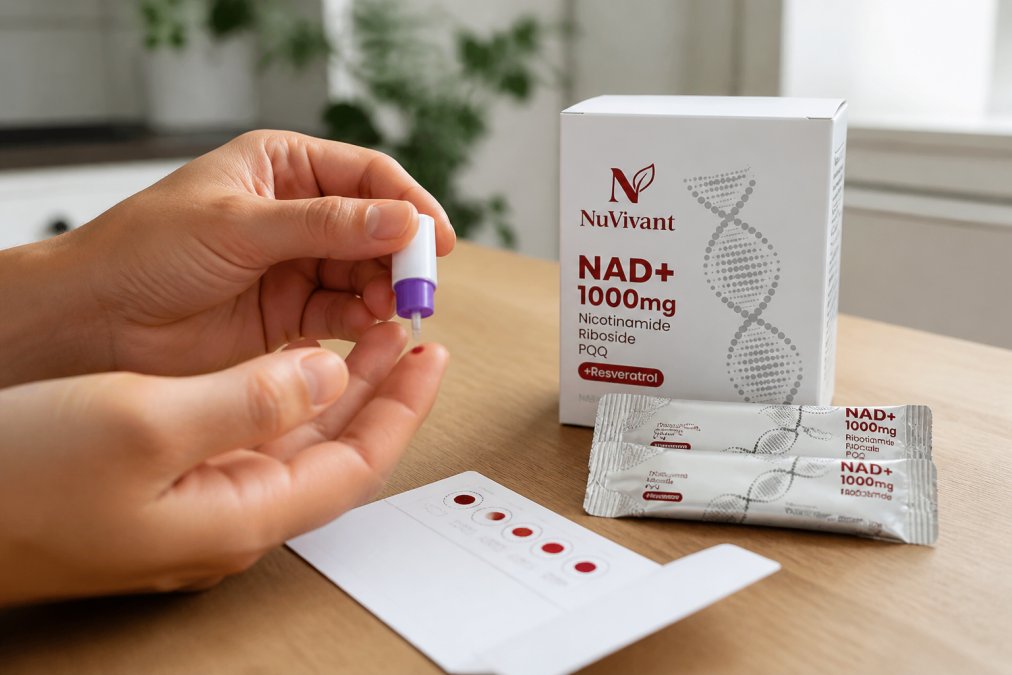
An at-home energy test is a diagnostic blood assessment you complete from home using a finger-prick sample. You collect dried blood spots on a card and return them via post to a laboratory for analysis. The test measures biomarkers, proteins, hormones, and metabolites, that directly influence how your cells produce and use energy.
Chronic fatigue typically signals an underlying imbalance in systems that regulate cellular energy: iron deficiency, thyroid dysfunction, vitamin B12 depletion, hormonal shifts, or declining NAD+ levels. A comprehensive at-home energy test reveals which factors are affecting you personally, rather than asking you to guess based on generic advice.
Bien-Etre's clinical-grade NAD⁺ test exemplifies this approach. It measures intracellular NAD+ levels using laboratory analysis identical to hospital settings, with results delivered as a clear, jargon-free report.

Why Am I Constantly Feeling Exhausted? Common Root Causes
Persistent fatigue that doesn't improve with sleep points to systemic issues. Your body produces energy at the cellular level, and when that production falters, you experience mental fog, afternoon crashes, and difficulty recovering from exercise.
Iron deficiency is the most overlooked culprit. Iron carries oxygen to your cells; without sufficient iron, your mitochondria cannot generate ATP (adenosine triphosphate), the molecule that fuels every function (the NIH). Women in their 40s and 50s face particular risk during perimenopause and menopause.
Thyroid dysfunction silently undermines energy production. Your thyroid regulates metabolic rate; when it underperforms, every cellular process slows. Many people with thyroid-related fatigue receive a standard TSH test that appears "normal" yet continue to feel exhausted. Full thyroid assessment, including free T3, free T4, and thyroid antibodies, often reveals the real picture.
Vitamin B12 and folate deficiencies impair red blood cell formation and DNA synthesis, both essential for energy metabolism. These deficiencies develop gradually and often go undiagnosed because symptoms mimic other conditions: fatigue, brain fog, numbness, and mood changes.
Hormonal imbalances, particularly in oestrogen and testosterone, directly affect energy levels. Declining testosterone reduces muscle mass and mitochondrial function. Low oestrogen during perimenopause and menopause disrupts sleep, increases inflammation, and impairs cellular recovery.
Declining NAD+ levels represent a fundamental shift in cellular ageing. NAD+ is a coenzyme that regulates energy production, DNA repair, and cellular stress response. By your 40s, NAD+ can drop by up to 50%, directly correlating with reduced energy and increased fatigue (peer-reviewed research).
Fatigue Blood Test Markers: Which Biomarkers Matter Most
A standard GP checkup typically measures basic markers: full blood count, glucose, and thyroid-stimulating hormone (TSH). These provide a starting point but miss the detailed picture that explains why you feel exhausted.
A comprehensive fatigue assessment measures these key biomarkers:
Iron and Anaemia Indicators
Iron deficiency is one of the most common and treatable causes of chronic fatigue.
Ferritin measures iron stored in your body. Low ferritin indicates depleted iron reserves, even if your haemoglobin appears normal on a standard test. You can have "normal" haemoglobin but insufficient iron stores, leaving your cells starved of oxygen.
Haemoglobin and mean corpuscular volume (MCV) reveal whether your red blood cells are adequately formed and sized. Low haemoglobin indicates anaemia; abnormal MCV suggests the type of anaemia, as iron deficiency, B12 deficiency, and folate deficiency each produce distinct patterns.
Transferrin saturation shows how much iron your body is actively transporting, catching iron imbalance that ferritin alone might miss.
Thyroid and Metabolic Function
Thyroid dysfunction is frequently missed. Comprehensive assessment requires:
TSH (thyroid-stimulating hormone) signals your pituitary's attempt to regulate thyroid output. Elevated TSH suggests underperformance; suppressed TSH suggests overactivity. However, TSH alone misses the full picture.
Free T4 and free T3 measure the active thyroid hormones circulating in your blood. Free T3 is particularly important as the most metabolically active form; some people convert T4 to T3 poorly, leaving them symptomatic despite "normal" TSH and T4.
Thyroid peroxidase (TPO) antibodies reveal autoimmune thyroiditis, where your immune system attacks your thyroid. This diagnosis changes management entirely, yet many people with TPO antibodies and fatigue are told their thyroid is "fine" because TSH falls within range.
Nutrient Deficiencies
Your cells require specific nutrients to synthesise ATP and sustain energy pathways:
Vitamin B12 is essential for red blood cell formation, myelin synthesis, and methylation reactions that power cellular energy. B12 deficiency produces fatigue, brain fog, numbness, and mood disturbance. Vegans, people with digestive disorders, and those over 50 face elevated risk.
Folate (vitamin B9) works alongside B12 in DNA synthesis and energy metabolism. Folate deficiency mirrors B12 deficiency in symptoms.
Vitamin D regulates immune function, muscle strength, and mood. Low vitamin D correlates with persistent fatigue, particularly in northern climates.
Magnesium is a cofactor in over 300 enzymatic reactions, including those that produce ATP. Deficiency causes muscle weakness, fatigue, and sleep disturbance.
Hormonal Imbalances
Hormones orchestrate energy production and recovery:
Testosterone (in both men and women) drives mitochondrial function, muscle protein synthesis, and motivation. Low testosterone reduces energy and slows recovery.
Oestrogen and progesterone fluctuate during perimenopause and menopause, disrupting sleep quality and increasing inflammation, both of which deplete energy reserves.
Cortisol (your stress hormone) regulates circadian rhythm and energy availability. Chronically elevated cortisol exhausts your adrenal glands. Testing cortisol patterns, particularly morning levels, reveals whether stress-driven dysregulation is contributing. clinical accuracy.
Clinical-Grade NAD+ Testing for Energy and Recovery
NAD+ (nicotinamide adenine dinucleotide) is the molecule at the centre of cellular energy production and repair. It powers sirtuins, proteins that regulate ageing, inflammation, and metabolic health, and fuels DNA repair mechanisms. When NAD+ declines, your cells cannot sustain energy production, and recovery slows dramatically.
Clinical-grade NAD+ testing measures intracellular NAD+ levels using laboratory methods validated in peer-reviewed research. This is a diagnostic tool used by researchers studying ageing, metabolic disease, and recovery.
Bien-Etre's NAD⁺ Intracellular Test (£299.00) measures your baseline NAD+ using dried blood spots analysed by a CLIA-accredited laboratory, the same standard applied in hospital settings. The result is a personalised report showing your NAD+ level, how it compares to age-matched reference ranges, and what that means for your energy and recovery capacity.
Why test NAD+? Because supplementation without baseline measurement is guesswork. Some people respond dramatically to NAD+ precursors like nicotinamide riboside (NR) or nicotinamide mononucleotide (NMN); others see modest gains. Testing reveals your starting point and allows you to retest after 90 days to measure actual progress.
Athletes benefit particularly from NAD+ testing because recovery capacity directly determines training adaptability. Low NAD+ impairs muscle protein synthesis, delays lactate clearance, and reduces mitochondrial biogenesis, all of which slow recovery and limit performance gains (peer-reviewed research). Restoring NAD+ through targeted supplementation and lifestyle changes creates measurable improvements in recovery speed and training tolerance.
How the At-Home Test Process Works
At-home energy testing eliminates the friction of clinic appointments while maintaining clinical rigour.
Step 1: Order and receive your kit. Your test kit arrives within 3-5 working days, containing a lancet, collection card, alcohol wipe, plaster, and prepaid return envelope. Bien-Etre's NAD⁺ Intracellular Test kit ships with clear instructions and a QR code linking to a video walkthrough.
Step 2: Collect your sample at home. You prick your finger using the provided lancet, allow blood to flow onto the collection card, and let it dry. The entire process takes 2-3 minutes. No special preparation is required.
Step 3: Return the sample. You seal the dried blood spot card, place it in the prepaid envelope, and post it. The sample remains stable at room temperature for weeks.
Step 4: Laboratory analysis. Your sample reaches an accredited laboratory, where technicians analyse your biomarkers using validated methods. For Bien-Etre's NAD⁺ test, analysis takes 7-10 working days.
Step 5: Receive your results. Your personalised report arrives via email as a PDF. Unlike cryptic lab reports, Bien-Etre's reports translate results into plain language: what your levels mean, how they compare to reference ranges, and what to do next.
The entire process, from ordering to receiving results, typically takes 2-3 weeks.

Understanding Your Results and Next Steps
A blood test is only valuable if you understand what the results mean and how to act on them.
Bien-Etre's reports address this directly. Each result includes:
Your biomarker value, the actual measurement from your blood sample.
Reference range, the "normal" range for your age and sex. A ferritin level of 15 might be "normal" by population standards but insufficient for someone training intensively or experiencing fatigue.
Interpretation, plain-language explanation of what your result means. Low ferritin means your cells may be oxygen-starved, explaining fatigue and reduced exercise tolerance.
Recommended actions, specific next steps based on your results. If NAD+ is low, the report recommends NAD+ precursor supplementation and lifestyle changes that naturally boost NAD+. If B12 is deficient, it recommends dietary sources or supplementation.
After receiving results, decide whether to self-manage, consult a coach or nutritionist, or discuss findings with your GP. Bien-Etre's reports are designed to facilitate conversations with healthcare providers: they include clinical references and are formatted in a way GPs recognise.
For athletes, results often reveal why recovery is lagging. Low ferritin explains slow recovery from hard training; low NAD+ reveals why you're not adapting to training stimulus as expected. For women navigating perimenopause or menopause, results often reveal hormonal shifts driving fatigue, guiding decisions about hormone replacement therapy, lifestyle modifications, or supplementation.
At-Home Testing vs GP Visits: When Each Makes Sense
Both at-home testing and GP visits have legitimate roles in managing fatigue.
GP visits are essential when:
You have acute symptoms suggesting serious illness: severe chest pain, shortness of breath, or sudden cognitive changes warrant immediate medical evaluation.
Your fatigue is accompanied by other unexplained symptoms: weight loss, persistent fever, or joint pain require professional diagnosis to rule out serious conditions.
You're on medications that interact with supplements or require monitoring.
You have a diagnosed medical condition (thyroid disease, diabetes, autoimmune condition) that requires ongoing medical management.
You're considering hormone replacement therapy during perimenopause or menopause.
At-home testing is ideal when:
You're experiencing persistent fatigue without obvious cause and want to investigate before booking a GP appointment.
Your GP has run basic tests that came back "normal," but you still feel exhausted. Comprehensive at-home testing measures markers your GP didn't check.
You're an athlete or fitness enthusiast seeking to optimise recovery and performance.
You want to measure the impact of lifestyle changes or supplementation. Testing before and after a 90-day protocol shows whether your intervention actually worked.
You're health-conscious and prefer data-driven personalisation over generic advice.
At-home testing and GP care work best together. Use at-home testing to gather detailed biomarker data, then bring those results to your GP for professional interpretation and integration with your overall health picture.
| Consideration | At-Home Testing | GP Visit |
|---|---|---|
| Turnaround time | 2-3 weeks | 2-4 weeks (appointment wait) + results delay |
| Biomarker depth | Comprehensive (20+ markers) | Basic (TSH, FBC, glucose) |
| Cost | £199-£299 | Free (NHS) |
| Interpretation | Plain-language personalised report | Clinical interpretation, requires follow-up |
| Action guidance | Specific recommendations included | Requires separate consultation |
| Medical oversight | Lab-accredited analysis; no doctor review | Full medical assessment |
| Best for | Optimisation, investigation, tracking | Diagnosis, medication, serious symptoms |
Chronic fatigue is rarely mysterious once you measure what's actually happening in your blood. The biomarkers driving your exhaustion, iron, thyroid function, nutrient levels, hormones, NAD+, are all measurable. At-home energy testing gives you that data without the friction of clinic appointments, and clear, actionable results that let you stop guessing and start fixing.
If you're constantly exhausted despite adequate sleep and can't identify why, an at-home energy test is your first move. Bien-Etre's clinical-grade testing, starting with the NAD⁺ Intracellular Test at £299.00, measures the biomarkers that matter most and delivers results in plain language you can act on immediately. Pair testing with targeted supplementation, the Starter Pack (£299.00) combines your baseline NAD⁺ test with a month of NAD+ supplement, or the 60 Day Cellular Recharge (£199.00) adds two months of NMN300, and retest after 90 days to verify your protocol is working. Stop guessing. Start measuring. Restore your energy with data-backed clarity.

Frequently Asked Questions
How do I test my energy levels at home?
At-home energy tests use a simple fingerprick to collect a dried blood spot sample. You order the test kit, collect your sample at home following the instructions, and return it in a prepaid envelope. A clinical laboratory analyses your biomarkers, including iron levels, thyroid function, vitamin B12, folate, and NAD+ status, and sends you a personalised report. The Bien-Etre NAD+ Intracellular Test (£299) provides clinical-grade analysis to reveal your baseline energy and cellular function.
What are the most important fatigue blood test markers to check?
Key biomarkers for fatigue include full blood count (to detect anaemia), ferritin (iron stores), thyroid function (TSH and free T4), vitamin B12, folate, and vitamin D levels. For athletes and those over 40, NAD+ status matters significantly, NAD+ powers over 500 cellular functions and can decline by up to 50% by your forties, directly affecting energy and recovery. Clinical-grade NAD+ testing reveals whether low cellular NAD+ is contributing to your exhaustion.
Is clinical-grade NAD+ testing actually validated, or is it just a wellness trend?
Clinical-grade NAD+ testing is validated by accredited laboratories using rigorous diagnostic standards. Bien-Etre's NAD+ Intracellular Test is analysed by CLIA-accredited labs, meaning it meets the same clinical accuracy standards as tests your GP orders. NAD+ is not a trend, it's a measurable coenzyme essential for cellular energy production, mitochondrial function, and recovery. Testing before and after supplementation shows whether your protocol is actually working, unlike guessing based on how you feel.
What should I do after I get my at-home energy test results?
Your personalised report explains what each biomarker means in plain language, no jargon. If results show deficiencies (low iron, B12, vitamin D, or NAD+), you can discuss targeted interventions with your healthcare provider or coach. Many people combine testing with evidence-based supplementation: the Starter Pack (£299) pairs the NAD+ test with one month of NAD+ supplement, or the 60 Day Cellular Recharge (£199) combines testing with 60 days of NMN300. Retest after 90 days to measure whether your protocol actually raised your levels.
When should I see a GP instead of using an at-home energy test?
See your GP if you experience severe, sudden fatigue, shortness of breath, chest pain, unexplained weight loss, or symptoms lasting more than two weeks without improvement. At-home tests are ideal for identifying nutritional gaps, hormonal patterns, and cellular NAD+ status when fatigue is chronic but not acute. They complement, not replace, GP care. Share your at-home results with your doctor to inform discussions about your health and guide any further investigations they recommend.
This article was written using GrandRanker