
Jinfiniti vs SelfDecode: NAD Testing Compared
Table of Contents
- NAD Testing Comparison: Jinfiniti vs SelfDecode
- Understanding Intracellular NAD Blood Testing
- Longevity Biomarker Testing and What It Reveals
- How to Increase NAD Levels Naturally: Testing Into Action
- Cost-Benefit Analysis: Investment vs Actionable Insight
- Safety, Privacy and Clinical Validation
- Which Service Is Right for You?
- Conclusion
Last Updated: August 13, 2026
NAD Testing Comparison: Jinfiniti vs SelfDecode
When investigating persistent fatigue or evaluating recovery strategies, two names surface: Jinfiniti and SelfDecode. Both offer intracellular NAD blood testing and personalized insights, but they're not identical. This comparison shows exactly what each delivers, where they differ, and which matches your health goals.

At Bien-Etre, we understand that choosing a NAD testing provider means selecting whether the data translates into actionable changes. The right test clarifies your baseline, reveals your unique biology, and points toward interventions that work. The wrong one leaves you with numbers but no clear path forward.
Overview of Both Platforms
Jinfiniti positions itself as a premium longevity biomarker testing company emphasizing clinical rigor and comprehensive cellular health analysis. SelfDecode frames NAD testing as part of a personalized genetics platform connecting genetic predispositions to actionable lifestyle and supplement recommendations.
The philosophical difference matters: Jinfiniti emphasizes "measure everything that predicts longevity," while SelfDecode emphasizes "understand your genetics, then optimize based on what your biology needs." Both collect samples at home via fingerprick (dried blood spot), both use CLIA-accredited laboratory analysis, and both deliver reports within 7-10 working days.
Quick Comparison Table
| Feature | Jinfiniti | SelfDecode | Winner |
|---|---|---|---|
| NAD Test Standalone | Available | Available | Tie |
| Test + Supplement Bundle | Premium bundles | Limited options | Jinfiniti |
| Genetic Integration | Limited | Core offering | SelfDecode |
| Report Complexity | Detailed clinical | Simplified actionable | SelfDecode for beginners |
| Retesting Protocol | 90-day intervals recommended | Flexible | Jinfiniti |
| Best For | Serious biohackers, athletes | General health optimization | Context-dependent |
Understanding Intracellular NAD Blood Testing
What Intracellular NAD Testing Measures
Intracellular NAD testing quantifies nicotinamide adenine dinucleotide (NAD+) circulating in your bloodstream, specifically measuring the intracellular concentration that fuels cellular energy production and DNA repair. This is a specific biomarker reflecting your mitochondrial function and metabolic status.
NAD+ acts as a critical coenzyme in energy metabolism; cells cannot generate ATP (adenosine triphosphate) without it. As we age, NAD+ levels naturally decline, linked to reduced mitochondrial efficiency, slower cellular repair, and accelerated ageing. Testing reveals whether your current level is optimal for your age and activity level, or whether intervention is warranted.
The test measures what's happening now in your cells, not your genetic predisposition to low NAD. This distinction is crucial: you might have excellent genes for NAD production but still show depleted levels due to chronic stress, poor sleep, or intense training without adequate recovery.
How Each Service Collects and Analyses Samples
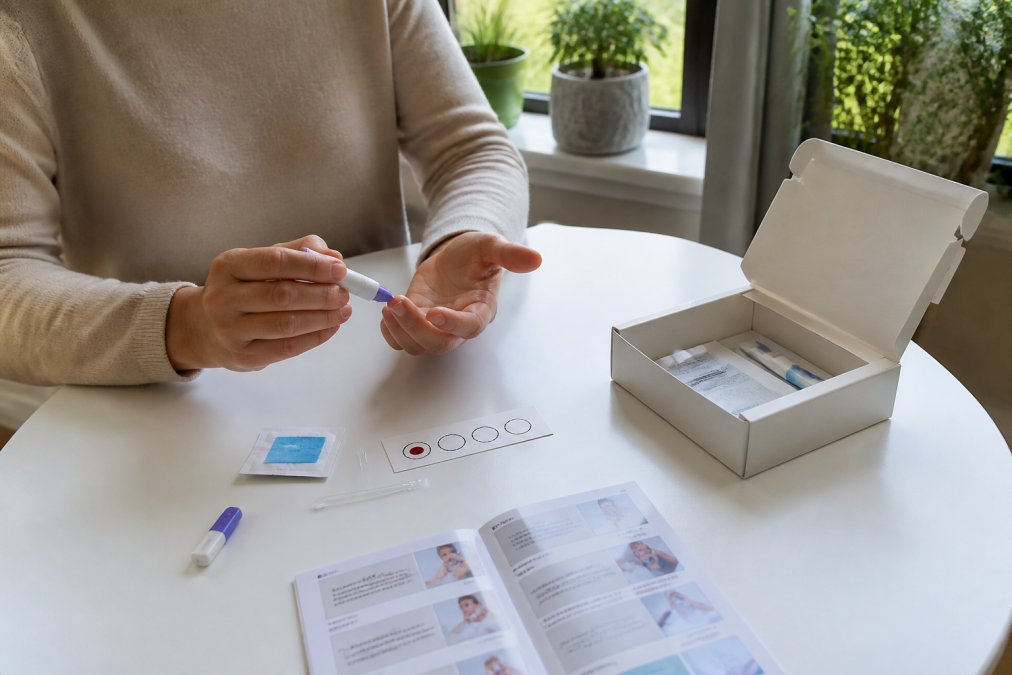
Both services use the same collection method: an at-home fingerprick onto a dried blood spot card. You prick your finger, collect a small sample, let it dry, and return it via prepaid post. Both send samples to CLIA-accredited laboratories.
Where they diverge is in what they measure alongside NAD. Jinfiniti's standard NAD test focuses specifically on intracellular NAD concentration, contextualizing it within their broader longevity biomarker framework. SelfDecode's NAD test often arrives as part of their genetic health panel, connecting your NAD result to genetic predispositions for metabolic efficiency and intervention response.
Longevity Biomarker Testing and What It Reveals
NAD as a Biomarker for Cellular Health and Ageing
NAD+ functions as a longevity biomarker because its levels directly correlate with cellular repair capacity and healthspan, the years you live in good health. Research consistently shows that people with higher NAD+ levels demonstrate better cognitive function, stronger mitochondrial performance, and slower accumulation of age-related damage.
The ageing process fundamentally involves declining NAD+ availability. Cells with depleted NAD show reduced capacity for sirtuins (proteins regulating cellular stress responses and DNA repair) and PARPs (enzymes involved in DNA damage response). When NAD drops, these critical repair systems slow down and cellular damage accelerates.
Testing your intracellular NAD level reveals whether your cells operate at a baseline supporting healthy ageing or whether they're showing metabolic stress. A low NAD result means your current metabolic status is depleted relative to your age and activity level, actionable information.
Genetic Predisposition vs Current NAD Status
Your genes influence your baseline NAD production capacity; some people naturally maintain higher levels due to genetic variants in NAD synthesis pathways. But your current NAD level is determined by the interaction between genetics and lifestyle: sleep quality, training intensity, stress levels, alcohol consumption, and nutrient status all suppress or support NAD+ availability.
Testing your actual NAD level tells you what's happening now. Genetic testing tells you your predisposition. The combination is powerful: if your genes suggest you should maintain high NAD but your test shows depletion, lifestyle factors or nutrient deficiencies are the problem. If your genes suggest lower baseline NAD and your test confirms it, you know you need more aggressive intervention.
Jinfiniti treats NAD as one biomarker among many longevity indicators. SelfDecode connects NAD to your genetic profile, helping you understand whether low results reflect genetic predisposition or lifestyle-driven depletion.
How to Increase NAD Levels Naturally: Testing Into Action
Supplement Recommendations Based on Your Results
Both services recommend NAD precursor supplements based on your baseline test result. The most common recommendations are nicotinamide riboside (NR), nicotinamide mononucleotide (NMN), or niacin (vitamin B3), each with different absorption profiles and bioavailability.
Jinfiniti typically recommends starting with 500-1000 mg daily of NR or NMN, with retesting after 90 days to measure whether supplementation raised your intracellular NAD.
SelfDecode integrates genetic data into supplement recommendations. If your genes suggest you metabolize NR efficiently but struggle with NMN absorption, their report flags this and recommends NR specifically, reducing trial-and-error supplementation.

Bien-Etre's approach combines clinical-grade NAD testing with bundled supplementation protocols. The 60 Day Cellular Recharge bundle pairs your baseline NAD test with two months of NMN300 (300 mg nicotinamide mononucleotide daily), eliminating the gap between testing and action.

Lifestyle Interventions and Monitoring Progress
NAD supplementation alone rarely delivers optimal results. Lifestyle interventions equally support NAD+ availability: consistent sleep (7-9 hours nightly), regular exercise (particularly high-intensity interval training and resistance work), caloric restriction or intermittent fasting, and stress management.
High-intensity training paradoxically depletes NAD+ acutely but triggers adaptive responses that increase NAD synthesis over time. This is why athletes often pursue NAD testing to understand whether their training protocol is sustainable.
Both services recommend retesting after 90 days of consistent supplementation and lifestyle changes. This window allows enough time for NAD levels to shift measurably in response to intervention.
Cost-Benefit Analysis: Investment vs Actionable Insight
A standalone NAD test typically costs between £200-350. Jinfiniti's premium bundles including additional longevity biomarkers run higher. SelfDecode's pricing varies depending on whether you're adding NAD testing to an existing genetic report or starting fresh.
The real question isn't "which is cheaper" but "does the result change what I do?" A £300 test clarifying whether you need NAD supplementation and providing a concrete 90-day protocol is far better value than a £150 test leaving you wondering what to do next.
Jinfiniti's premium positioning reflects their broader biomarker ecosystem. If you're already committed to comprehensive longevity testing, adding NAD testing fits naturally. If you just want your NAD level and supplement recommendations, you're paying for unnecessary features.
SelfDecode's genetic integration justifies cost if you haven't done genetic testing elsewhere. If you've already done 23andMe or Ancestry, SelfDecode's genetic data is redundant, making Jinfiniti's standalone NAD test the simpler choice.
For most people, baseline testing plus a 90-day supplementation protocol with retesting costs £600-700 total (two tests plus supplements) and generates concrete data about whether NAD supplementation works for you personally.
Safety, Privacy and Clinical Validation
Data Privacy and Genetic Information Protection
Both Jinfiniti and SelfDecode handle genetic and health data under strict regulatory frameworks. In the UK, genetic data falls under the Data Protection Act 2018 and UK GDPR, with additional protections under the Human Tissue Act 2004.
Before testing, verify each service's privacy policy explicitly states: samples are used only for your test (not sold to third parties without consent), genetic data is encrypted at rest and in transit, and you can request data deletion after a specified retention period.
SelfDecode's model involves genetic interpretation, requiring genetic profile storage. Jinfiniti's NAD test doesn't require genetic storage unless you opt for broader genetic testing. Fewer companies holding your genetic data means fewer potential exposure points.
Clinical Standards and Laboratory Accreditation
Both services use CLIA-accredited laboratories (Clinical Laboratory Improvement Amendments, a US standard recognized internationally as rigorous). CLIA accreditation means the lab meets federal standards for accuracy, quality, and personnel qualifications.
Jinfiniti emphasizes partnerships with established clinical laboratories and peer-reviewed validation. SelfDecode similarly uses accredited labs but focuses on genetic interpretation; the lab work is solid, but the value proposition is connecting genetics to actionable health decisions.
For NAD testing specifically, both use validated assays. Blood samples are analyzed using liquid chromatography-mass spectrometry (LC-MS), which directly measures NAD+ concentration. This is standard clinical chemistry, not experimental.
Which Service Is Right for You?
Best for Athletes and Performance Optimisation
If you're training intensively, NAD testing clarifies whether your recovery keeps pace with training stress. Athletes often experience persistent fatigue reflecting depleted NAD+ and impaired mitochondrial recovery.
Jinfiniti appeals to serious athletes because their broader biomarker framework includes markers directly relevant to training adaptation: inflammatory cytokines and cortisol patterns. SelfDecode works equally well, particularly if you want genetic insights into your metabolic response to training.
The practical recommendation: either service works for NAD + recovery optimization. Choose Jinfiniti for comprehensive longevity biomarkers alongside NAD, or SelfDecode for genetic context on supplement response.
Best for Hormonal Changes and Perimenopause
Women navigating perimenopause often experience unexplained fatigue, brain fog, and reduced recovery capacity. These symptoms partially reflect declining oestrogen but also reflect age-related NAD+ depletion. Testing your actual NAD level clarifies whether supplementation addresses the energy component.
SelfDecode's genetic integration is particularly valuable because certain genetic variants influence how your body metabolizes oestrogen and how your mitochondria respond to hormonal fluctuations. Jinfiniti's comprehensive biomarker approach also works well, measuring markers related to hormonal status and metabolic changes alongside NAD.
The practical recommendation: SelfDecode's genetic + NAD combination is particularly useful in perimenopause, connecting genetic predispositions to current metabolic status and distinguishing between hormone-driven and NAD-driven symptoms.
Best for General Longevity and Preventative Health
If you're health-conscious and curious whether you're ageing well at the cellular level, NAD testing is a meaningful data point. For general longevity without specific performance or hormonal concerns, both services work. Choose Jinfiniti if you want NAD as part of a comprehensive longevity dashboard, or SelfDecode if you want genetic context and simplified recommendations.
Bien-Etre's NAD+ Intracellular Test at £299 offers a straightforward entry point: baseline testing without premium bundle commitment. This works well if you want to understand your current NAD status before deciding whether supplementation is worth pursuing long-term.
The practical recommendation: start with a single baseline test. If your result shows depletion relative to your age and activity level, commit to a 90-day supplementation protocol with retesting. If your baseline is optimal, you've confirmed your current lifestyle supports good metabolic health.
The bottom line: Jinfiniti and SelfDecode both deliver clinically valid NAD testing but serve different priorities. Jinfiniti suits people wanting comprehensive longevity biomarkers and willing to invest in premium testing. SelfDecode works better if you want genetic context and simplified recommendations. For most people starting out, a single baseline NAD test answers the most important question: Is my current NAD level optimal, or do I need intervention? From there, choose between providers based on whether you want genetic integration (SelfDecode) or broader biomarker context (Jinfiniti). Bien-Etre's clinical-grade NAD testing provides that critical baseline data without premium positioning, making it an accessible entry point for anyone curious about their cellular energy status.
Frequently Asked Questions
Is an at-home NAD test kit scientifically reliable?
Yes, when conducted by CLIA-accredited laboratories using dried blood spot analysis. Intracellular NAD blood testing has been validated in clinical research and provides measurable biomarker data comparable to traditional laboratory testing. The key is ensuring your provider uses certified analysis and reports results in standardised units. Reliability depends on proper sample collection, storage, and laboratory accreditation, not the at-home collection itself.
How do Jinfiniti and SelfDecode differ in their approach to NAD testing?
Jinfiniti focuses primarily on intracellular NAD measurement through blood analysis, offering targeted supplementation protocols based on your baseline results. SelfDecode integrates NAD testing with broader genetic predisposition analysis, providing lifestyle and supplement recommendations based on both your current NAD status and genetic markers. Jinfiniti emphasises metabolic data; SelfDecode emphasises genetic context. Choose Jinfiniti for direct NAD optimisation; choose SelfDecode if you want genetic insights alongside metabolic testing.
What is the difference between genetic predisposition and current NAD status?
Genetic predisposition tells you whether your DNA makes you more or less likely to maintain healthy NAD levels, it's static and unchangeable. Current NAD status (measured via intracellular NAD blood test) shows your actual NAD levels right now, it's dynamic and responsive to supplementation, exercise, and diet. You may have genetic markers suggesting lower NAD production, but testing reveals your current reality. Both matter: genetics inform why you struggle; testing shows what to do about it.
How often should you test your NAD levels for longevity tracking?
Most experts recommend baseline testing, then retesting after 60-90 days of supplementation or lifestyle intervention to measure progress. After establishing a stable protocol, annual or biennial testing tracks long-term trends. For athletes optimising recovery, quarterly testing during training cycles provides more granular data. Frequency depends on your goals: performance optimisation warrants more frequent testing; general longevity tracking may need only annual baseline updates. Always discuss testing frequency with your healthcare provider.
This article was written using GrandRanker