
Avealife Alternatives for Longevity Tracking
Table of Contents
- Why People Look Beyond Avealife for Longevity Tracking
- Key Health Metrics for Longevity Tracking
- At-Home Diagnostic Testing for Health Optimisation
- Creating a Personalised Supplement Routine Based on DNA
- How to Interpret Longevity Health Data
- Data Privacy and Ownership in Longevity Tracking
- Wearable Technology vs. Manual Tracking and Lab Testing
- Conclusion
Last Updated: August 17, 2026
Why People Look Beyond Avealife for Longevity Tracking
Longevity tracking measures the quality of your years, not just their quantity. Most people seeking longevity tracking alternatives want something that fits their life better: lower costs, specific biomarkers, or deeper integration with existing health protocols.
At Bien-Etre, we understand this frustration. People come to us for measurable data without clinic appointments, personalized insights without generic advice, and the ability to understand what their numbers mean. The landscape has expanded significantly: wearables monitor heart rate variability continuously, at-home diagnostics reveal NAD⁺ and metabolic health, DNA analysis predicts skin aging, and supplement protocols tailor to your unique biology.
This guide explores practical longevity tracking alternatives available today, from wearable devices and lab-based testing to personalized supplementation and data interpretation. Whether you're an athlete seeking recovery insights, navigating perimenopause, or tired of generic wellness advice, you'll find concrete options for building a longevity strategy that works for you.
Key Health Metrics for Longevity Tracking
The foundation of longevity strategy is knowing which metrics matter. Key metrics fall into distinct categories: cellular health, cardiovascular function, metabolic performance, and recovery capacity.
Cellular health starts with NAD⁺ levels. NAD⁺ is a coenzyme powering over 500 cellular functions including energy production, DNA repair, circadian rhythm regulation, and stress response. NAD⁺ levels decline by up to 50% by your forties, directly affecting how you feel, recover, and age.
Cardiovascular metrics indicate heart efficiency and resilience. Heart rate variability (HRV) measures variation between heartbeats; higher variability indicates better recovery and autonomic nervous system balance. HRV holds predictive power for long-term health span that conventional markers like resting heart rate and blood pressure lack.
Metabolic health encompasses glucose regulation, lipid profiles, and insulin sensitivity. Continuous glucose monitoring (CGM) reveals how your body responds to foods and activities in real time, while fasting insulin and HbA1c provide snapshots.
Recovery and performance metrics include sleep architecture, muscle recovery markers, and stress hormones. Sleep quality, specifically deep and REM sleep proportion, predicts longevity more reliably than duration alone.
| Metric | What It Measures | Best Tracked By | Frequency |
|---|---|---|---|
| NAD⁺ levels | Cellular energy and repair capacity | Clinical lab test | Every 60-90 days |
| Heart rate variability | Recovery and nervous system balance | Wearable device | Daily |
| VO2 max | Cardiovascular fitness | Wearable or fitness test | Monthly |
| Continuous glucose | Metabolic response to food | CGM device | Continuous |
| Sleep architecture | Deep and REM sleep quality | Wearable or sleep tracker | Nightly |
| Resting heart rate | Cardiovascular efficiency | Wearable or manual | Daily |
The most effective longevity trackers combine multiple data streams: a wearable captures daily HRV and sleep; periodic lab testing reveals NAD⁺, glucose control, and inflammatory markers; DNA analysis shows genetic predispositions.
At-Home Diagnostic Testing for Health Optimisation
At-home diagnostic testing has fundamentally changed health optimization. You no longer need clinic appointments, weeks for results, or premium prices for basic testing.
NAD⁺ testing via dried blood spot is now available through accredited laboratories. You collect a fingerprick sample at home, mail it in a prepaid envelope, and receive results within 7-10 working days using clinically validated methodology.
Bien-Etre's 60 Day Cellular Recharge (£199.00) combines clinical-grade NAD⁺ testing with two months of NMN300 supplementation. You establish your baseline, begin a targeted protocol, and retest after 60 days to measure cellular response. The Starter Pack (£299.00) pairs NAD⁺ testing with one month of NAD+ supplement. This test-before-and-after model is critical because supplementation without baseline measurement is guessing.

These tests differ from generic wellness kits through clinical rigor. NAD⁺ testing uses CLIA-accredited laboratory analysis. Reports are plain-language, not jargon-heavy. You get your actual number, what it means for your age and activity level, and concrete next steps.
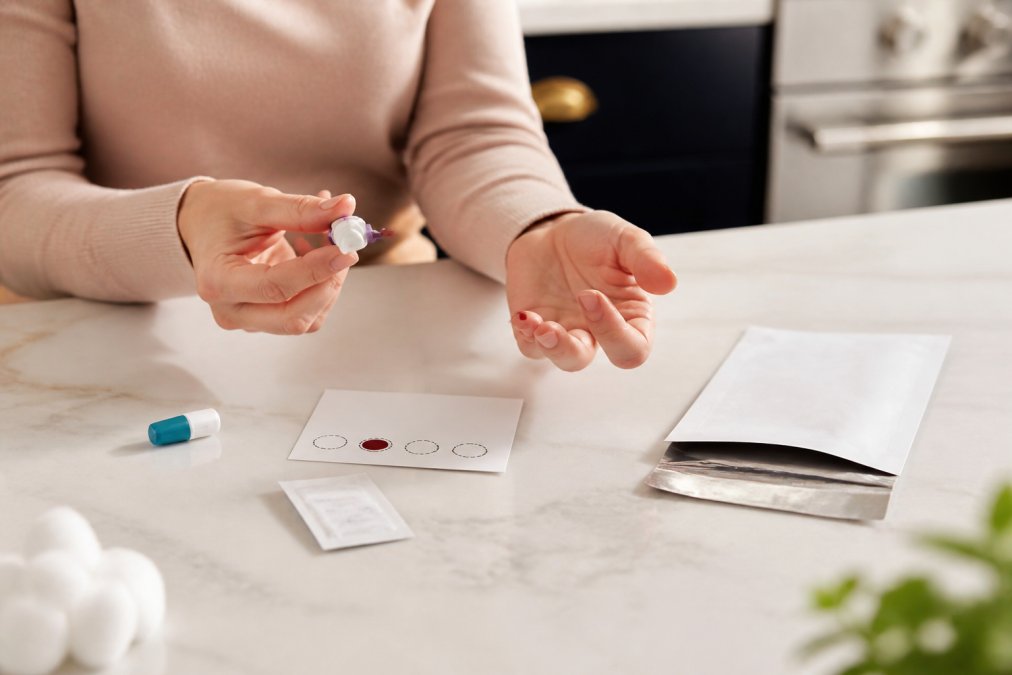
Beyond NAD⁺, at-home metabolic panels, micronutrient testing, hormone panels, and inflammatory markers are increasingly available. DNA-based skin analysis reveals how your skin ages and what ingredients will work for your biology, moving skincare from guesswork to personalization.
At-home testing offers speed and cost advantages. For tracking longevity markers over time, the cost savings compound.
Creating a Personalised Supplement Routine Based on DNA
Most people take supplements because they've read they're good for health, not because their body actually needs them. Creating a personalised supplement routine based on DNA tests first, then supplements strategically.
DNA analysis reveals genetic predispositions for nutrient absorption, metabolism, and how your body responds to specific compounds. Some people have genetic variations impairing their ability to convert certain vitamin forms into usable forms. This isn't deterministic, but it's far more precise than generic recommendations.
The practical starting point is understanding your NAD⁺ status. NAD⁺ is foundational because it affects energy, recovery, cognitive function, and cellular repair. If your NAD⁺ is low, supplementation with NAD⁺ precursors becomes strategic. If adequate, additional supplementation may not move the needle. This is why testing first matters.
Bien-Etre's NMN300 (£44.99) and NAD+ supplement (£49.99) are designed as part of a test-led protocol. NMN300 delivers 300 mg of nicotinamide mononucleotide daily, a direct precursor your cells convert into NAD⁺. NAD+ contains 600 mg of nicotinamide riboside alongside Quercetin Phytosome, Trans-Resveratrol, and PQQ. Both are GMP-certified and independently tested for purity and heavy metals.

The framework works like this: establish your baseline through testing, implement a targeted protocol for 60-90 days, then retest to measure progress. This eliminates supplement roulette where you take something for months without knowing whether it's working.
How to Interpret Longevity Health Data
Raw data without interpretation is noise. A NAD⁺ number means nothing unless you understand what it means for your age, activity level, and goals.
When you receive a clinical NAD⁺ report, you get three critical pieces: your absolute NAD⁺ level, how it compares to age-matched population averages, and what it suggests about your cellular energy and recovery. A NAD⁺ level of 500 µM might be excellent for a 55-year-old but concerning for a 35-year-old. Context matters.
The interpretation framework: First, identify whether your biomarker is low, normal, or optimal for your age and activity level. Second, consider your symptoms and performance, does the data align with how you actually feel? Third, establish a baseline and track change over time. A single data point is a snapshot; repeated measurements over 60-90 days show whether your protocol is working.
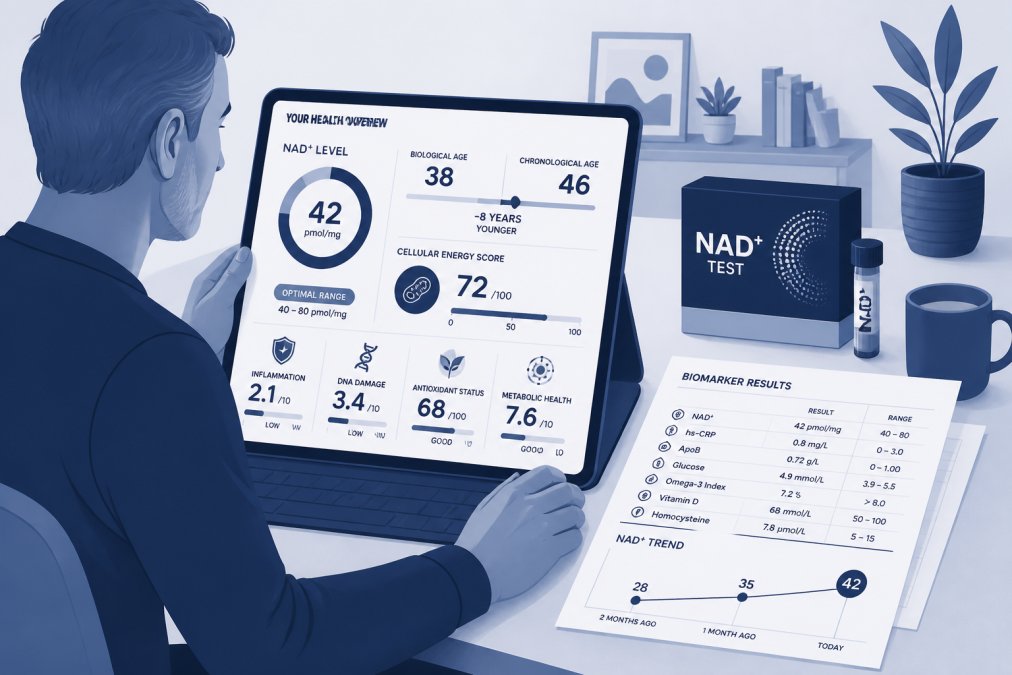
Heart rate variability data requires similar interpretation. Most wearables give a daily HRV score, often normalized to 0-100. Higher scores suggest better recovery and autonomic balance. What matters is your trend. Dropping HRV signals compromised recovery; stable or rising HRV means your protocol is working.
Glucose data from continuous monitoring is more straightforward. Your CGM shows glucose spikes after meals, during stress, or with certain activities. Spikes above 160 mg/dL suggest metabolic dysregulation. This shifts your behavior, you adjust based on patterns you notice.
The most common mistake is optimizing for the wrong metric. Effective interpretation connects biomarkers to actual symptoms and goals.
Data Privacy and Ownership in Longevity Tracking
When you send DNA or blood samples to a testing company, you're sharing deeply personal biological information. Understanding what happens to that data, who owns it, how it's stored, and who can access it is non-negotiable.
In the UK, genetic data is treated as special category personal data under GDPR, receiving heightened protection. Companies must have explicit consent, store data securely, and allow deletion requests.
Ask before testing: Does the company own your data or do you? Can they sell it to third parties or researchers? How long do they keep it? Can you request deletion? Reputable testing companies focused on clinical diagnostics have clear data ownership policies. You own your data; the company stores and analyzes it on your behalf.
Bien-Etre prioritizes your privacy and control. Your NAD⁺ test results and DNA analysis are yours. The clinical lab operates under strict confidentiality agreements. Your data is not sold, shared with third parties, or used for research without explicit consent.
Verify the company is transparent about data storage location (ideally within your region, subject to local data protection laws). Confirm you can request your data in standard format. Check whether the lab is accredited and regulated.
Wearable Technology vs. Manual Tracking and Lab Testing
The longevity tracking landscape has three approaches: wearable devices tracking continuously, manual tracking through journaling, and periodic lab testing. Each has distinct advantages.
Wearable technology excels at capturing continuous data. A device on your wrist tracks HRV, sleep architecture, activity patterns, and recovery 24/7. The advantage is granularity; you see patterns over weeks and months that manual tracking would miss. The limitation is that wearables measure proxy metrics. They're accurate for tracking trends but not precise enough for clinical diagnosis.
Wearables are best for athletes and performance-focused individuals. Continuous HRV and sleep tracking inform whether you're recovering adequately.
Lab testing provides precision wearables can't match. A clinical NAD⁺ test gives an exact number analyzed by accredited equipment. Metabolic panels reveal lipid profiles, glucose control, and inflammatory markers with clinical accuracy. The limitation is frequency and cost. You test every 60-90 days, not daily.
Lab testing is best for establishing baselines and measuring protocol effectiveness. If you're implementing a supplement routine or lifestyle change, lab testing before and after (60-90 days later) proves whether it's working.
Manual tracking through journaling and symptom logs is underrated. You notice which foods give you energy or brain fog. You build intuition about your body. The limitation is bias and incompleteness.
Manual tracking complements other methods. Journaling energy levels and symptoms alongside wearable data and lab results creates a complete picture. You see that your NAD⁺ increased (lab data), your HRV improved (wearable data), and you feel more energetic (subjective experience). Alignment confirms the protocol is working.
The most effective longevity strategy combines all three. Use wearables for daily trend tracking. Use lab testing every 60-90 days to measure progress on key biomarkers. Use manual tracking to notice patterns and connect data to lived experience. For most people, start with a wearable device combined with periodic lab testing. This combination costs £200-500 annually and provides the data foundation for real optimization.
Conclusion
The shift from generic health advice to data-driven longevity optimization is real, and the tools are more accessible than ever. Whether you're exploring longevity tracking alternatives because Avealife doesn't fit your needs, or building a longevity system from scratch, the framework is the same: test your baseline, implement a targeted protocol, measure progress, adjust based on data.
If you're ready to move beyond guessing and start optimizing based on your actual biology, Bien-Etre's clinical-grade NAD⁺ testing and targeted supplementation provides the foundation. The 60 Day Cellular Recharge (£199.00) combines a baseline NAD⁺ test with two months of NMN300 supplementation, everything you need to establish whether your cells are responding to intervention. Receive clear, jargon-free reports showing exactly what your NAD⁺ levels mean for your energy, recovery, and cellular health, then use that data to guide meaningful conversations with your healthcare provider or coach.
Frequently Asked Questions
What are the best alternatives to Avealife for longevity tracking?
The best alternative depends on your priorities. If you want clinical-grade NAD⁺ testing with actionable supplement recommendations, at-home diagnostic testing combined with personalised supplementation works well. Wearable devices track real-time metrics like heart rate variability and sleep architecture, whilst lab-based testing provides deeper biomarker insights. Many people use both: wearables for daily monitoring and periodic lab tests to validate progress. Bien-Etre's NAD⁺ test (£199-£299) combines baseline testing with evidence-backed supplements, giving you measurable data to guide your health decisions.
How do I choose a longevity tracking provider for a personalised supplement routine based on DNA?
Start by clarifying what you need: genetic insight, biomarker testing, or both. DNA-based approaches reveal how your body metabolises nutrients, whilst biomarker testing (like NAD⁺) shows your current cellular state. Look for providers offering clinical-grade lab analysis, plain-language reports, and actionable recommendations. Verify that any supplement recommendations are tied to your specific test results, not generic protocols. Bien-Etre's approach combines NAD⁺ baseline testing with targeted supplementation, allowing you to retest after 60-90 days to confirm the protocol is working for your biology.
Are at-home diagnostic tests for longevity accurate?
Yes, when analysed by accredited laboratories. At-home tests like dried blood spot sampling are validated clinical methods used in NHS settings and research. The accuracy depends on proper sample collection, secure handling, and analysis by CLIA-accredited labs. Bien-Etre's NAD⁺ test uses CLIA-accredited laboratory analysis, the same standard as traditional clinic-based blood work. The advantage is convenience: you collect at home, post your sample, and receive results without a clinic visit. Accuracy is comparable to traditional testing when protocols are followed correctly.
What metrics should I track to monitor my longevity progress?
Track biomarkers that directly relate to your health goals: NAD⁺ levels (cellular energy and recovery), heart rate variability (cardiovascular resilience), VO2 max (aerobic fitness), sleep architecture (recovery quality), and continuous glucose monitoring if metabolic health is a concern. These metrics reveal whether your lifestyle interventions, supplements, exercise, sleep, are actually working. Avoid passive data collection alone; pair wearable metrics with periodic lab testing to validate progress. Testing before and after a supplementation protocol (typically 60-90 days) gives you objective evidence of whether your approach is effective.
How does at-home diagnostic testing improve the effectiveness of my longevity routine?
At-home testing eliminates guesswork by showing your baseline biomarkers before you start any intervention. Without baseline data, you cannot know whether a supplement or lifestyle change is actually working. Testing reveals your unique biology: your NAD⁺ levels, how your body responds to exercise, and whether your sleep quality is genuinely improving. This personalised data lets you tailor interventions to your specific needs rather than following generic advice. Retesting after 60-90 days of supplementation or lifestyle changes gives you measurable proof of progress, allowing you to adjust your approach based on real results, not assumptions.
This article was written using GrandRanker