
Are At-Home Gut Health Tests Accurate?
Table of Contents
- What At-Home Gut Health Tests Actually Measure
- How Gut Microbiome Testing Works
- Limitations of Microbiome Sequencing Technology
- Clinical Validation: What the Evidence Shows
- Gut Microbiome Test NHS: What Your GP Can Offer
- How to Interpret Gut Health Test Results
- What These Tests Cannot Do
- Privacy and Data Security Considerations
- Frequently Asked Questions
Last Updated: September 28, 2026
What At-Home Gut Health Tests Actually Measure
At-home gut health tests accurate in measuring the bacterial composition of your gut microbiome by analyzing a stool sample. They identify which bacteria species live in your digestive system and estimate their relative abundance. But here's what matters: these tests show you what's there, not necessarily what's wrong or what to do about it. (Source: the limitations of 16S rRNA sequencing for species-level identification)
The tests use DNA sequencing technology to read genetic material from bacteria in your sample. They can identify thousands of different bacterial species and calculate metrics like diversity scores. However, identifying bacteria is fundamentally different from diagnosing disease or predicting health outcomes.
Most at-home gut health tests fall into two categories based on their sequencing method. Each has different strengths and weaknesses when it comes to accuracy and clinical usefulness. Understanding which technology your test uses matters because it affects what the results actually tell you.
How Gut Microbiome Testing Works
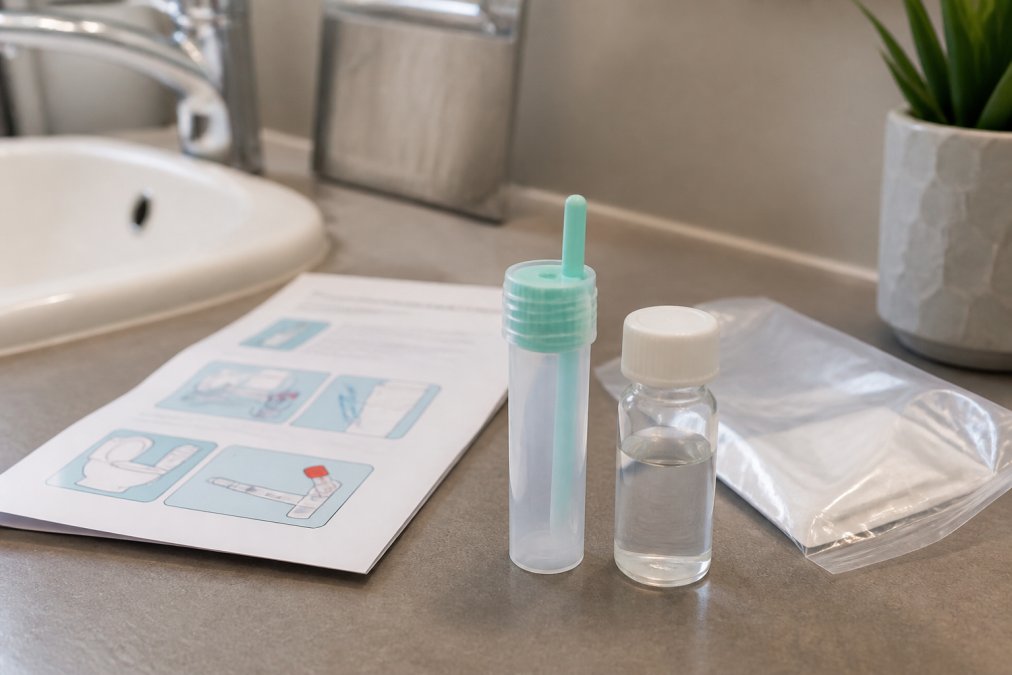
Gut microbiome testing starts with a simple collection process. You provide a stool sample at home using a kit provided by the testing company. The sample is mailed to a laboratory where it's processed and analyzed using one of two main sequencing approaches.
16S ribosomal RNA sequencing
16S ribosomal RNA sequencing is a DNA-based method that identifies bacteria by targeting a specific genetic region called the 16S rRNA gene. This region exists in all bacteria but varies enough between species to act as a genetic barcode.
The process works like this: technicians extract DNA from your stool sample, amplify the 16S region using specialized lab equipment, and then sequence it. They compare the results against databases of known bacterial sequences. The test tells you which bacteria are present and their relative proportions.
This method is widely used because it's cost-effective and well-established. However, it has limitations. The 16S approach cannot identify bacteria at the species level with complete accuracy (pubmed.ncbi.nlm.nih.gov). It groups some bacteria into broader categories. Additionally, the method cannot measure metabolic activity, it only shows which genetic sequences are present, not whether those bacteria are actually alive or active.
Shotgun metagenomics
Shotgun metagenomics sequences all the DNA in your sample, not just the 16S region. It provides more detailed taxonomic information and can identify bacteria at the species and strain level with greater precision.
This method sequences the entire genetic content of your sample randomly (like shooting it with a shotgun, hence the name). The fragments are then matched against reference databases. Because it sequences everything, it can identify bacteria, viruses, fungi, and other organisms in your sample.
Shotgun metagenomics is more comprehensive and accurate than 16S sequencing. It can also measure functional genes, the genetic instructions for what bacteria can potentially do. The trade-off is cost. Shotgun metagenomics is significantly more expensive than 16S testing and generates much larger datasets that require more sophisticated analysis. Balancing these technical demands requires a nuanced understanding of testing cost and accuracy as clinical diagnostics continue to evolve.
Limitations of Microbiome Sequencing Technology
Even the most advanced sequencing methods have real technical limitations that affect accuracy and clinical utility. Understanding these limitations is essential before interpreting your results.
Reference database gaps are a major issue. Sequencing identifies bacteria by comparing your sample against existing databases of known bacterial sequences. But those databases are incomplete. Many bacteria have never been sequenced or catalogued. If your sample contains bacteria not yet in the reference database, the test cannot identify them. This means your results are only as complete as the database the lab uses.
Standardization problems plague the entire field. Different labs use different protocols, different sequencing platforms, and different analysis software. A sample sent to two different labs may produce different results. There are no universal standards for how to collect samples, extract DNA, sequence, or analyze the data. This lack of standardization makes it difficult to compare results across labs or track changes in your microbiome over time with confidence.
Sampling bias affects what you actually measure. Your stool sample represents a snapshot of bacteria in your colon at one moment in time. Bacterial populations fluctuate daily based on diet, stress, antibiotics, and other factors. A single sample cannot capture this variation. Additionally, some bacteria are easier to extract and sequence than others, so the proportions you see may not reflect the true proportions in your gut.
False positives and negatives occur regularly. Contamination during collection, storage, or lab processing can introduce bacteria that weren't in your original sample. Conversely, some bacteria may be present but fail to amplify during sequencing, leading to false negatives. No test is 100% accurate.
Clinical Validation: What the Evidence Shows
Here's the uncomfortable truth: most at-home gut health tests lack strong clinical validation. This means they haven't been rigorously tested in clinical trials to prove they can diagnose disease or predict health outcomes.
A test is clinically validated when it's been studied in controlled settings, compared against gold-standard diagnostic methods, and shown to produce reliable, reproducible results that correlate with actual health outcomes, meaning gut health tests accurate enough to diagnose disease or predict outcomes. Most commercial at-home microbiome tests have not undergone this level of scrutiny.
The scientific consensus is cautious. Researchers can measure and describe your microbiome composition accurately. But the link between specific microbiome patterns and actual health problems remains poorly understood for most conditions. A few exceptions exist, certain bacterial patterns are associated with conditions like inflammatory bowel disease or Clostridioides difficile infection. For most other conditions, the connection is speculative.
This distinction matters enormously. A test can be technically accurate at identifying bacteria while being clinically useless for predicting or diagnosing health problems. Many at-home tests fall into this category. They produce accurate bacterial identification data that has no clear clinical application for the person taking the test.
Professional medical organizations have issued cautionary statements about interpreting commercial microbiome tests. They note that the tests can generate anxiety and unnecessary dietary changes based on findings that may not actually affect your health. Without clinical validation, you cannot know whether the patterns the test identifies matter for you personally.
Gut Microbiome Test NHS: What Your GP Can Offer
The NHS does not routinely offer commercial microbiome testing for general wellness or symptom exploration. Microbiome testing is not part of standard NHS screening or diagnostic protocols for most conditions.
However, if you have specific symptoms suggesting a gut-related condition, persistent diarrhea, inflammatory bowel disease, or recurrent infections, your GP may order diagnostic testing. This would typically be stool testing for specific pathogens or parasites, not comprehensive microbiome sequencing. These targeted tests are clinically validated and directly relevant to diagnosing the condition you're experiencing.
If you're interested in microbiome testing, discuss it with your GP first.
How to Interpret Gut Health Test Results
If you've received results from an at-home gut health test, here's how to approach interpretation sensibly.
What These Tests Cannot Do
At-home gut health tests cannot diagnose most medical conditions. They cannot identify the cause of your symptoms with certainty. They cannot predict future disease. They cannot tell you which specific dietary changes will help you personally.
Privacy and Data Security Considerations
When you submit a stool sample for microbiome testing, you're providing genetic information. This raises legitimate privacy concerns that deserve serious consideration.
Ask these questions before testing:
- How long does the company retain your sample and data?
- Will your data be used for research? Can you opt out?
- Who has access to your genetic information?
- What happens to your data if the company is acquired or goes out of business?
- Can you request deletion of your data?
Frequently Asked Questions
Are at-home gut microbiome tests clinically validated?
Most at-home gut health tests lack the clinical validation required for diagnostic use. While the sequencing technology itself is scientifically sound, the interpretation of results and their clinical relevance remain unclear. These tests can identify bacterial species and diversity but cannot reliably diagnose digestive conditions or predict health outcomes. Reference ranges vary between testing companies, and results lack standardisation across the industry, making it difficult to compare findings or use them for clinical decision-making with your GP.
What are the main limitations of microbiome sequencing?
Microbiome sequencing has several significant limitations. Stool samples capture only a snapshot of your gut bacteria at one moment in time and may not represent the full microbial community throughout your digestive system. The tests cannot determine whether bacteria are alive or dead, measure their metabolic activity, or identify harmful pathogens reliably. Reference ranges are not standardised across laboratories, and the clinical significance of specific bacterial ratios remains poorly understood. Additionally, dysbiosis patterns identified in tests do not always correlate with symptoms or disease.
Can at-home gut health tests diagnose digestive conditions?
No. At-home gut health tests cannot diagnose medical conditions. They provide information about bacterial composition but cannot confirm conditions like irritable bowel syndrome, coeliac disease, or inflammatory bowel disease. If you experience persistent digestive symptoms, unexplained fatigue, or other health concerns, consult your GP. They can order appropriate diagnostic tests, such as faecal calprotectin or endoscopy, and rule out serious underlying conditions that at-home tests cannot detect.
How do I interpret my gut health test results?
Gut health test reports typically show bacterial diversity, dominant species, and comparisons to reference populations. High diversity is often presented as positive, but diversity alone does not indicate health status. Pay attention to the methodology used (16S or shotgun metagenomics), as different methods yield different results. Be cautious of recommendations based on results alone; dietary and lifestyle changes should be discussed with a healthcare provider or registered dietitian. Request clarification on any jargon, and ask your provider how the results apply to your specific symptoms or health goals.