
5 Best Supplements for Focus and Energy in 2026
Table of Contents
- How These Supplements for Focus and Energy Were Selected
- Comparison Table: 5 Best Supplements for Focus and Energy
- 1. NMN300: Best for Cellular Energy and Healthy Ageing
- 2. NAD+: Best for Recovery and Mental Stamina
- 3. 60 Day Cellular Recharge: Best for Tracking Your Progress
- 4. Starter Pack: Best for First-Time Supplement Users
- 5. Magnesium Glycinate: Best for Relaxation and Sleep Support
- Benefits of NAD+ for Energy Levels
- Frequently Asked Questions
Last Updated: September 25, 2026
How These Supplements for Focus and Energy Were Selected
Most people searching for the 5 best supplements for focus and energy are handed a list of pills with no way of knowing whether any of them will work for them. At Bien-Etre, we take a different view: the supplement matters far less than whether it addresses a gap your body actually has. That is why every product below was judged on four criteria: whether it supports a measurable pathway in cellular energy, whether its ingredients appear at meaningful doses rather than token amounts, whether its quality can be independently verified, and whether it fits into a routine you can realistically sustain.
Comparison Table: 5 Best Supplements for Focus and Energy
| Product | Price | Key Ingredients | Best For | Format |
|---|---|---|---|---|
| NMN300 | £44.99 | NMN 300 mg | Cellular energy and healthy ageing | Daily capsule |
| NAD+ | £49.99 | NR 600 mg, Quercetin, Resveratrol, PQQ | Recovery and mental stamina | Daily stick |
| 60 Day Cellular Recharge | £199.00 | NAD⁺ test + 60 days NMN300 | Tracking your progress | Test + supplement |
| Starter Pack | £299.00 | NAD⁺ test + 1 month NAD+ | First-time supplement users | Test + supplement |
| Magnesium Glycinate | Varies | Magnesium glycinate | Relaxation and sleep support | Daily capsule |
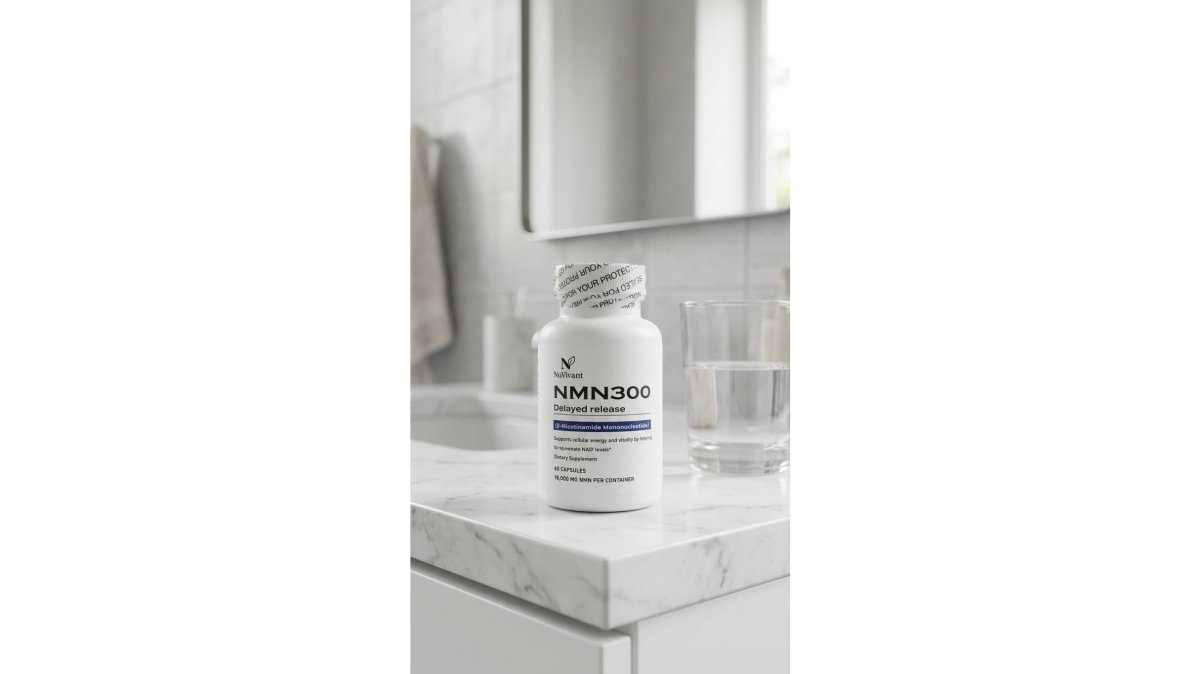
1. NMN300: Best for Cellular Energy and Healthy Ageing
NMN300 is the strongest starting point for anyone whose fatigue does not respond to more sleep or more coffee. It delivers 300 mg of nicotinamide mononucleotide, a direct precursor your cells convert into NAD⁺, the coenzyme behind hundreds of cellular functions. NAD⁺ levels decline with age, which is one reason energy and recovery feel different in your forties than they did in your twenties.

2. NAD+: Best for Recovery and Mental Stamina
Where NMN300 is minimal, NAD+ is broad. Each serving combines 600 mg of nicotinamide riboside, one of the most extensively researched NAD⁺ precursors, with quercetin phytosome, trans-resveratrol and PQQ. That stack targets the same cellular energy pathway from several angles at once, which suits people training hard or recovering from a demanding stretch.
3. 60 Day Cellular Recharge: Best for Tracking Your Progress
The 60 Day Cellular Recharge is the only option here that tells you whether it is working. The bundle pairs the NAD⁺ Intracellular Test, a simple at-home fingerprick analysed by a CLIA-accredited laboratory, with two months of NMN300. You collect your sample at home in minutes, return it with the prepaid pack, and receive a plain-language report in 7-10 working days.

4. Starter Pack: Best for First-Time Supplement Users
If you have never tested anything before, the Starter Pack combines the same clinical-grade NAD⁺ test with a full month of NAD+, priced at £299.00. Your first month of supplementation is included at no extra cost.

5. Magnesium Glycinate: Best for Relaxation and Sleep Support
Magnesium glycinate is the least glamorous entry on this list and, for many people, the most immediately noticeable. It supports relaxation and sleep quality rather than raw alertness, which matters because poor sleep is one of the most common reasons people feel foggy and flat during the day.
Stacking magnesium with caffeine and stimulants
This is the section most supplement lists skip, and it is the one that matters if you drink coffee. Magnesium and caffeine do not cancel each other out, but they pull in opposite directions:
- Caffeine blocks adenosine receptors, which is what produces alertness, and it has a half-life of roughly five to six hours in most adults. A 3pm coffee is still meaningfully active at 9pm.
- Magnesium glycinate supports the parasympathetic side of the nervous system, which is the side you need to switch on to fall asleep.
Where it falls short
It will not fix a cellular energy deficit, and it will not tell you anything about your own biology. Treat it as a supporting player, not the headline act. If your fatigue persists after two to three weeks of consistent sleep and magnesium, the next step is a baseline test rather than another supplement. Physiological recovery often requires more than just baseline stability, necessitating a nuanced approach to natural energy drinks that prioritize sustained metabolic support over fleeting stimulation.
Safety and interactions
Magnesium is generally well tolerated, but it can interact with certain diuretics, antibiotics and medications used for thyroid conditions. People with reduced kidney function should speak to a GP before supplementing, because the kidneys regulate magnesium excretion. As with everything on this list, food supplements are not a substitute for a varied, balanced diet and healthy lifestyle.
Benefits of NAD+ for Energy Levels
NAD⁺ (nicotinamide adenine dinucleotide) is a coenzyme present in every cell, and it sits at the centre of the reactions that convert food into usable energy. It works as an electron carrier: it accepts and donates electrons in the mitochondrial electron transport chain, which is the process that generates ATP, the molecule your cells actually spend. Without adequate NAD⁺, that chain runs less efficiently, and the subjective result is the flat, heavy tiredness people describe as low energy rather than sleepiness.
Matching the approach to your goal
- A single precursor at a moderate dose suits most people starting out. Nicotinamide mononucleotide (NMN) and nicotinamide riboside (NR) are the two most common precursors, and both feed the same salvage pathway your body uses to recycle NAD⁺. A typical starting range is 250-300 mg of NMN or 300-600 mg of NR daily.
- A broader stack with synergistic compounds suits those pushing recovery. Quercetin, resveratrol and PQQ are commonly paired with a precursor because they support mitochondrial function through separate routes rather than adding more of the same raw material.
- Testing first suits anyone who wants to know their baseline rather than assume it. An at-home NAD⁺ test gives you a number to work from, which is the difference between a personalised routine and a guess.
Dosage optimisation and cycling
Most supplement lists stop at the ingredient. The part they skip is that NAD⁺ precursors are generally taken daily rather than cycled, because the pathway is a continuous recycling system rather than a receptor that desensitises. The common pattern practitioners use is:
- Start low. Begin at the lower end of the range for two weeks before increasing.
- Take it in the morning. NAD⁺ support is not a stimulant, but some people find evening doses affect sleep quality.
- Hold the dose steady for 8-12 weeks. This is roughly the window in which measurable changes in a retest tend to appear.
- Retest, then adjust. If your baseline was low and your retest has moved, the dose is working. If it has not moved, increasing the dose is more sensible than adding a second product.
Where the evidence is thinner
NAD⁺ decline with age is well established. What is less settled is how much of that decline can be reversed by oral precursors, and how quickly. Human trials exist but are relatively short and use different doses and different measurement methods, which is why the honest position is that precursors support a real pathway without promising a transformation. Anyone telling you a specific number of years of biological age will be reversed is selling, not explaining.
Frequently Asked Questions
What is the best supplement for energy and focus?
There is no single best option because focus and energy depend on your individual biology. NAD+ precursors like NMN and nicotinamide riboside support cellular energy production, while certain nutrients like magnesium and B-vitamins can influence alertness and mental clarity. Testing your baseline NAD+ levels before starting gives you a measurable reference point. A supplement that works well for one person may do little for another if the underlying deficiency differs.
Are nootropic supplements safe for daily use?
Most well-formulated nootropic supplements are designed for daily use, but safety depends on dosage, ingredient quality, and your health status. Choose products manufactured in GMP-certified facilities and independently tested for purity and heavy metals. If you take prescription medication, are pregnant or nursing, or have a medical condition, speak to your GP before starting any new supplement. Food supplements are not intended to diagnose, treat, or cure any disease.
What are the signs of nutrient deficiency causing fatigue?
Persistent tiredness, brain fog, poor concentration, and slow recovery after exercise can all point to low levels of certain nutrients, including NAD+. These signs overlap with many other conditions, so self-diagnosing from symptoms alone is unreliable. A lab-backed test gives you concrete data on what your body actually needs, which is more useful than guessing based on how you feel.
How does a personalized supplement routine based on DNA work?
A DNA-informed routine uses your genetic data and lab results to identify which nutrients your body processes less efficiently. Instead of following generic advice, you target the specific pathways where you need support. Bien-Etre's NAD+ Intracellular Test, for example, measures your baseline NAD+ level so you can see whether supplementation is actually raising it. Retesting after 60 to 90 days confirms whether your routine is working.
Can I take NAD+ supplements with caffeine?
NAD+ precursors like NMN and nicotinamide riboside are not stimulants, so they do not carry the same crash or jitter risk as caffeine. Many people take them in the morning alongside coffee without issue. If you are sensitive to stimulants, avoid stacking high-dose caffeine with any supplement that affects alertness. Take NAD+ supplements consistently each morning and let the effects build over weeks rather than expecting an instant boost.
Fatigue that does not lift is a puzzle, and guessing at it gets expensive. Bien-Etre exists to replace that guesswork with data: clinical-grade NAD⁺ testing analysed by a CLIA-accredited laboratory, at-home sample collection with no clinic visit, and clear, jargon-free reports you can take to your doctor or coach. Get started with Bien-Etre and build a routine around your own biology rather than someone else's average.